Lots of news ... and a bit from Cultivate
Loads to report from Cultivate’25, from which the Ball Publishing crew and I just returned, but I don’t yet have all the details about it compiled, so I can only give you a few bits and pieces until next week, when I have more. Oh, look, here’s one now!
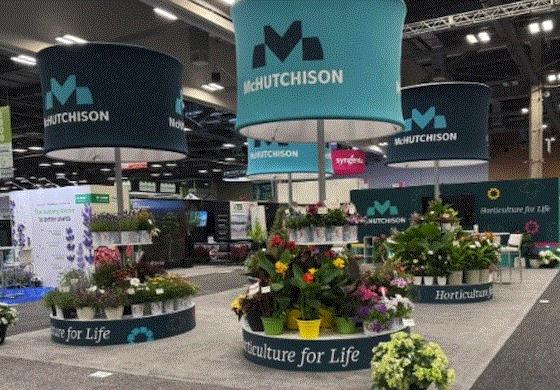
McHutchison, Vaughan’s rebrand under one name: McHutchison
Having operated as two companies since resurrecting the Vaughan’s Horticulture name in 2013, McHutchison has announced that they're now consolidating both companies “into a single, stronger organization to better serve its customers and partners across the industry.”
That company will be known as McHutchison.
McHutchison is a 123-year-old brand dating back to 1902 when founded by James McHutchison in New York City. (In a twist few know or remember, McHutchison was acquired by Vaughan’s in 1966. That’s what enabled McHutchison to bring back the Vaughan’s name in 2013.)
Vaughan’s goes back to 1876 and Vaughan’s Seed Company. The Vaughan’s name went away sometime after its parent, Sandoz, merged with Ciba-Geigy to form Novartis and then Novartis merged with AstraZeneca to form Syngenta. McHutchison owned the Vaughan’s name, however, allowing them to bring it back to serve the commercial greenhouse market. In 2017, Dümmen Orange acquired McHutchison and Vaughan’s to give them their own in-house brokerage firms.
The refreshed brand officially launched at Cultivate’25 in Columbus, Ohio, where the company unveiled a refreshed visual identity that, as the press release stated, “reflects its continued growth, evolution and commitment to the future of horticulture.”
“This represents far more than a shift in branding,” said Ken Turrentine, President of McHutchison. “It’s a thoughtful step forward, one that respects our shared history while bringing together our collective strengths to better serve our customers. Uniting under the McHutchison name simplifies the way that growers connect with the expertise, resources and relationships they count on to succeed.”

In memoriam: Bill Van Belle
Bill Van Belle, founder of Van Belle Nursery in Abbotsford, British Columbia, Canada, passed away July 5. He was 80.
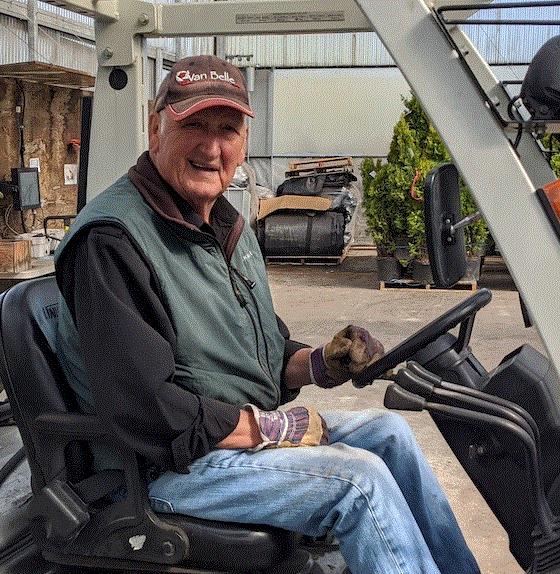
Bill was born in 1945 in Enschede, the Netherlands and emigrated with his family at age 4 to Canada, where they eventually settled in Bowmanville, Ontario. His mother and father tried their hand at vegetable and cattle farming, but Bill joked that his dad, "didn’t know the front or hind end of a cow." Bill’s father kept trying different ventures, and eventually, the family found their way to growing ornamental plants. As Bill recalled, he respected his parents for pursuing different enterprises, and that they always found a way to make a living and support their family with dignity.
Bill earned a Bachelor of Arts degree in Geography and Spanish from the University of Waterloo, and a Certificate in Horticulture from the University of Guelph. He met his wife, Grace, while living in Bowmanville and they married in 1970. In 1973, after moving from Ontario to Abbotsford, B.C. and working for a local landscaping company, Bill and Grace decided to start Van Belle Nursery. Bill had discovered a strong Ontario market for nursery stock grown in B.C. and also a knack and love for rooting flowering shrub liners in their tiny backyard greenhouse.
DeVonne Friesen, president of Bloomin’ Easy Plants, a division of Van Belle, wrote of Bill, “For anyone who knew Bill the nurseryman, you knew him as an optimist, a nonconformist, inventor, a joke-teller with a hearty laugh, a man of faith and an occasional firebrand. He was also an aggressive-but-savvy founder who was comfortable taking calculated risks while understanding that mistakes were inevitable and even proof of pushing past too-often accepted limitations. Bill would often remind his son Dave (current President of Van Belle) and the team of leaders, that ‘the guy who doesn’t do anything doesn’t make mistakes.’ He operated that way himself through the years and set this tone as part of his legacy, encouraging Dave and the team to embrace the freedom to take aggressive, but thoughtful, action without being motivated by fear.”

In memoriam: Simon Groot
Another passing of a notable Dutchman (notable enough to have his obituary in The Economist): Simon Groot, founder of East-West Seeds—a major breeder and producer of vegetable seeds for the Asian, African and Latin American markets—passed away July 6 at the age of 90.
Born in 1934, Simon was part of the sixth generation of the famous Sluis & Groot breeding company founded in 1867 in Holland by his great-grandfather. Simon earned a degree in business economics from Erasmus University in Rotterdam and came into the family business in 1958 at his father’s urging, where he became director of flower seed sales.

Traveling in Indonesia in the 1970s, Simon was struck by the poor quality of vegetable seeds, which led to low yield and persistent poverty among the farmers. Which is why, when the family sold Sluis & Groot in 1981, with his share of the proceeds he founded East-West Seeds (originally known as Hortigenetics Philippines) in the Philippines, partnering with seed trader Benito Domingo. The company aimed to develop and distribute high-quality vegetable seeds tailored for tropical climates. Their mantra was “You serve the farmer first.”
Their first breeding trials began in 1982, and in 1986, they introduced a bigger gourd variety called Jade Star, the first locally developed commercial vegetable hybrid in the Philippines and Southeast Asia. It was easier to grow, produced better yields and was resistant to downy mildew.
Over time, East-West grew to serve some 20 million small farmers in 80 countries in Asia, Africa and Latin America. They offer 600 varieties in 80 crops. Three of his four children have leadership roles within the company, with his son Ard serving as chairman since 2018.
Simon’s influence and impact has been recognized with many awards over the years, the greatest of which being the World Food Prize in 2019, the highest honor in agriculture.

The Mill Creek Report?
It doesn’t quite have the same ring as the River Ridge Report, but when it comes to gardening, publisher Paul Black’s neighbors are 9% more into it than mine.
I learned that after Paul helped me out by conducting the River Ridge Report in my stead, driving (with his wife, Annie) River Ridge’s 14 streets and counting evidence of gardening at 356 homes.
Afterwards, Paul expressed some dismay at how often they’d pass six or eight homes in a row with no sign of gardening anywhere in the front yard or porch. I shrugged and said that’s typical. Not in his neighborhood, he replied.
“Oh, yeah?” I retorted. “Why don’t you do a Mill Creek Report and see if your neighbors are more into gardening than mine.”
Be careful what you ask for.
While walking his dog, Paul surveyed 108 homes in Mill Creek. The results? Of the 108, 74 exhibited some sort of spring gardening activity—68.5%. In River Ridge, that number was 59.5%. So he’s got me beat there.
When it comes to how they garden—in containers, with hanging baskets or right in the ground, containers are far and away the most popular, at 93% of homes that gardened. In River Ridge, that number is 79%. Hanging baskets, however, are a lot less popular in Mill Creek than in River Ridge—23% vs. 41%. But gardening in the ground is twice as popular—32.5% vs. 16%.
 A Mill Creek home. Pots, plus annuals in the ground. But no hanging baskets.
And as for the all-important “all three”—meaning gardeners who have pots, baskets AND flower beds, Mill Creek doubles River Ridge, 9% vs. 4%.
What’s it all mean? Neither of us were sure, but I had one hunch. I checked median home prices. River Ridge is $317,000; Mill Creek is $412,000.
I told Paul, “What it means is when you go up the economic ladder just a bit, you have the luxury to spend more on flowers.”
At least, that’s the best answer I have. Of course, it might be a case of “keeping up with the Joneses.” In River Ridge, you can tell some folks don’t care a whisker what their neighbors think.
What do YOU think the difference might be caused by? Email me HERE.

NGMA’s new logo

I’ve been a National Greenhouse Manufacturers Association (NGMA) member since joining GrowerTalks in 1993 and have even served on its Board. So I was gratified to see that the logo of the association (which dates back to the days of steam boilers and Dayton thermostats) has been updated to symbolize NGMA’s vision to lead innovation, excellence and collaboration within the greenhouse manufacturing sector.
The new logo debuted at Cultivate’25.
Amanda Flint joins Bailey

Congrats to Amanda Flint, who's joined Bailey Nurseries as Product Development Manager. She'll be replacing Debbie Lonnee, who's retiring at the end of the year after leading the Product Development team for more than 30 years.
You might recognize Amanda’s name: She was with EuroAmerican Propagators (where she starred in a few of my webinars); then she moved over to PlantHaven International, where she served as Plant Project Manager. Amanda will be responsible for breeder relations globally, product trialing and go-to-market planning for all the Bailey brands you know, including Endless Summer Hydrangeas, First Editions Shrubs & Trees and Easy Elegance Roses.
To support a smooth transition, Debbie has moved into the role of Senior Product Developer, where she'll share her decades of experience with Amanda and the team.
California delegation tours World Horti Center
Might Silicon Valley have a competitor called “Food Valley”? A group from Sacramento, California, hopes so.
Representatives from community colleges, universities, the food tech sector, farmers, food banks, transportation, the Chamber of Commerce and even some chefs, recently visited the Netherlands to tour World Horti Center, a “global knowledge and innovation center for international greenhouse horticulture.”
Their goal? Building a “Food Valley” in Sacramento, creating “a strong ecosystem where education, research, technology and entrepreneurship come together to shape the future of the food industry,” as the folks at World Horti Center describe it.
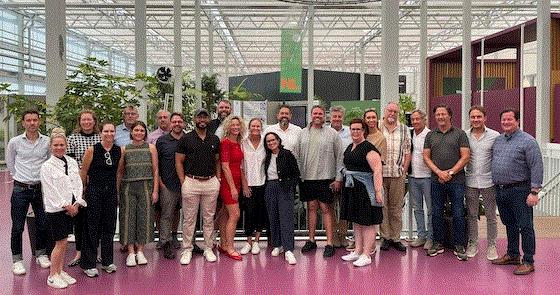
Inspired by their visit to World Horti Center, the group decided that greenhouse horticulture and vertical farming must play a role in their initiative alongside the region’s strong traditional agriculture.
140 years of Bachman’s
Congratulations to Bachman’s—at 140 years old, one of the oldest garden centers in the country. To celebrate with their customers, they hosted events and parties back in June to celebrate 14 decades of serving the Minneapolis market.
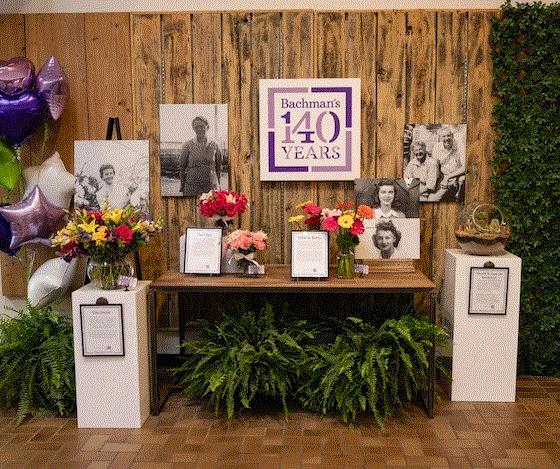
Bachman’s was founded in 1885 and remains a family-owned business today, with fifth-generation Bachman family members leading the company. Bachman’s operates six full-service Floral, Gift & Garden Centers throughout the Twin Cities, and 27 floral departments within Lunds & Byerlys grocery stores.
Additionally, Bachman’s operates indoor and outdoor landscaping divisions, a weddings and special events department, a wholesale nursery division, 7 acres of greenhouses, and Cedar Acres, a retail location and 670-acre growing range in Farmington, Minnesota, which produces many of the plants, flowers and landscaping products sold by Bachman’s today.
Bachman’s birthday month began by launching the Buzz & Bloom garden at the Minnesota Zoo. The partnership features the zoo’s first-ever pollinator garden, which Bachman’s designed. It will serve as a living classroom to teach people about supporting the local ecosystem.
June 13 kicked off the birthday weekend with an event that included a band and a live TV broadcast of a popular local lifestyle show from the flagship Bachman’s store, complete with a live audience of more than 150 people. The show highlighted the company’s history and offerings, and also had tips and trends segments, hands-on demos and more.
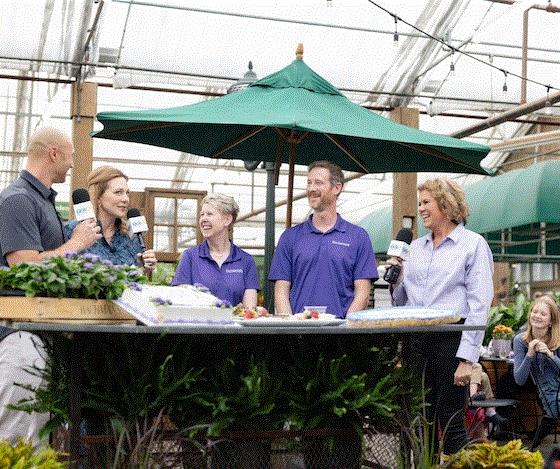
On June 14, birthday parties at all Bachman’s locations included a wide array of free entertainment to invite the communities to celebrate 140 years. The parties featured live music, food trucks, photo opportunities, door prizes, giveaways, birthday treats and more.
Bachman florists created The Heritage Collection, a luxurious floral arrangement tribute to 140 years of love, growth and legacy. Available for a limited time, each of the 13 arrangements is inspired by a beloved member of the Bachman family—their stories, their style, their spirit.
“Our 140th birthday has been the perfect opportunity for us to take a moment to celebrate not only our company’s rich heritage, but also the communities and customers who we’ve had the pleasure of serving all these years,” said Susan Bachman West, CEO and President of Bachman’s. “We have abundant gratitude for the people and partners who’ve helped us reach 140 years, and we are energized and excited to continue building the legacy of our family business.”

Lucanne announces CannaSun young plant producers
Sometime back, I told you about a new line of heliconia, bred by Dümmen Orange, but now being offered by a new company, Lucanne, run by Perry Wismans, formerly of Dümmen Orange. Now I’ve gotten word from Perry that Lucanne (pronounced Luke-Ann) will also be offering a line of canna lilies called CannaSun, bred by GreenWorks. CannaSun made its U.S. debut in the trial grounds at Young’s Plant Farm.
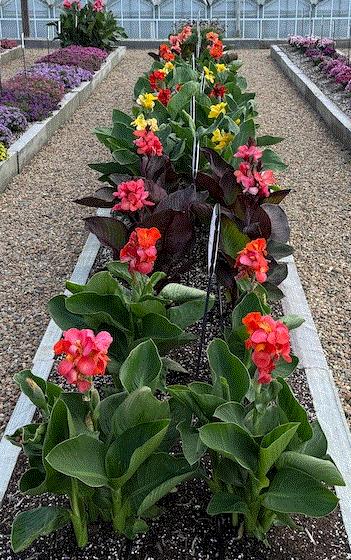
Perry also disclosed that he’s got five well-known young plant companies in his supply network, including:
- American Farms LLC (Naples, Florida)
- D.S. Cole Growers (Loudon, New Hampshire)
- Natural Beauty (Denmark, Wisconsin)
- Knox Horticulture (Winter Garden, Florida)
- Pacific Plug & Liner (Watsonville, California)
Perry said CannaSun are from seed, have great uniformity in pot production and make stunning “thrillers” in mixed containers.
They made their debut at Cultivate’25, too, so watch for them to hit the market.
Sneak peek at Monrovia’s 100th anniversary hydrangea
Another Cultivate debut, this time from Monrovia, which is celebrating its 100th anniversary in 2026. But you know how it is when you can’t wait? So at 99 years, they launched Centennial Ruby Hydrangea, a unique H. macrophylla with deed red blooms that darken as they mature to create what Monrovia calls “a dramatic, color-shifting display of blooms.”
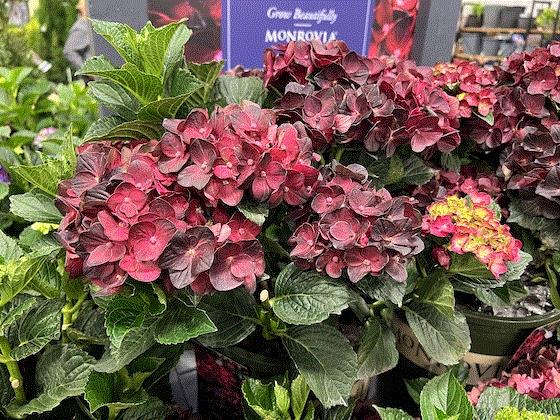
Monrovia said Centennial Ruby offers strong, sturdy stems supporting large blooms that last more than 100 days and the sturdiness of the plant makes it ideal for changing weather conditions. It stays compact, topping out at 3-ft. tall and wide. Its petite size and long-lasting blooms make it perfect as a front border or container plant. It's recommended for Zones 4 to 9.
“When we saw this hydrangea in our trials, we knew it was special,” said Jonathan Pedersen, CEO and president of Monrovia. “It is the perfect plant to celebrate Monrovia’s milestone.”
You know how availability is often limited at the launch of a woody ornamental variety? Monrovia is taking advantage of that, offering the first 5,000 plants with a special tag with a limited-edition number.
“Centennial Ruby will be the marquee of our 2026 marketing,” said Katie Tamony, CMO and trend spotter for Monrovia. “Its rich, saturated color speaks to design and garden trends. Gardeners are craving bold, romantic tones and this plant really delivers that something special.”
Learn more about Centennial Ruby in THIS VIDEO.

Finally I …
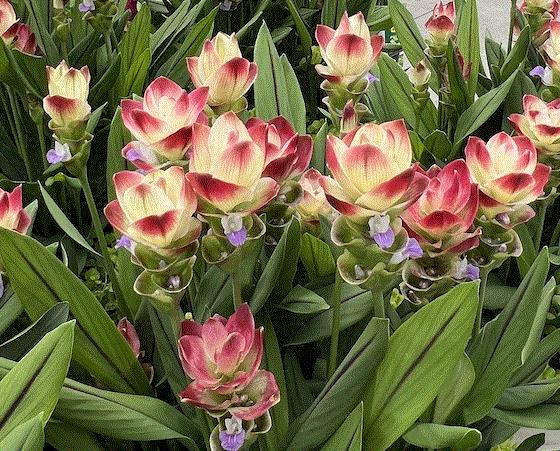
That pretty bicolored curcuma I featured a few newsletters ago in “Finally …” is called Solar and it came from young plant supplier ForemostCo. Erika Santa, ForemostCo’s marketing manager, filled me in on the variety, which was bred by KP Holland in the Netherlands.
“Each year we roll out a few new varieties, so we are constantly improving the colors and attributes of these beautiful curcuma,” Erika wrote. “We couldn’t agree more that everyone should experience the beauty of these Siam Tulips! They are a fast-growing crop that serves as the perfect summer extender shoulder crop.”
I’ll give Daryl Higgs from Brisbane, Australia, props for also identifying Solar, as he, too, grows the crop and like it (they call it Siam Solar).
Daryl showed me another of his KP Holland-bred varieties, Siam Splash. Wrote Daryl, “We produce them every summer and get good interest in the product. We like to give our crops two full seasons of growth to get a better flush of stems and flowers. It is costly growing for 24 months, but I think the result is worth it. Our customers like them.”
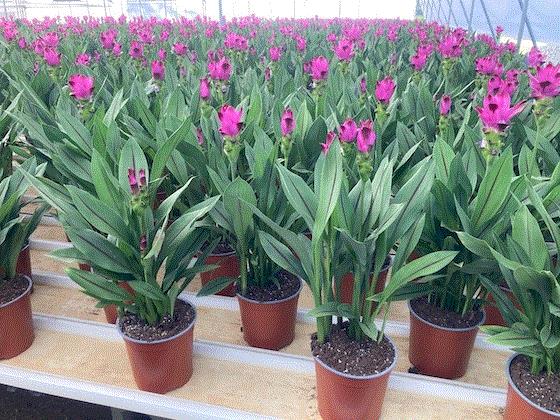
As well they should, Daryl—a beautiful crop!

Finally II …
Next Monday through Friday, I’ll be back in my old stomping grounds of Chicagoland and the Ball Mothership to cover Ball Customer Days, the biggest event of the year for Ball Seed and the Ball breeding companies. Watch for me and all the other editors next Thursday and Friday, July 24-25. If you can’t make it, we will, of course, capture the highlights on video. But do try to make it out—it’s an easy drive from a large portion of the Midwest.
And, heck, plane rides are easy these days—you can once again keep your shoes on!
Feel free to email me at beytes@growertalks.com if you have ideas, comments or questions.
See you next time!

Chris Beytes
Editor-in-Chief
GrowerTalks and Green Profit
This e-mail received by 29,752 loyal readers!
Thanks to my loyal sponsors, who help me reach the 29,752 readers of Acres Online in more than 60 countries. Want to be one of them (a sponsor, that is)? Give Kim Brown a shout and she will tell you about our many advertising opportunities.