Poinsettias (and More) in Iowa’s Polar Tundra
My Ball Publishing colleagues Jen Zurko and Paul Black traveled to frigid Iowa to visit a premier poinsettia trial. Below is Jen’s report, once she thawed out.
On Wednesday last week, Publisher Paul Black and I huddled into a rental to drive Northwest to attend Plantpeddler’s Poinsettia Variety Day for the first time. In case you live elsewhere, you probably don’t know that the Midwest is currently under a steely, icy grip of frigid temperatures. It was 5 degrees F when we walked into Plantpeddler, but greenhouses are the best winter respite. Especially when they’re filled wall-to-wall with poinsettias.
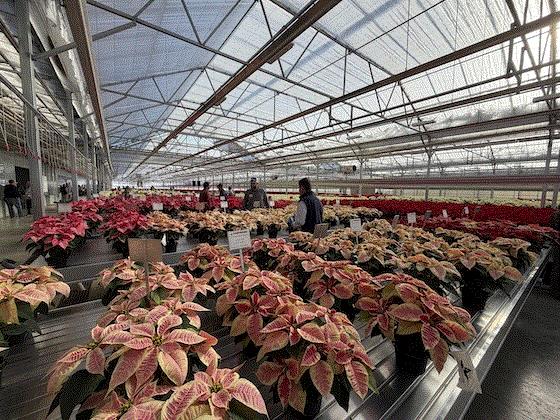
Owner Mike Gooder told me that he, his wife Rachel and their son John have been putting on poinsettia trials annually for the past 15 years. What started as an informal meeting with a handful of sales reps became a larger coordinated event that sees an average of 120 to 150 attendees. This year, Mike and Sales Manager Stacy Bryant said they grew over 223 varieties sorted by color, weeks and vigor.
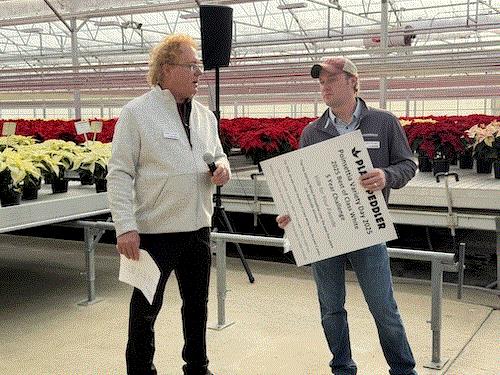
Mike and John Gooder
“Anything we can do to make other growers better. It’s an important part of what we believe is our role in the industry and that’s the value of disseminating knowledge,” said Mike.
Since Plantpeddler started their trials in 2010, Mike said he’s seen dramatic changes to the poinsettia market, one of them being a shift in the popularity of red. Mike said only 40% of the poinsettias they grow for their customers are red. Where some growers, especially those who grow for big box stores, may still grow 70% to 75% red, Mike said growers who sell to more niche customers (like IGCs, florists, grocery stores, etc.) seem to have more flexibility on what they can offer with less-commoditized products like novelties, but also in other applications like combinations and, yes, painted poinsettias. Mike said that 50% of their poinsettias “get a paint job” and those automatically come with an extra $3 charge, as they’re treated like a premium item.
Mike said that the more options you offer the consumer, the more their buying habits will change. It’s also helped that the shifts he’s been seeing haven’t just been with the end consumer, but also with the genetics. There are now more varieties that fit every application. Gone are the days of growing one variety and forcing it for multiple pot sizes or blasting it with PGRs, which adds cost—there’s a color and habit for every container now.
“It’s really cool that some of those non-traditional types are resonating with consumers,” said Mike. Stacy agreed, saying, “You may not want a traditional red poinsettia, but you still want that holiday décor.”
Mike and his team have a positive outlook when it comes to a pretty high-maintenance crop that requires a lot of resources in time, cost and effort. And holding an annual event around it adds even more. But it’s all in how you look at the bigger picture.
“People think you can’t make money on poinsettias,” said Mike. “I believe it’s more of an overhead factor. If you can grow a crop and you can cover the costs of goods—which are inputs—then you’re covering your annual overhead. You won’t get rich growing poinsettias, but if you make your overhead in the winter, all of the profits you make in the spring will go directly to your bottom line. You can’t do that if your greenhouse is empty in the winter.”
Thanks for that report, JZ! I interviewed Mike and Stacy (and Production Manager Nikki Wolter) for a poinsettia article appearing in the January issue of Green Profit,so keep an eye out for more of what they have to say about how IGCs can elevate their poinsettias for consumers.

Incorporate the Senses
Mike Gooder’s comments about the improvement in poinsettia genetics over the last decade or more is made even more dramatic with observations from Ball Horticultural’s Marvin Miller. Marvin had been following my recent poinsettia remarks here in buZZ! over the weeks and emailed me with the following:
“In the old days (60-plus years ago), poinsettias got so leggy that florists used to put the tips of pine tree branches into the pots to cover the naked stems. Maybe 20 years ago, I asked Paul Ecke Jr. whether he thought the advances in poinsettia breeding had eliminated the smell of Christmas from the poinsettias, as florists stopped using the pine shoots once we learned to grow newer varieties, which no longer dropped their lower leaves. Of course, Paul thought it was a ridiculous question, but he shared the interaction with some of his industry friends.
“After that, we saw some high-end florists, such as Bachman’s in Minneapolis, adding pine shoots back into their poinsettia pots to retrieve that Christmas smell. Talk about an upgrade! We also saw some florists tying bundles of cinnamon sticks into the ends of their bows. Again, we added another sensory component (smell) to the rewards of buying a poinsettia, which typically only work on the sense of sight.”
Want to include another attractive component to poinsettias without going to the trouble of paint or glitter? Here’s a pro tip from Marvin: Add a few sprigs of gold and/or silver ting-ting to the poinsettia pot.
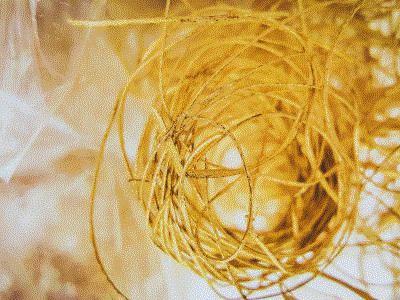
“The point to me is that when we deal with as many of the five senses as possible, we increase the value of whatever it is we’re trying to sell,” Marvin said. “Poinsettias by themselves can be beautiful, but by themselves, there is no sound, there usually is no taste (unless Chris is eating bracts again), and if you touch them, they might bleed the sap, which can be quite messy. So, dealing with smell is an obvious advantage, as we just doubled the senses we’re attracting.”
Marvin has a point. I could totally get behind the poinsettias with pine boughs tipped in. Plus, the fragrance might just keep the cat away.

Mitchell’s Annual Poinsettia Survey
Mitchell’s Nursery and Greenhouse in King, North Carolina, held its annual Poinsettia Trials November 28-December 8, opening up their facilities to the public and local media to share the beauty that is a poinsettia-filled greenhouse. They grew more than 12,000 poinsettias with over 77 different varieties. And while those visitors were strolling through the display, Mitchell’s asked them to vote for their favorites.
Which varieties took home the top favorites in each of four categories?
Top 5 Red
-
Red Ribbons
-
Christmas Mouse
-
Toro Red
-
Fortuna Red
-
Christmas Bells
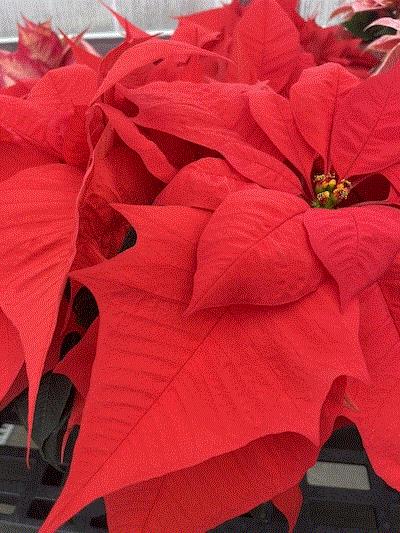
Red Ribbons
Top 5 White
-
Princettia White
-
Rinehart Pure White
-
Alaska White
-
Moni White
-
J Adore White Pearl
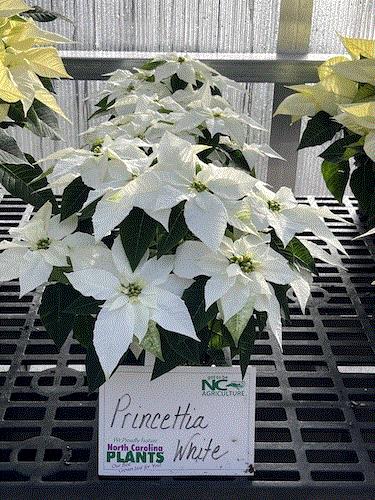
Princettia White
Top 5 Pink
-
Luv U Pink
-
Princettia Queen Pink
-
J Adore Soft Pink
-
Princettia Queen Shell Pink
-
Enduring Pink
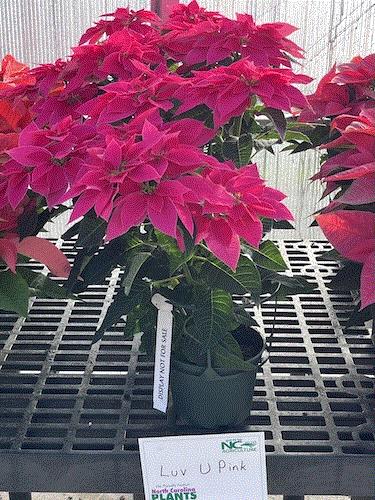
Luv U Pink
Top 5 Novelty
-
Ice Punch
-
Norwin Orange
-
Tapestry
-
Princettia Sparkling Rouge
-
Candy Cane
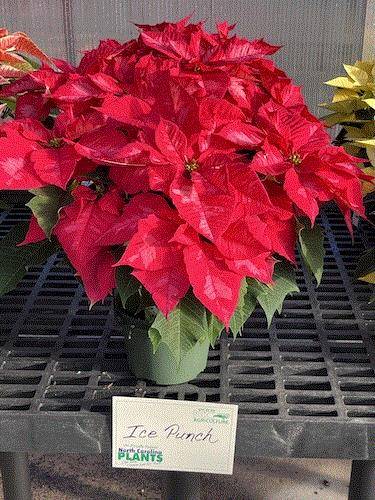
Ice Punch
Mitchell’s also asked voters to choose their very favorite poinsettia in the building. How could they even pick? But they did and here are the top three.
Top 3 Overall
-
Ice Punch
-
Luv U Pink
-
Red Ribbons
“The poinsettia trials are about recognizing the beauty in diversity, finding the joy in participation, and the strength in collective decision-making,” wrote Judy Mitchell in a press release about the trials. “We have learned that when you invite your community to be part of something, magic happens … Each vote is a piece of a larger story that celebrates not just poinsettias, but the people who breed them.”
What a wonderful sentiment, Judy!
Poinsettia Buy-Backs
We have talked about poinsettia buy-back programs here before. But it’s been at least a year—actually, nearly three! As a reminder, poinsettia buy-backs or trade-ins are when you encourage customers to bring in their post-holiday poinsettias in January to receive a discount on a purchase such as a houseplant.
In the piece Jen Polanz wrote in buZZ! nearly three years ago she mentioned the folks at Groovy Plants Ranch have had a trade-in program. I’m curious if others have instituted anything like this, as well. How do you run it? What are your trade-in terms? And do people participate?
Let me know your strategy, if you have one. And I’ll share your methods in buZZ! next week so others can hustle and get a program going for January.
Plantpeddler Floral, Garden & Gift
Back to Jen Zurko’s trip to Iowa for a moment. While out there, she and Paul stopped at Plantpeddler’s new retail location. JZ was kind enough to share what she saw with buZZ!
On the way back to Chicago, Paul and I stopped by Plantpeddler’s new retail location down the street from their greenhouses that just opened in November. They were still putting some finishing touches in the greenhouse and wrapping up construction of the second floor of the main store, but they’re up and running, selling Christmas décor, gifts and accessories, along with a few houseplants and cut flowers.
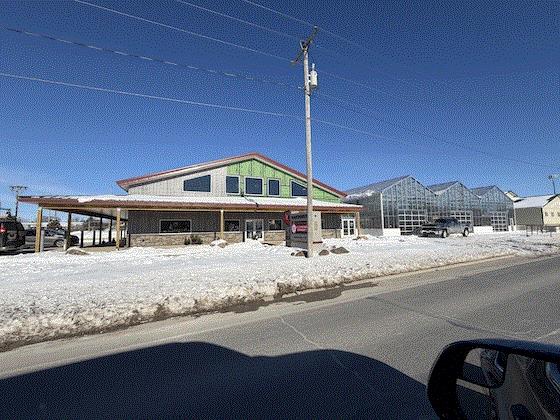
I spoke with Molly Gooder, John’s wife and general manager of the store, about why Plantpeddler wanted to open a retail location—or rather a NEW one. They’ve had a small store across the street for more than 40 years, but the building was outdated and they couldn’t expand. Earlier this year when Mike and John started discussing adding on to the wholesale location, Rachel put her foot down and said, nope—not until we move retail to a new location with a new facility.
So, in April, they broke ground on land that the Gooders already owned that housed a few Quonsets. Once the Westland greenhouse was up and they were able to put out some inventory, they opened November 22, with an official grand opening planned for January or February.

Molly said the store will be about 50% gifts and 50% plants. And although Pinter’s Gardens & Pumpkins is about 20 minutes away and they do sell plants (that they get from Plantpeddler, of course), their primary business is agri-tainment, with a pumpkin patch, apple orchard and on-site bakery. Plantpeddler Floral, Garden & Gift will fill the need for the community to get gift flowers and plants for Mother’s Day and Valentine’s Day, but also for specific events like weddings and funerals.
The home décor and accessories you’ll find at Plantpeddler will cater to a wide demographic (from kid’s toys and books to higher-end apparel) and be a place where families can come to not only buy stuff, but to hang out. Molly said they’ll have a space that serves ice cream and there are plans to put in a coffee bar. She also wants to eventually hold classes and workshops, like “mommy and me” painting classes, to make Plantpeddler Floral, Garden & Gift a destination and a place with something else for local families to do.
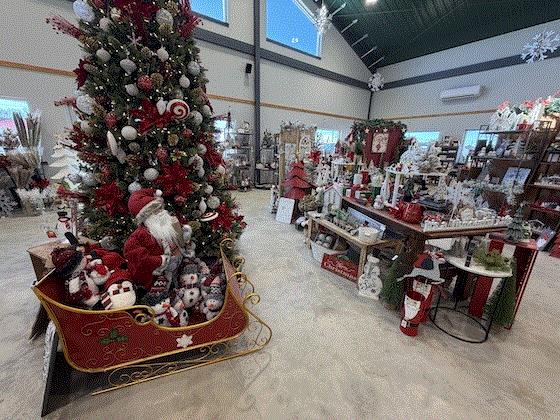
Molly has lots of plans and ideas floating around in her head and this is why the Gooders asked her if she’d be willing to quit her job as a nurse that she’s had for the last 15 years to manage the retail location. They were getting rid of the old for the new, so Mike wanted a fresh perspective and new ideas to go with it. That’s where Molly comes in. Plus, since she’s now officially part of Plantpeddler and not just married-adjacent, she’ll be closer to John on a daily basis to offer him support as he continues to elevate in his family’s business.
Molly admitted she was nervous about completely changing her career path—especially with three young children under the age of 6—but she’s excited for the flexibility and opportunities it will offer her family.
“Having a destination store front is huge for this community,” said Molly. “A lot of people [around here] think Plantpeddler is only a small retail shop—they’ll get to see a whole new side of the business.”
Plantpeddler is creating a “third space” for their community—I love it! Make sure you get yourself a big, comfy couch, Molly. Thanks for the report, JZ!

Two IGC-Related TOD Podcasts
Fellow Ball Publishing colleague Bill Calkins has veered his mainly grower/greenhouse-related Tech On Demand podcast into the garden center lane for the last couple of episodes. And since he and his guests are discussing garden center topics, you should definitely give them both a listen.

What are they about, you ask?
Artificial Intelligence in the Green Industry (Part 2): Bill is joined by two experts from Epicor—a software company delivering comprehensive ERP solutions, as well as CRM tools and a range of supply chain management systems. Kerrie Jordan, Epicor’s chief marketing officer and Sam Kirkland, a national business development strategist, are on the podcast to talk A.I. You have data at your disposal—these folks discuss digitizing it and applying A.I. to use this data even more effectively. A.I. has the capability to assist in all fundamental business processes—from product procurement and cash flow management to employee productivity and customer engagement.
Bill, Kerrie and Sam spent time discussing what exactly A.I. means for green industry businesses including ways A.I. can help personalize businesses to level up the customer experience. Give this one a listen on Spotify and Apple Podcasts.
Part 1 of the AI in the Green Industry series was the one with Clint Albin from A24 Consulting, which I believe I’ve mentioned here before.
Solving Top Tech Challenges for Garden Centers with BloomSuite. Bill sits down with Brands in Blooms co-founders Jeff O’Brien and Jon Morrison. Jeff and John are bringing a new a solution to garden center retailers called BloomSuite. It’s a click-to-edit website platform built specifically for garden centers. The platform also offers an e-commerce component connecting your store to nursery fulfillment partners that ship plants directly to your customers. And if your marketing messages, social media and CRM are disconnected and operating in isolation, BloomSuite also offers a CRM + marketing dashboard to tie it all together. They’ve thought of everything that garden centers could possibly need in this new offering.
Also on the ticket is a discussion about the importance of having a website you’re proud of, why collecting data is only as good as your plan to use it, the high cost (and confusion) of stacking multiple platforms, how e-commerce opens you up to a new customer base and how advanced tech could possibly allow us to be more human in the near future.
Listen to that episode on Spotify and Apple Podcasts. And when you’re done, you’re encouraged to set up a free website audit with the BloomSuite team—schedule your opportunity HERE.
Speaking of Podcasts
A new episode of my own podcast—I Dig Your Story—is ready for your listening pleasure. It’s not a whole episode with a guest or anything but more of a Q&A or a FAQ, answering questions such as what the show is about, who is the show of interest to and who the heck I am. (My sister informed me after listening to the pilot episode with NGB’s Diane Blazek that I had neglected to mention who I was. “I mean, I know who you are, but some other people might not know,” she told me.)
I’m having fun with it! Please listen—it’s 8 minutes of your time with some groovy music at the end. Listen to it on Spotify, Apple Podcasts and Amazon Music (and a few others, too!). New episodes begin on a (mostly) weekly basis in January!
Cabbage Crush
This week my Pinterest pal Gail Pabst from National Garden Bureau sent along the 2026 version of Pinterest Predicts. It’s a visual list of the 21 trends Pinterest sees growing in the new year. And wow, I don’t know who their set designer is but that person is a creative genius.
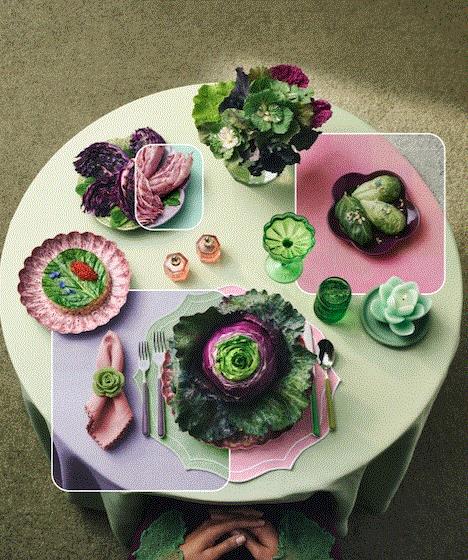
Cabbage really can be beautiful! And delicious.
Anyway, the trend Gail believes is most pertinent to us involved in gardening is called “Cabbage Crush.” It’s exactly that—a renewed interested in that humble mass of tight leaves. Here’s how the Pinterest folks describe Cabbage Crush:
The motto for 2026? Live, laugh, leaf. In the year ahead, Boomers and Gen X will say goodbye to their cauliflower obsession and crown cabbage the new kitchen MVP. Think blistered-edge “steaks,” kimchi cocktails and even crispier taco wraps. It’s crunch time, baby.
They determined cabbage is an up-and-comer based on their research of increased searches for:
-
Cabbage dumplings: up 110%
-
Golumpki soup: up 95%
-
Cabbage alfredo: up 45%
-
Sautéed bok choi: up 35%
-
Fermented cabbage: up 35%
I’d eat most of that. Meanwhile, as for the other trends, I love the Fun Haus aesthetic but am not confident enough to pull the trigger. Others can be relatable to horticulture, too, if you think hard about how to pull it off.
Check all of them out for yourself HERE and let me know which ones you might be able to weave into either horticulture or some retail displays.

AIB Celebrates 25 Years in 2026
America In Bloom has officially opened up registrations for its 2026 program year, which will be its 25th year. The national nonprofit dedicated to helping communities become more vibrant and welcoming through the power of plants has had extraordinary engagement over its quarter century, with nearly 480 communities in 44 states being involved. A key factor in community success is the involvement of local industry professionals.

With national momentum building for the 25th anniversary in 2026, AIB is calling on growers, garden centers, landscape firms and allied green industry businesses to help bring their own communities into the program. “Horticulture professionals understand better than anyone how plants transform places,” said Mason Day, America in Bloom’s President-Elect in a press release. “When industry leaders champion America in Bloom in their own communities, they not only elevate local pride and beautification efforts, they also create business opportunities, strengthen customer relationships, and help communities thrive in measurable ways.”
Participating in AIB is really a win-win. There’s demand for plants and services, positive media exposure, increased visibility, stronger local partnerships with community organizations—and staff get engaged through community service. These are all great things.
And because it’s AIB’s 25th anniversary, festivities will include special anniversary recognition, expanded educational resources, new marketing tools for participants, and the launch of “Gardens Across America,”, a certification program that encourages individuals, businesses and municipalities to plant gardens showcasing local spirit and foster environmental stewardship.
Need more proof that getting involved is worth your effort? Take the case of Castle Rock, Washington. I’m told they are a multi-award winning AIB community that has embraced the America In Bloom program and is thriving because of it. Its storefronts are full, busloads of tourists come through the community to see the beautiful flowers and landscaping and economic development is booming. All of this is nearly 100% growth since participating in AIB. And how did Castle Rock become involved in AIB? I’m told it was at the suggestion of a local nursery—The Plant Station. This is how your garden center can both transform your community and grow your business.
Share this opportunity to participate in America In Bloom with your community’s local leaders. You won’t know how it could possibly transform your community until you try. To learn more and to register your community, visit AmericaInBloom.org.


If you have any questions, comments, suggestions, etc., drop me a line if you'd like at ewells@ballpublishing.com.

Ellen Wells
Senior Editor-at-Large
Green Profit
This week's BuZZ! was sent to 28,755 loyal readers!
If you're interested in advertising on BuZZ! contact Kim Brown ASAP!