In memoriam: Gary Mangum
I am sorry to have to report that Gary Mangum, co-founder and former CEO of Bell Nursery in Maryland and a groundbreaker in the modern mass market plant business, passed away unexpectedly on December 15. He was 69. Visitation will be December 29 from 2-4 p.m. and again from 6-8 p.m. in Chester, Maryland. You can find the details HERE.
Gary was well known for helping develop the in-store service programs that are almost ubiquitous today at big box retailers, and he was a champion of making pay-by-scan work. He focused Bell exclusively on one customer, Home Depot—a move many considered risky, myself included. I once asked him if he was afraid Home Depot would drop him in favor of another grower.
“Chris,” he replied. “I want Bell to be so good that Home Depot will be afraid we will drop THEM!”
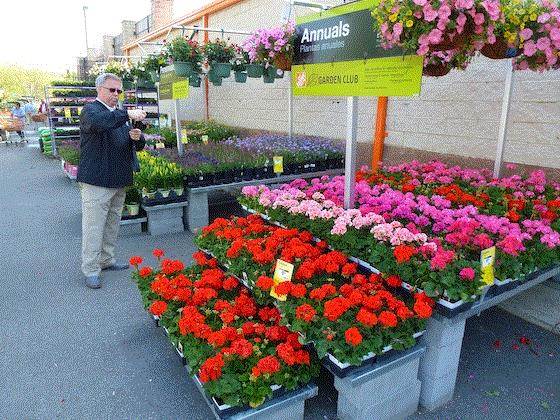
Gary in his element, a Home Depot garden center, circa 2012.
Gary was one of our “Growers Talk Business” writers for 11 years, sharing insights gleaned from his very successful running of Bell Nursery. He would share every detail, believing that a rising tide lifts all boats. He spent many days mentoring other Home Depot growers on his methods … but few, if any, could emulate him. Seeing him in action, I recognized why: While most growers know what to do and how to do it, Gary had a third strength: he knew why to do it. When other growers were dropping product on the sidewalk and slipping away under the radar, Gary was sending Monday morning intelligence emails to the store managers and merchants, telling them exactly what was going on in their stores—good and bad.
And in their stores he was! Almost daily, watching sales, talking to employees, managers, and especially customers, understanding what was moving and why, and making sure more of it was on the way.

Some Gary and Bell history (and my small role)
A multi-generation family business founded in the 1920s, Gary and his business partner Mike McCarthy bought Bell from Gary’s parents in 1994. The business was bedding plants, potted plants and interiorscaping. Gary and Mike put all their eggs in the Home Depot basket in the ’90s—very successfully. They built a network of growers on Maryland’s eastern shore—farmers who needed a cash crop. Gary set them up with greenhouses, head grower Tom Wheeler would teach them how to grow and Mike would coordinate delivery of their output to Home Depot.
In the late 2000s and into the 2010s, they expanded south and west with acquisitions in Virginia, North Carolina and Ohio. In 2018, Gary and Mike sold the business to Central Garden & Pet. Gary semi-retired into a life that included a cannabis business and state politics, helping get Maryland Governor Larry Hogan elected. The former governor even posted his condolences on Facebook, writing:
“There was no kinder or more generous person. Gary had a quiet way of lifting people up, always putting others first and never asking for recognition. He believed deeply in helping people and he lived that belief every single day.”
Absolutely true!
The Bell Nursery story is one I followed almost from the beginning and I like to think I had a hand in it, at least in a very small way.
I'd heard about Gary and Mike from their Ball Seed rep and paid them a visit in 1996. Impressed, I named them one of our inaugural Top Eight Up-and-Coming Growers for 1997. In Gary’s very last “Growers Talk Business” column in June 2018, he cited my coverage, writing, “We were definitely rookies, but that particular article really motivated us internally to live up to the kind words and confidence we received at the time.”
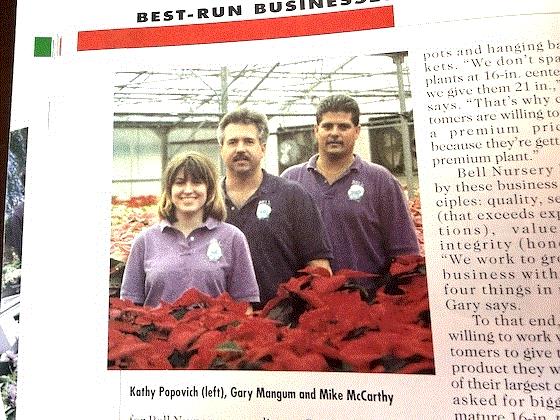
Gary (center) with head grower Kathy Popovich (now Miller) and partner Mike in their first GrowerTalks article.
In the same column, Gary mentioned one of our GrowerExpo conferences from a year or two earlier where he heard Peggy Van de Wetering of Ivy Acres speak about the garden center service program they were developing on Long Island.
Wrote Gary, “That session motivated us to accelerate our focus on the service aspect of the Bell business. We first thought we could help Home Depot get our limited products through their cash registers if we helped consolidate them on the sales tables, then we moved to helping with watering.”

Flying with Gary from Baltimore to visit his stores around Philadelphia.
The rest, of course, is floriculture history: Bell grew into one of the biggest and best wholesale big box growers in the country, copied by many, but rarely matched.
Another time I think I helped Gary: This was the late ’90s and we were having dinner after a visit to his greenhouse. Gary told me he was having trouble finding good bedding plant plugs. I said I’d been hearing good things about a little-known plug grower in West Virginia called Bob’s Market, owned by Bob Barnitz. Gary connected with Bob, was suitably impressed with the quality, service and family values, and in short order Bell became Bob’s biggest customer.
Another dinner, during poinsettia season in the early 2000s, I think (because Gary had a cell phone): At dinner, Gary got a voice message from a chain customer wanting to significantly increase their order—like quadruple it. But they wanted a price break for doing so. Gary listened to it, told me what the buyer wanted, then asked, “Should I do it?”
I thought a bit.
“Have you given them a price break before when they’ve upped their order?”
“No.”
“Do you need this order or can you sell the plants elsewhere?”
“I can sell them to someone else.”
“Then why go down the slippery slope of tying increased orders to lower prices?” I reasoned. “If you do, they’ll always expect a price break when they order more.”
Gary nodded, said “You’re my witness,” took out his phone, called the buyer and said, sorry, we can do the increased quantity, but the price has to stay the same.
He got the order anyway. I think that showed him it’s okay to sometimes say no to a customer.

Metrolina, South Central merge
It’s the first big M&A news in horticulture in quite a while … but also the least dramatic: Metrolina Greenhouses of North Carolina and South Central Growers of Tennessee have agreed to merge into one company. It’s not dramatic because the owners are cousins who’ve worked together for years and share the same important values, culture and business philosophy that have made each company a success on its own.
The merger will be formalized January 1, with the three brothers who own South Central—Alex, Ron and Tim Van Der Hengst—becoming shareholders in Metrolina along with the four VanWingerden brothers—Art, Abe, Michael and Thomas. Each will fill specific rolls within the joint business (listed below). Also, South Central will be renamed Metrolina Greenhouses, Springfield.
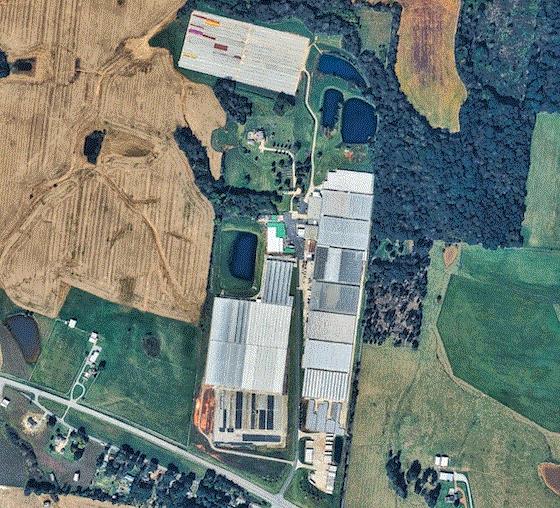
Metrolina has 200 acres of greenhouse in Huntersville, North Carolina, 200 acres of growing space in York, South Carolina (the former Stacy’s Greenhouses); South Central has 25 acres of greenhouse and 17 acres of outdoor space in Springfield, Tennessee. Combined, the business will now serve 1,600 Home Depot, Lowe’s, Walmart and Sam’s Club stores.

Above: Metrolina's 200 acres of greenhouses (plus outdoor space) in North Carolina. Below: South Central Growers. But the merger isn't about physical size, it's about long-term reach, capabilities and service to customers.
My first question in any deal like this is always: “Why?” What’s behind the merger … especially when it’s two family businesses joining forces—something I don’t believe I’ve seen before. In the press release, Abe offers “growth” as the reason:
“At its core, this merger is about growth. Growth allows us to invest more, serve customers better and create more opportunities for our people. This partnership enables us to grow faster and smarter by bringing together two highly aligned teams.”
Via Teams, Abe explained more about that growth, saying it’s not about physical size or rankings in a magazine.
“This is growth that allows us to take our strategy and apply it across more stores,” he explained. “This allows us an additional facility that has growth opportunity from a land standpoint. From a regional standpoint, right now we have folks asking us to ship to areas that we are not comfortable shipping to from Huntersville, North Carolina, or York, South Carolina, but now we can potentially do that from Springfield, Tennessee. So there is a regional play here, too, that really gives us a lot of options.”
“Middle Tennessee is a fast-growing area,” added Alex. “There’s a lot of opportunity for growth at this location.”
And conveniently, Metrolina and South Central’s sales territories are contiguous to each other.
“So this is a natural progression from east to west that that just fits like a glove when you think of those elements of it—logistically, strategy-wise, common customers, common business philosophies,” said Abe.
He added that the deal was not spur-of-the-moment; they’d been working on the details for a couple of years.
“It took some time for us to find the right timing, the right common ground, the right framework to put it together.”
 |
 |
|
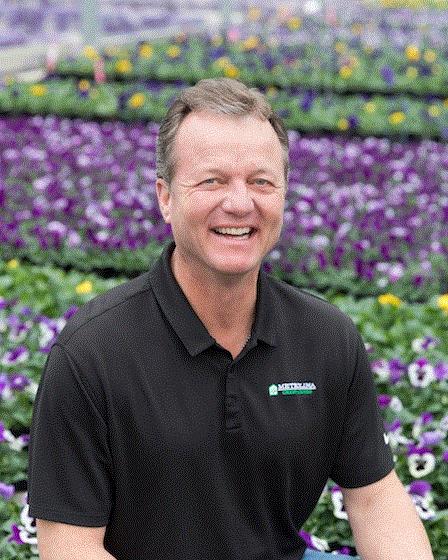
Abe VanWingerden |
Alex Van Der Hengst |
I asked Alex for his reason for doing the deal and becoming part of Metrolina and he explained that as a mid-sized operation, South Central was in a potentially precarious position, at least long-term, because most of the bankruptcies or acquisitions taking place in the last decade or so had happened to businesses of a similar size.
“So we knew we probably would have to do something,” he admitted. “We’re a very healthy company. We’re not concerned about today. I’m not really concerned about tomorrow. But, you know, it would be silly to stick our heads in the sand and pretend that we couldn’t fall victim [to major industry changes or an acquisition] in the future … If we can’t meet our customers’ demands in whatever area—technology, service teams, you know, those kind of things—then we’re not big enough and we’re going to get left behind.”
Bottom line: The deal gives Metrolina the additional scale they need to continue to be able to say “yes” to customer demands, whether it be the geography they cover or the services they offer. And it gives South Central access to the cutting-edge technologies growers need today and in the future to serve the mass market—things like the predictive analytics that tell you how much you sell when it’s 80F and sunny versus 72F and cloudy, and the logistics to get product to all those customers efficiently and effectively.
“To be able to get on board with an organization that is going to be able to be on the forefront of all these new technologies? … I’m not going to lie, that’s pretty exciting, right?” said Alex.

A few more details
I brought up the topic of contract growers, knowing both businesses make heavy use of them, and both Abe and Alex said this will be a positive for them all; in fact, there are only two who don’t already grow for both Metrolina and South Central.
As for responsibilities following the merger:
- Abe will be Chief Executive Officer of Metrolina Greenhouses
- Art VanWingerden will be Chief Operating Officer, Supply Chain, Horticulture and Site Management
- Alex will be Chief Revenue Officer
- Michael VanWingerden will be Chief Operating Officer, Labor and Logistics
- Thomas VanWingerden will be Chief Operating Officer, Operations
- Ron Van Der Hengst will be Chief Operating Officer, Springfield Site
- Tim Van Der Hengst will be Chief Growing Officer, Springfield Site
- The rest of the executive leadership team will remain in their current roles
Speaking of responsibilities, another benefit of the merger is creating a business that’s attractive to the next generation of VanWingerdens and Van der Hengsts.
“Our dads expected us to come work in the greenhouse and we felt obligated to do it,” said Abe. “I probably broke that mold a little bit and didn’t do it right away, but there was always that pressure to do it. (Editor’s note: Abe worked for Proctor & Gamble for eight years before joining the family business). Our kids don’t feel that pressure, and that’s okay. We want them to go off and be successful. We want them to go off and do great things. But we want to create an organization that’s attractive for them to come back and work at and potentially lead one day, with a role just as cool and sexy as a job in New York City or San Francisco or Chicago.”
Alex summed up the deal neatly in this quote from the press release:
“The industry is changing rapidly and consolidation isn’t slowing down. We’re passionate about this business and wanted a path that allows us to continue operating, growing and investing at a higher level. This merger gives us that opportunity while keeping our leadership team deeply involved.
“This is not an exit—it’s an opportunity. By combining leadership, systems and scale, we can grow faster together than either company could independently.”

Happy retirement, Gary Grueber!
Well-known German plantsman Gary Grueber is finally slowing down after more than four decades in product development, plant breeding and sourcing, trialing, introduction and marketing for companies like InnovaPlant, Kientzler, Proven Winners and Cultivaris. He recently announced his retirement from Cultivaris, which he co-founded with Josh Schneider in 2007. Taking over for Gary will be Robert Wacker, his partner of many years at Cultivaris, who's been responsible for sales and finances.

“Garry Grueber is one of the very few individuals in the plant industry that have an intuitive gift for recognizing the potential of truly innovative products and concepts with solid sales potential,” Robert said in the announcement. “Over the years, he has brought joy to many garden enthusiasts—but has also excelled in generating substantial sales and profits for growers around the globe.”
You’ll recognize the names of some of the plants Gary helped bring to market: Euphorbia Diamond Frost, Cleome Señorita Rosalita, Petunia Surfinia and Hydrangea Runaway Bride, which was the Plant of the Year at the 2018 Chelsea Flower Show, plus crops like erysimum, bacopa and scaevola.
I wrote “slowing down” in the beginning because Gary isn't headed off into the sunset just yet. He’ll still offer his services to breeders, growers and the plant trade in general through his own consultancy.
“I could not imagine slamming on the brakes and going from 100 to zero,” he said. “I would very much like to remain active in the green industry, share my accumulated knowledge and experience in a constructive manner—albeit on a rather reduced level moving forward.”
Congrats, Gary! But before you really slow down, we want you to bring a few more cool plants to market.

Beacon delivers charitable donations for 2025
In the spirit of the season, PanAmerican Seed has completed its annual Beacon Impatiens season with the delivery of “Shine the Light” donation checks to two worthy charities: esp Inc., based in Georgia, and Greenfingers Charity in the UK. “Shine the Light” is a program that donates a portion of Beacon Impatiens sales to selected charitable organizations.
The 2025 donation checks were presented at two separate local events to the leadership and supporters of esp Inc. and Greenfingers Charity. Key members of the PanAmerican Seed international teams were also on site to join the festivities.
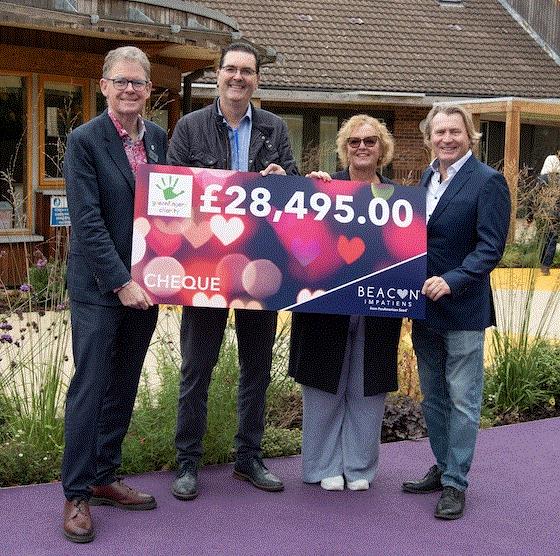
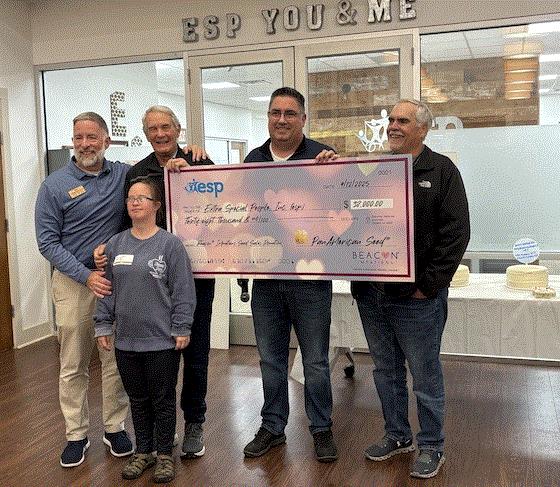
Both of the Beacon Impatiens-supported charities this year create transformative and engaging experiences for the people they assist: Greenfingers Charity, through beautiful hospice gardens dedicated to life-limited children and their families, and esp Inc., through empowering activities and meaningful opportunities for people with disabilities, along with their caregivers.
“It is always a joy to see the impact our Beacon Impatiens collaborations have on the annual charities,” said Sarah Makiejus, Global Marketing Manager for PanAmerican Seed. “Whether it’s colorful flowers in the garden to lift spirits or the team effort it takes to build awareness and raise funds, the PanAmerican Seed family is ready for the challenge and they always deliver!”
Here in the states, esp Inc. was brought to the attention of PanAmerican by Dr. Allan Armitage, professor emeritus of the University of Georgia.
“One of the things we try to do to make life a little better for everybody is plant wonderful color and plant some beautiful things, to make people smile,” Dr. Armitage told Sarah Makiejus at Cultivate’25 in Columbus, Ohio. “But if you're fortunate to work with organizations that also make a difference, life is even better.”
Beacon Impatiens, a series of Impatiens walleriana with proven high resistance to impatiens downy mildew, brings flower-filled enjoyment back to shade gardens everywhere. As part of a dedicated mission to “shine the light,” PanAmerican Seed has committed to donating to a new charity each year. A new charitable partner will be announced soon for the 2026 sales season.

Follow-up to Plantpeddler’s Poinsettia Variety Day news
Last time, Jen Zurko brought us some details from Plantpeddler’s Poinsettia Trials in Cresco, Iowa; what she couldn’t provide by press time, however, was the results of the attendee voting for favorite varieties. That came out a week later.
In a vote unique to Plantpeddler, they once again did a “five-year challenge,” this time among whites—a blind vote (no tags on the varieties) pitting the five top-finishing white varieties from the past five years of Plantpeddler trials. The competitors were Jack Frost, Alaska, Pure White, Alpina and Brilliant White. And the winner in the blind vote? Brilliant White from Selecta!
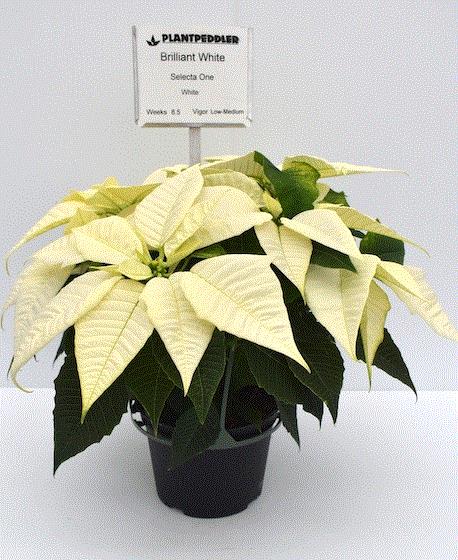
Once again, “non-traditional” novelty varieties ranked at the top of the trial in both the Red and Non-Red categories. This reflects the industry’s drive to keep innovating this holiday classic to stimulate consumer interest and sales. Trial attendees voted using a three-flag system for Best Red Variety and Best Non-Red Variety with a 3, 2, 1 point scoring. The results are as follows:
Red Variety Top 10
Red Ribbons (Dümmen Orange)

Astro Burgundy (Beekenkamp)
FabYULEous Red (Dümmen Orange)
Christmas Royale (Selecta)
Robyn Red (Beekenkamp)
Tapestry (Dümmen Orange)
Timeless Red (InBlume)
Kayla Red (Beekenkamp)
Christmas Morning (Selecta)
Christmas Wish Red (Selecta)
Non-Red Variety Top 10
Ice Punch (Dümmen Orange)

Sky Fantasy (Selecta)
SK274 White (Lazzeri)
Alpina White (Lazzeri)
Qismas White (Graff Breeding)
Superba New Glitter (Lazzeri)
Moni White (Dümmen Orange)
Biancaneve White (Lazzeri)
Christmas Beauty Prince (Selecta)
Plantpeddler also produced a very nice video of the event that includes variety coverage from each breeder and images of all the Top 10 vote getters.

Watch it HERE (Jen and Paul from GrowerTalks even make a very brief cameo or two).

How to make hay on National Poinsettia Day
December 12 went flying by last Friday and I forgot it was National Poinsettia Day! My apologies! But I didn’t have to remind Mike Gooder—he uses the occasion each year to bring horticulture to the attention of lawmakers, educators and other influencers in Plantpeddler’s home state of Iowa.

Recipients included Iowa Governor Kim Reynolds (above), Iowa Secretary of Agriculture Mike Naig, Iowa Senate Majority Leader Mike Klimesh, Iowa State University President Dr. Wendy Wintersteen and Dean of the College of Agriculture Dr. Daniel Robison.
Excellent job taking advantage of the occasion to get the word out about our industry, Mike!
Feed your mites … if they’re good mites! (a tip from Biobest)
Are you feeding your predatory mites? If not, you're likely to be missing a trick, says biological control company Biobest.
They offer a feed product called Nutrimite to improve the establishment, survival and effectiveness of predatory mites. It’s especially important to use the product when pest levels (you know, their food source, along with pollen) are low.
When pest mites and pollen are scarce—early in the season or after pest suppression—Nutrimite fills the gap, keeping hungry mites active and effective.
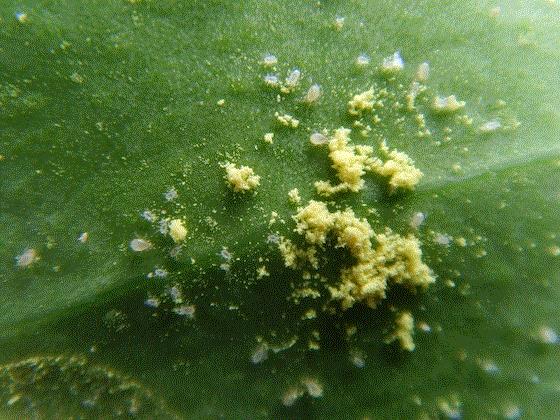
A bug buffet!
Made from specially selected nutrient-rich pollen, Nutrimite is applied during propagation, greenhouse crop establishment or in short-cycle crops to strengthen mite populations. It’s especially in ornamentals such as chrysanthemum, poinsettia, ficus and calathea where mites can be harder to establish.
You apply it every two weeks at the recommended rate using either Biobest’s Entomatic Handheld applicator or a Makita blower adapter. If you use the Entomatic, you can apply predatory mites and Nutrimite simultaneously.
Finally …

You know I used to grow poinsettias in Florida, so they’re definitely a thing down here ... Costa Farms and a few other large growers must do millions between them. But when it’s warm and sunny at Christmas time, you can find your holiday spirit in other plants—like SunPatiens, which offer as festive a mixed planter as any red-and-white poinsettia combo.
They last a whole lot longer in your patio planters, too!
(Makes me wonder: Can you apply Ball Seed's Fantasy Colors plant dye to impatiens? Maybe get some of those cool Confetti colors on a big tub of white ones? Hmmm ...)
Feel free to email me at beytes@growertalks.com if you have ideas, comments or questions.
See you next time!

Chris Beytes
Editor-in-Chief
GrowerTalks & Green Profit
This e-mail received by 30,114 loyal readers!
Thanks to my loyal sponsors, who help me reach the 29,728 readers of Acres Online in more than 60 countries. Want to be one of them (a sponsor, that is)? Give Kim Brown a shout and she will tell you about our many advertising opportunities.