Hoffmann acquires majority interest in Smith Gardens/PP&L
What do Smith Gardens, Oberweis Dairy and the Pittsburgh Penguins have in common? They’re all part of the portfolio of private equity firm Hoffmann Family of Companies, as are some more horticulture names you know, like American Farms, N.G. Heimos Greenhouses, Hoffmann Hillermann Nursery & Florist, Bay Area Herbs & Specialties, Kaleidoscope Floral and Topiary Creations. And now Smith Gardens joins the Hoffmann team. Jen Zurko reports on the details:
A couple of weeks ago, Smith Gardens, a fourth-generation greenhouse operation based in the Pacific Northwest, announced that private equity firm Hoffmann Family of Companies has acquired a majority interest in the business.
 This year, Smith Gardens is celebrating 125 years in the horticulture industry, led by brothers Eric and Mark Smith, with members of the fifth generation already actively involved. Smith Gardens will continue under Eric and Mark’s leadership, as they retain partial ownership and remain in their management roles, guiding the company’s strategic direction.
In a brief phone chat, Eric stressed that it was important that they found the right partner that not only had an established stake in the green industry, but also emulated the same values commonly held in a family-run business. Hoffmann is currently run by its second generation family members, co-CEOs Geoff and Greg Hoffmann, sons of founder and chairman David Hoffmann.
“They understand family businesses, and it was one of the criteria that we felt was really important for the continuity of the business and for our team,” explained Eric. “Having a partner that understands the seasonality of our products and has been in this business for four or five years in other parts of the country gives us confidence that they understand what it takes to be successful in our industry.”
Hoffmann’s portfolio consists of more than 125 global brands that include aviation and transportation, hospitality and entertainment, marketing and real estate. But during the last few years, they’ve become majority investors in a handful of nursery and greenhouse businesses, including some familiar faces, like N.G. Heimos/Millstadt Young Plants and American Farms. The strategic partnership with Smith Gardens expands Hoffmann’s rapidly growing agriculture and horticulture portfolio into a new geographic region, complementing its existing holdings in California, Florida, Illinois, Missouri and Mexico.
Since Eric and Mark bought the business from their parents, Terry and Carolyn, in 2004, Smith Gardens has experienced consistent growth. The company operates five growing facilities across the Pacific Northwest and West Coast totaling 4 million sq. ft., with more than 100 acres of outdoor production in Bellingham, Mount Vernon (after the purchase of the property from Skagit Horticulture in 2024) and Marysville, Washington; and Aurora, Oregon (which includes a 6-acre expansion completed this year), plus their young plant business, Pacific Plug & Liner, in Watsonville, California. Twelve hundred employees help produce annuals and perennials in their growing facilities, and in their merchandising service division.
“We look forward to expanded opportunities for growth and development of our team and our business,” said Eric.

Who are the Hoffmanns?
Despite her persistence, Jen couldn’t get anyone from Hoffmann to go on the record about their purchase of Smith Gardens or any of the other greenhouse businesses. So I thought I’d dig more into this company that has shown a strong interest in horticulture of late.
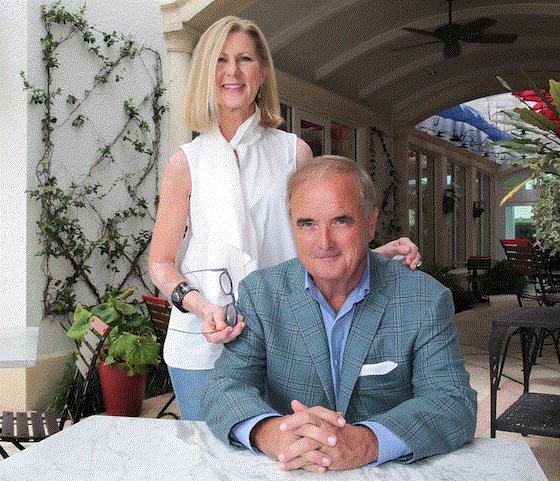
David and Jerri Hoffmann. He’s #1763 on the Forbes Billionaire List. In case you're looking for an investor …
The business was founded by David Hoffmann and his wife, Jerri, in 1989 in Winnetka, Illinois, when David founded DHR International, now DHR Global, the world’s largest privately held international executive search firm. Today, The Hoffmann Family of Companies has ownership in more than 200 brands with 400-plus locations in 30 countries. It’s a privately held family investment business, which makes numbers hard to find, but they claim more than $1 billion in real estate assets. And the recent Pittsburgh Penguins purchase was worth a reported $1.7 billion. (David has also expressed interest in purchasing the St. Louis Cardinals baseball team—which is not for sale, say the current owners.)
So why greenhouses? Without the Hoffmanns telling us, we can only speculate. Their website says they look for:
- Strong businesses, properties and leaders—all with the potential to grow and improve. That describes the nursery operations they’ve acquired so far—all quality businesses with proven, well-respected owners and managers.
- Family-oriented interests and values that align with ours. Ditto. In fact, it's the trait that most attracts greenhouse businesses to Hoffmann over other venture capital or private equity.
- Opportunities for sustained investment and improvement, guided by a long-view philosophy of a 10-plus year hold. Good, because you don’t get rich quick in this industry. Sometimes you don’t get rich slow, either. They're going on four years as owner of some of these nursery businesses.
- Hands-on leadership focused on protecting a name, strengthening a brand and carrying forward a legacy. In each case I’m familiar with, the owners want their family business to continue on after them. And so far, we’ve seen no effort by Hoffmann to change or water down these family brands.
- Owners who seek involvement, want a stake in the future and are eager to lead their teams to new heights. In each case, the current ownership and/or management remain in place to run the business. We see no indication that Mr. Hoffmann wants to learn how to grow bedding plants.
In addition, these acquisitions come with considerable real estate. And the Hoffmanns seem focused on small local and regional businesses, like minor-league sports teams, golf courses, wineries, local publishers and tourist attractions (Everglades airboat rides, anyone?) that are good for a local economy. Greenhouses fit that description.
All seem like good reasons to make long-term investments in the greenhouse industry.

My podcast, featuring Zoltan Kovacs
After a brief holiday and travel hiatus, The Chris Beytes Podcast is back, this time with Zoltan Kovacs, who's become a bit of a star in the perennial world. A Perennial Product Specialist at ThinkPlants and our 2008 Young Grower Award winner, Zoltan came to the U.S. from Hungary in 1995 speaking just a couple of words of English. Now, in the world of perennials, he knows everybody and everybody knows him.

In this engaging conversation, Zoltan shares his journey in the horticulture industry, reflecting on his career progression, insights into perennial breeding and the cultural transition from Hungary to the U.S. He emphasizes the importance of building relationships in the industry, offers advice for young growers and discusses his personal interests, including a passion for vintage cars and motorcycles. Zoltan’s experiences highlight the evolving landscape of horticulture and the significance of quality of life in one’s career.
Watch or listen on YouTube HERE.
And check out my other Young Grower podcasts on my playlist HERE. More will be coming each week.

The Hottest New Perennials of 2026 (a free livestream)

My next webinar … er, livestream, will be Thursday, March 12 at 1:00 p.m. Eastern on the topic of 15 of the hottest new perennials coming from Proven Winners and Walters Gardens for 2026.
My guest expert will be Walters’ Regional Product Manager Laura Robles, a veteran of my livestreams and the perfect person to deliver practical insights, best practices and growing tips to help optimize plant performance and elevate your perennial program. Be sure to bring your perennial questions!
As a bonus, Laura will give you a sneak peek at 15 standout perennials Walters is planning to introduce for 2027.
Sign up HERE! I'll bet you Zoltan will be there!
Speaking of Proven Winners … Veggies are back!
Proven Winners launched a vegetable program called Proven Harvest in 2018, starting with a couple of nice tomatoes and a basil. But the program was “mothballed” after COVID, Kevin Hurd, Senior VP of Product Development, told me in a 2024 interview when I asked why we hadn't seen much of it. But now Proven Harvest by Proven Winners is back, thanks to a partnership with Pure Line Seeds.
I’m not familiar with Pure Line, but according to their website, the Warden, Washington, seed company dates back to 1948 and specializes in vegetable varieties for processing and the fresh produce market. They’ve got a certified organic line and they represent PRUDAC's dwarf vegetables, which I've covered at the California Spring Trials over many years.
As the exclusive licensee for the Proven Harvest by Proven Winners brand in North America, Pure Line Seeds will be developing a grower network to produce two collections of garden and patio vegetables, with the goal of beginning consumer sales in 2027.
The initial rollout will include two collections of vegetable and herb plants. The Garden Grown collection will include traditional varieties with improved plant performance and nutritional benefits for in-ground planting. Options will include garden classics like tomatoes, peppers, eggplants, beans, cucumbers, broccoli and squash. The Petite Patio collection will be made up of dwarf varieties for containers, raised beds and even hanging baskets, including tomatoes, peppers, beans, basil, broccoli, mini melons, cauliflower and more (we can assume many of these are coming from PRUDAC).
“We’re excited to expand our footprint in the garden center once again and continue working on our strategy of being the broadest and most complete garden brand,” said Kevin in the press release about the launch. “With the addition of Proven Harvest, we’re able to offer consumers a single trusted source for all major plant categories. We’ve always been impressed with Pure Line, the way they conduct business and their professionalism. They bring a lot of value to the Proven Winners brand.”
“This is just a little scratch on the surface of what we can provide,” said Kirsten DeLong, Pure Line Seeds manager of product development. “That’s going to be the fun part—working with growers to see what else we can do. We’re really trying to hit Proven Winners’ strengths of bringing a high-quality branded product to market.”
A grower network is being developed to supply Proven Harvest by Proven Winners plants to retail garden centers, initially including both Proven Winners Carleton (formerly Four Star Greenhouse) and Proven Winners Loudon (formerly Pleasant View Gardens). The rollout will begin with a strong selection of vegetable and herbs, and Pure Line Seeds will work to add varieties in coming years. (Interested in being a supplier? Contact Pure Line Seeds at (920) 342-8981.)
Like all Proven Winners plants, Proven Harvest plants will require Proven Winners branded containers and tags.

Lloyd’s fig is an award-winner
Here’s a new variety news story I missed at IPM Essen: A fig called Fignomenal (clever!) bred by our friend Lloyd Traven, proprietor of Peace Tree Farm in Pennsylvania, has earned one of IPM’s Novelty Showcase awards—one of just eight varieties so recognized this year. Fignomenal Fig was recognized in the woody ornamental category, drawing global attention to its distinctive qualities and market potential.
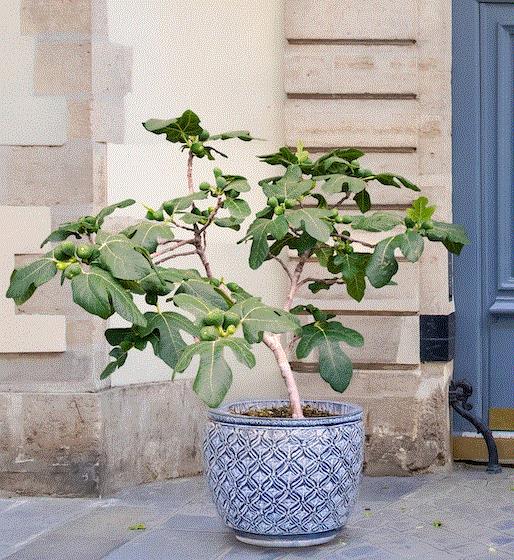
Lloyd recalls discovering a mutated branch on one of the Chicago Hardy fig plants in his production that was markedly different in habit and fruit production.
“Darker, really short internodes and heavily laden with fruit very early,” he told me via email. “I thought it was a witches’ broom at first. From a dormant plant in April, the first matured container had over 100 figs at Cultivate and they all ripen in the north.”
That was seven years ago; he patented the variety in 2023 after growing plants on to maturity and testing it in tissue culture.
Fignomenal is a truly compact fig tree that meets the needs of modern gardens and urban areas. It’s perfect for small gardens, patios, balconies and even indoor planters, maintaining a neat, manageable size while delivering loads of medium-sized figs with deep brown skin and sweet, pink red flesh. Self-fertile and highly productive, Fignomenal requires only a single plant to produce fruit and is capable of year-round production under suitable conditions.
Lloyd suggests keeping it in a container—he still has his first plant in a 10-in. container after five years and it's just 36-in. tall and wide with dense branching. He said the biggest maintenance issue is harvesting all the fruit!
For a list of TC, URC, young plant and finished growers, click HERE.
The Fignomenal logo—the “Fig Gnome”—was designed by Lloyd’s son, Abe, a tattoo artist. Lloyd said he will NOT be getting a Fignomenal tattoo in celebration of his win, explaining, "My body is a temple."

Happy 50 to “the biggest little greenhouse in Texas”
That’s the nickname of Steve’s Leaves, which is celebrating 50 years in 2026. Steve Rosenbaum founded the quirky business (which boasts more than 1,000 plant varieties) in 1976 at age 18. However, he really got his start in hort with terrariums at age 13, so he’s done this most of his life. After starting out from the trunk of his car, then moving into leased space, Steve eventually consolidated his business on 4 acres just outside of Dallas, Texas.
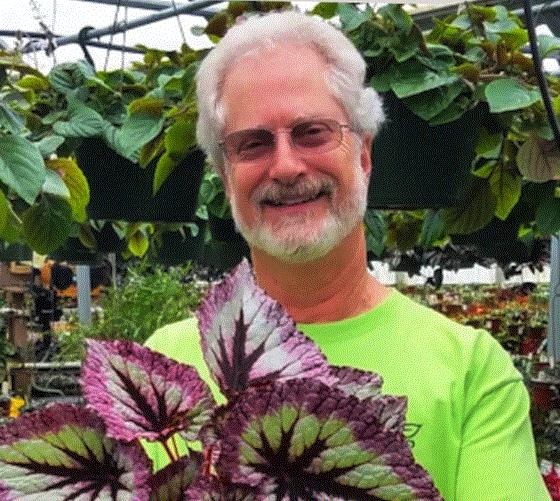
When Steve emailed to tell me of the milestone, I asked if he had any specific memories, good or bad, from the last 50 years. His answer tells of one long adventure:
“The first thing that comes to mind is how often I had to pivot to stay in business. Started out selling to nurseries and a few florists. Then my supermarket phase had me learning how to import custom baskets and decorate plants. That also introduced me to mafia-like practices with some of the chains.
“When the supermarket chains eliminated their foliage walls, suddenly I was on the brink of bankruptcy (this was in the late 1990s). Home Depot saved me from that fate. I sold to them for over 20 years. Then Pay By Scan almost put me under, but I learned how to make a profit under PBS.
“When the pandemic hit, suddenly all of the rare plants that I grew became much more valuable. That’s when I went 100% online and direct to consumers. It was difficult calling buyers I had spent many years cultivating relationships with and telling them I was no longer going to supply them with plants. Lots of other memories as well.”
That does about sum up the evolution of the floriculture business since 1976, Steve! Congrats … and should I wish you 50 more? Or did the first 50 wear you out?

Finally …
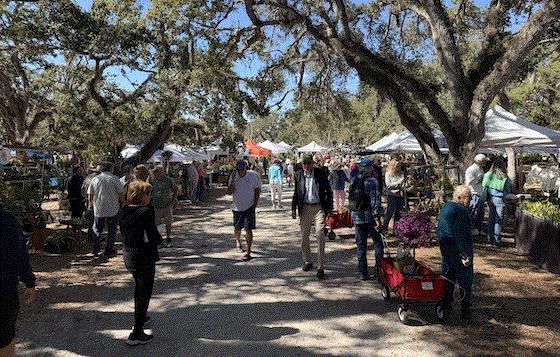
While the rest of the world was making sliders and wings for the Super Bowl, avid plant enthusiasts were descending on Riverside Park in Vero Beach, Florida, for Gardenfest, hosted every February by the Garden Club of Indian River County.
This was the 24th year for the outdoor plant market and our first. We had to drive and hour and a half south and east to attend, but after the hard freeze and resulting brown landscape, it was worth it to see some tropical color and maybe pick up a few things for the pool deck (we won’t replace any landscape plants until we see what died and what survived). The setting under the sprawling live oaks just minutes from the Atlantic was the icing on the cake.
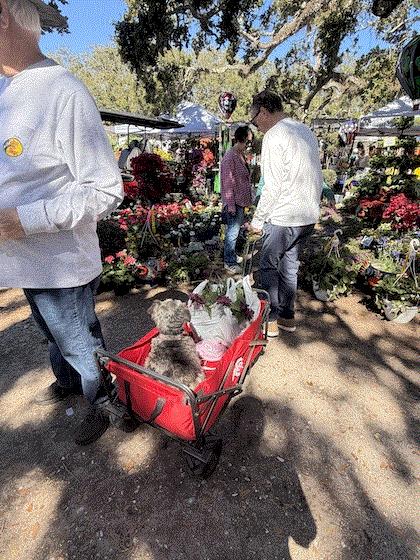
I’ll say it again: I LOVE to see people excitedly shopping for plants on a sunny day. And even in Florida, gardeners act as though they’ve been cooped up inside for six months. Like other Florida shows we’ve attended since moving back here, wagons for carrying your plant haul (and your kids and dogs) are a requirement—we even brought ours, and wound up filling it with bromeliads and orchids.
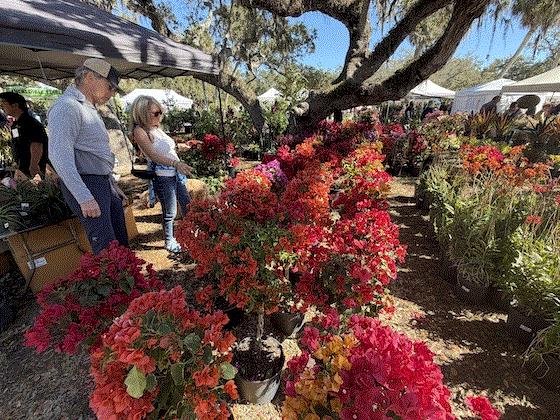
I overheard this fellow exclaim to the woman he was with, "These look like azaleas? Are they? They're bougainvilleas? They are? They are SPECTACULAR!"
I asked some of the vendors about conditions in east central Florida during the freeze; they said temperatures there dropped to the mid-20s F. Yikes! One of our favorite retailers, Valkaria Gardens, which I wrote about last March, suffered 60% damage to their gorgeous tropical landscape. McKee Botanical Gardens, formerly McKee Jungle Gardens when I was a kid, wasn’t hurt too badly, except the tops of some trees. They have enough dense overhead cover and lots of water to create a microclimate that protected the plants. I’ll be visiting both in the coming weeks to see for myself.


Feel free to email me at beytes@growertalks.com if you have ideas, comments or questions.
See you next time!

Chris Beytes
Editor-in-Chief
GrowerTalks & Green Profit
This e-mail received by 31,270 loyal readers!
Thanks to my loyal sponsors, who help me reach the 29,728 readers of Acres Online in more than 60 countries. Want to be one of them (a sponsor, that is)? Give Kim Brown a shout and she will tell you about our many advertising opportunities.