Continuing the BFG fall-out news: Arett grows
Griffin isn’t the only distributor picking up valuable assets from the remains of BFG. Fourth-generation Arett Sales Corporation of Pennsauken, New Jersey, has done the same, adding two former BFG staffers to manage their new Pacific Northwest Distribution Center.
Now this Tacoma, Washington, location is NOT a former BFG site (that one, in nearby Fife, was grabbed by Griffin). But Arett did attract former BFG staffers Scot Atkin and Darryl Hair to manage a new Tacoma warehouse, which covers 115,000 sq. ft. Scot and Darryl each bring more than 20 years of experience in horticultural distribution. They’ll begin stocking it in December and shipping from it in January. So it looks like you growers and retailers in the Pacific Northwest will be well-served by horticultural distributors.
Arett has also announced that they’re planning to expand into Southern California. The first mention came in September, when they said they'd identified facilities “that align with the company’s operational and distribution requirements." Still no mention of what that location will be, but Arett has hired Ricardo Soriano, previous manager of BFG’s San Bernardino distribution facility, which BFG acquired from L&L Nursery in 2021. Ricardo has more than 15 years experience at the San Bernadino distribution center.
“Having Scot and Darryl leading our Tacoma operation, and Ricardo leading our expansion into Southern California, is a tremendous advantage,” said company president Noah Chesbrough. “Their experience allows us to accelerate our expansion while maintaining the relationships and service standards that are so important to our business.”
Arett doesn't say if they're working to acquire that location or will be leasing something else in the area; they only state “additional details of Arett’s Southern California expansion will be announced soon.”
Lastly in Arett news, they’ve announced a West Coast Trade Show, slated for September 28-30, 2027, in Reno, Nevada. It'll join their regular East Coast Open House, scheduled for September 15-16, 2027, in Atlantic City, New Jersey.

It’s official: We’ve got ourselves a Super El Niño
Why do things halfway and have a regular El Niño when you can put in some extra effort and give the folks a Super El Niño? That’s what the Pacific Ocean must have been thinking when it raised its temperature by more than 2 degrees C (3.6 degrees F) above the long-term average—climbing from a 30-year average of 80.2F up to 85.8F. The result? Our usual weather patterns get disrupted, so warm places become cool, wet places become dry, and so on.
I was curious what causes the whole phenomenon, so I asked ChatGPT to educate me.
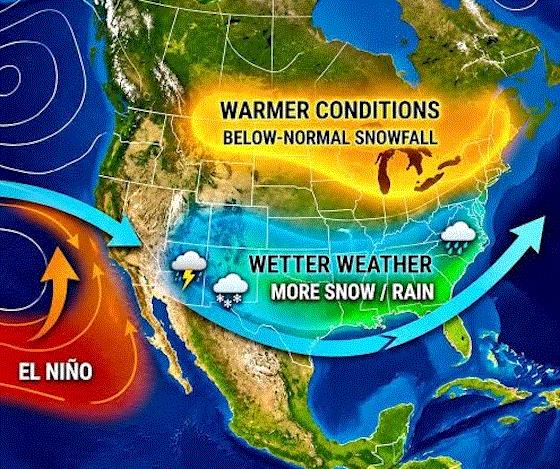
It seems there are normal trade winds that blow across the tropical Pacific from east to west, pushing the warm surface waters toward Indonesia and Australia, allowing colder, deeper waters to rise near South America. This circulation keeps the ocean temperatures moderated.
But once in a while, and for reasons that aren't understood, the trade winds weaken, allowing warm Pacific water to move eastward, which allows less cool water from South America to rise. The waters in the central and eastern Pacific get warmer, and that’s what affects the weather patterns across North America.
What can we expect? Despite the doomsayers, it’s a mix of good and bad:
- A warmer-than-normal winter in much of North America. That could mean lower greenhouse heating costs, fewer cold-weather disruptions and an earlier start to spring.
- The Southern U.S. could see wetter conditions, with potential flooding, saturated fields and increased disease pressure.
- The Western U.S. and Canada could potentially see warmer, drier conditions, reduced snowpack and greater water concerns heading into summer.
- Midwest and Northeast could have milder winter conditions, potentially extending the growing and landscape installation seasons.
- Continued suppression of hurricane activity in the Atlantic and Gulf.
Here’s a little table ChatGPT made me:
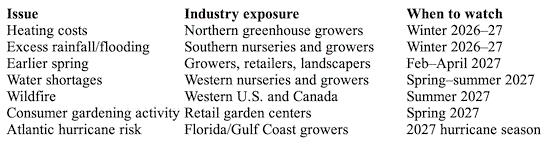
To sum up, you might save on heating this winter, some of you will benefit from improved moisture and retailers might see an early spring. But regional differences in rainfall, water availability and late freezes could create some significant headaches. In other words, spring in the plant business!

Garden mums: Up, down or sideways?
Last time, I gave a quick summary of my annual Fall River Ridge Report, which included the news that fall flower consumption was down considerably in my old neighborhood—from 43% of those who decorate for fall down to 32%. And since most of the fall flowers I see year after year are mums, I chalk it up to a decline in mum purchases. But why? Warm weather keeping the summer annuals looking good (it was a mild fall this year in Chicagoland, I'm told)? Folks bored with them? High gas or beef prices? I asked how mums are selling in your neck of the words and a few of you weighed in.
Duane Weaver of Milmont Greenhouse in Virginia, wrote: “We are seeing a multi-year downward trend across all customer segments in fall mums. We are offsetting with other fall plants (asters, marigolds, combo hanging baskets and planters, pumpkins, ornamental peppers, kale, etc.), but nothing else is big enough to make up for the decline in mum volume.”
Brian Martin of The Little Red Wagon in Maryland wrote: “I read your article with fascination. You are finally putting into words what we are feeling. I’ve just had the gut feeling that over the last several years people are losing their enthusiasm for mums! Not sure why or what. This year was softer than ever, and we blamed oversupply, high costs of commodities like fuel and food, and folks just getting a little tired of the hassle of fall mums. And, yes, the beautiful dry fall! Lots of flowers still blooming late this year. The enthusiasm of 10 years ago seems to have decreased; maybe it is just our perception. We have made the decision to decrease our numbers a bit for next year. We were able to hold steady with the spring plants. We are just a small roadside stand—we grow our own and retail most of them here and have been doing this for 10 years. We may be just an outlier and too small for your records, but just thought I’d chime in.”
Brian, nobody is too small to chime in to Acres Online! Your observations count as much as the next fellow’s!

Abe, on the mum season (plus some geraniums talk)
Not to knock Brian’s observations above, but this next fellow’s musings might carry a tad more weight, seeing how they summarize fall sales across 19 states and 1,600 stores.
Abe Van Wingerden of Metrolina Greenhouses in Huntersville, North Carolina, generously shares his view of the 2027 mum season:
It was a down year on mums this year for sure, but it was a lot worse until we had a strong late run to rescue some of the lost early mum sales. Down 6% to 8% overall. Five reasons (in order of impact from highest to lowest) is driving this decline in 2026:
1a) Mums sales are down because it was above 90F most every weekend in September in the South/Mid-Atlantic/Southwest. It was also very hot even into Midwest and Northeast states. Very rare vs. last year especially, and rare vs. other years (September was hotter than usual, I mean—August is always hot—but we don't plan mums for August anymore anyway). August is way too early, but September should be prime mum season in the Mid-Atlantic areas.
1b) It was cooler EARLY last year as an anomaly (Labor Day 2025 was in the high 70s in most East Coast markets), so a little bit of this in the base period was high, as 2025 was a strong year in the East on mums.
2) After weather, the next biggest impact is the improvement and expansion of better fall annual and perennial genetics. We are seeing consumers spend the same/more in fall every year, but there are now more options than just mums. Net, sales are still decent overall, but they are not being driven by mums. But it is not the normal snaps/dianthus/kale/dusty miller/early pansies that used to be the mix for fall sales. There’s not much product innovation in those areas. It is now SuperCals, coleus, celosia, sunflower, plectranthus and marigolds on the annual side in August/early September and perennials are being driving by echinacea, asters, rudbeckia and sedum, as well as fall grasses.

3) After non-mum fall genetics being better and finding more uses for them in the fall, it is also BETTER genetics carrying over those summer gardens much longer. General genetic improvements/selections like SunPatiens have consumers seeing their late spring/early summer gardens last much longer.
Those three things are driving mum consumption this year and in that order.
A fourth reason is the economy/election year/etc., but that is not as much of an impact as the first three reasons except it reduces store traffic for larger purchases (big repair/remodel projects are down) and hurts impulse sales when fewer people are hitting the stores overall (our product is still very impulsive). Additionally, fewer growers and retailers are pushing mums early, so the mum season has shortened a bit.
A fifth rationale is while we have seen some solid color innovation in mums and we have seen better mixed options in mums (mixing three colors together), we have not seen any dramatic garden performance change in 20 years on mums, so consumers see the same results year over year while there are other options out there.
This is the same as the geranium discussion in spring we have had for years. Why are geraniums down, yet overall spring sales continue to go up? Net, there are better options for consumers is the No. 1 reason (tons of innovation in other items besides geraniums) and lack of consistent innovation in geraniums outside of Calliope to keep it ahead of other plants that continue to improve/perform.
Innovation (both product and packaging) in any industry drives growth over the long-term and that is our mantra here. Everything else becomes an excuse as to why sales were down 1% to 2% a year verses seeing they are down 10% over five years—in other words, doing the same thing every year and expecting better results. You know—the definition of insanity.

And yet October retail sales were good!
So say retailers in both the U.S. and the UK.
According to Danny Summers at the Garden Center Group, their members saw double-digit sales gains for Weeks 41 through 44—all of October, in other words. The categories that were most up were Shrubs, Trees, Landscape non-plant goods, Perennials and then finally Annuals (into which garden mums fall).
Across the pond, the Horticultural Trades Association’s (HTA) monthly Market Update shows that garden center sales increased by 10% in October 2026 compared to the previous year and 19% above October 2024 levels—two good Octobers in a row! And that's in the face of an 11-point drop in consumer confidence for October—the second-largest decline since the Brexit vote in 2016.
Every garden product category grew against both previous years, with plant care sales up 21%, hardy plants up 18%, and outdoor containers and garden furniture both up 13%. Bedding sales also rose by 5%.
HTA credits the relatively mild, sunny conditions during the first half of October for helping extend the gardening season.
Fran Barnes, Chief Executive of the HTA, said: “October’s figures show that people are continuing to make time for their gardens, even as confidence in the wider economy has weakened. Customer transactions were up 7% on last year and 11% compared with 2024, with garden/gardening sales up 9% by volume, showing that people are still keen to get out into their gardens as autumn kicks in.”
However, garden centers in the UK face the same challenges we do here: rising labor, fuel and supply costs, which eat up much of the gains.
“We continue to call on the government to provide greater certainty and a supportive operating environment if [garden centers] are to invest, employ people and continue contributing to their local economies,” stated Fran.
The HTA represents about 1,400 businesses across the UK environmental horticulture sector, including garden centers, growers, retailers, landscapers and manufacturers.

Happy 200th to PHS!
Can you believe the Pennsylvania Horticultural Society (PHS) will be 200 years old in 2027? I don’t know if any horticultural entity can come close to claiming that sort of longevity. Naturally, they’re planning a year-long celebration of the milestone, which includes a brand freshening and website update that reflects the organization’s evolution “and its enduring commitment to improving lives through gardening.”
That means the organization was founded in 1827 when there were just 24 states, John Quincy Adams was president and the American industrial revolution was just getting underway. Back then, horticulture was still an emerging science, but an important one.
The Horticultural Society of London (later the RHS) was founded in 1804 and the Agri-Horticultural Society of India was founded in 1820 in Calcutta. The 53 gentlemen of Philly who proposed their own society did so to keep America on par with those other countries in the advancements of horticultural science, as well as encouraging the appreciation and beautification of Philadelphia and the region.
The yearlong celebration will feature special events and programming that highlight PHS’s history and lasting contributions, while creating opportunities for the public to participate in its next chapter.
The new brand, developed in collaboration with Philadelphia-based creative studio Smith & Diction, draws inspiration from the natural world while reflecting PHS’s evolving role as a horticultural institution. At its center is a redesigned PHS wordmark featuring three plants growing from its letters, creating a more immediate visual connection between PHS and the gardening at the heart of its mission. Subtle references to Philadelphia's street grid help ground the design in the city where PHS was founded. Beyond the wordmark, the new visual system introduces an expanded garden-inspired color palette and hand-drawn botanical illustrations that reflect the wide diversity of PHS's programs and the evolution of its work since 1827.
To strengthen PHS’s visibility and public engagement, the organization has also launched a redesigned website that makes it easier for audiences to explore PHS' work and find ways to get involved, including volunteering, membership and donating.

Can anyone else claim 200 years?
Two hundred years in business is quite the milestone and it got me to wondering: What other U.S. horticultural entities, if any, are still in operation after 200 years? Again, AI to the rescue (although I always double check its work).
I’ve found one that beats them all (with an asterisk): D. Landreth Seed Company, founded in Philadelphia in 1784—43 years before PHS. Landreth is also generally recognized as America’s first commercial seed company, with a customer list that included George Washington and Thomas Jefferson. And David Landreth Jr. was one of the 53 founders of PHS.
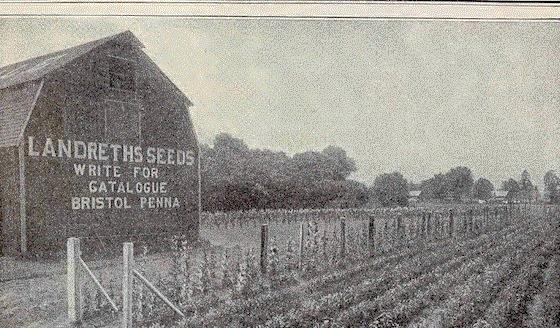
I give Landreth an asterisk because the family sold the business in 1942 and it changed hands several times, finally being auctioned off in 2016 and purchased by American Meadows, a wildflower, packet seed and bulb brand.
And let’s not forget Joseph Breck and Co., founded in 1818 and still continuing today, selling Dutch bulbs, perennials, and other flowers and garden gifts. They also get an asterisk because the fifth generation sold the business in1972 and that buyer (mail order firm Foster & Gallagher) went bankrupt in 2001, and Gardens Alive acquired Breck (and several other horticulture brands).
Did I miss someone? Let me know HERE.

A free hort education opportunity!
The DuPage Horticulture School was operated by Ball Horticultural Company from 1963 to 1988, and many of the hundreds of graduates of the program went on to found or run well-known businesses. They speak fondly of their experiences at the school even today!
Well, nearby College of DuPage in Glen Ellyn, Illinois, which has long run a solid horticultural associates degree program, wants to bring back the DuPage Hort School model by offering a special apprenticeship program that will give students hands-on, real-world experience as part of the education.
The new DuPage Horticulture Apprenticeship Program is a two-year course comprised of four semesters of in-class education during the summer and fall (totaling 64 credit hours) at College of DuPage, and on-site paid work experience at a participating greenhouse operation during two peak spring seasons. Students who complete the course will earn an associate’s degree in applied science in Horticulture, along with certificates in Horticulture and Greenhouse Management.
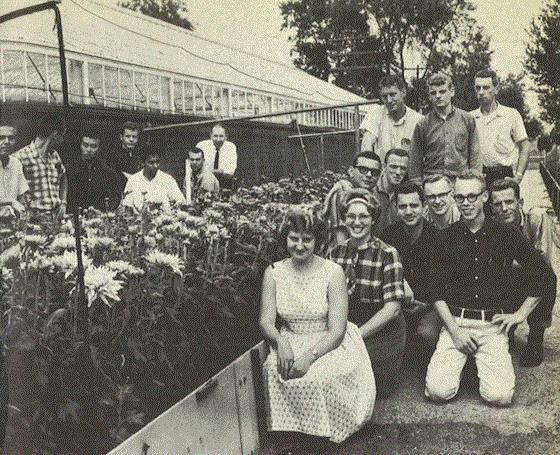
DuPage Hort School, circa 1963. College of DuPage wants to resurrect its apprenticeship model.
With the cost of higher education continuing to increase, the good news is that this program will be FREE for the 16 students chosen by the selection panel—made possible by generous contributions of industry professionals. The only thing the students will have to worry about is transportation, food and housing on the College of DuPage campus. (Resources to find housing will be provided.) During the spring apprenticeship on location, the greenhouse and nursery businesses participating in this program will provide housing, paid employment and mentorship.
“A lot of students are struggling to pay for tuition, books and fees, so this is a great opportunity for them to get a two-year degree basically paid for by the industry,” said Brian Clement, department chair and professor of horticulture at College of DuPage. “This program is based off of the old DuPage Horticulture School model, which a lot of people in the industry are familiar with, and we're trying to bring that model back.”
Dr. Nathan Jahnke, culture research manager for Ball and one of the industry members involved with this program, said that horticulture college programs typically require classes during the spring—the best time to earn experience. And it’s challenging to find work in a greenhouse during the summer after the peak season. This apprenticeship program helps students work around that.
“It’s challenging to find experienced labor with a strong education,” said Nathan. “The combination of the two strengthens our talent pipeline, ensuring we can continue to grow as an industry and provide consumers with impactful products.”
Available to students in the U.S. and Canada, the College of DuPage is accepting applications now through December 4 for the Summer and Fall 2027 semesters. And there are only 16 spots, so if you or someone you know will be graduating from high school in May or have one to three years of greenhouse experience and want to pursue a career in horticulture, apply today!
CLICK HERE for more information or to apply. You can also call Brian Clement direct (630-942-2526) or email him HERE.
And if you are interested in supporting this program with a financial donation or by participating as an apprenticeship host location, email Nathan Jahnke HERE.

Altman Plants helps create local garden
I appreciate the power of a good public garden. I can’t help but think many of you who make your livelihood from horticulture may have first been exposed to plants on a trip to a flower-filled public space. So I applaud Altman Plants and their staff for helping create a new Magical Ponytail Palm Maze at Alta Vista Botanical Gardens in Vista, California. The addition to the gardens opened Friday, October 30.

The Magical Ponytail Palm Maze is home to more than 250 plants, including dozens of its namesake ponytail palms, installed and maintained by Altman Plants team members. The ponytail palm (Beaucarnea recurvata) is a tree-sized succulent beloved for its thick, elephantine trunk and hairdo-like long foliage. Naomi Stein, the vice president of the botanical gardens, designed the maze. Naomi’s vision called for nine whimsically shaped mounds, each containing anywhere from a handful to nearly 20 plants.
Slopes rising from the maze are filled with flowering shrubs, succulents, bedding plants, palms, trees and other vegetation. All the colorful blooms attract pollinators such as hummingbirds and butterflies. Even more plants adorn the tiered retaining wall. The entrance to the maze is lined with a 32-plant privet hedge. Altman Plants donated all the plants, materials and labor for the garden.
Plants are not the only residents of the garden—two giant unicorns, created by Southern California metal sculpture artist Ricardo Breceda, protect a rainbow-colored footbridge built by local resident and friend of the gardens Ken Abernathy.
“Vista has been our home for decades and so much of who we are as a company grew right here," said Justin Dautoff, Altman Plants’ VP of marketing and business development. “Our team poured their hearts into every mound of this maze and we hope it becomes a place where families slow down, explore and discover a passion for plants that lasts a lifetime.”

Finally …
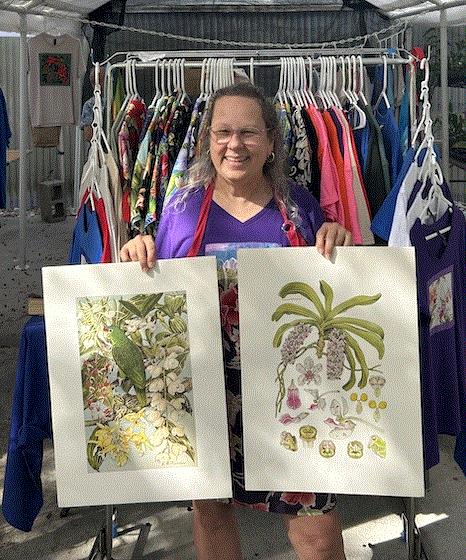
Marian Sheehan with a pair of orchid prints. The one on the right was done by her mom.
Here's a blast from my past: Meet Marian Sheehan, daughter of Dr. Thomas and Marion Ruff Sheehan, a couple who could well be considered royalty in the orchid world. Marian, a Gainesville, Florida, resident (in her folks old home), is continuing the tradition, selling “orchidabilia” at a half dozen or so garden and flower shows across the country. My wife, Laurie, ran into her at the Apopka International Fall Orchid Festival a few weeks ago and took this photo, which prompted a flood of memories.
You see, Marian’s mom was a world-famous orchid illustrator who worked for many years for the American Orchid Society, providing illustrations for their monthly publication. She also taught botanical art and floristry at UF. Marian's dad, Dr. Tom Sheehan, was a University of Florida professor known worldwide for his research and writings about orchids. As UF students, we've long appreciated their work—Laurie took his orchidology class, we have a signed copy of their collaboration, “Orchid Genera Illustrated” in our horticulture book collection, and we have a signed and numbered print of Marion’s painting of paphiopedilum orchids in our dining room.
But my favorite connection to the Sheehans comes from the Campus Page of the Gainesville Sun newspaper, which every senior journalism student had to write for. I covered the agriculture beat and I interviewed Marion in her home studio for the Campus Page in the spring of 1983, right before I graduated.
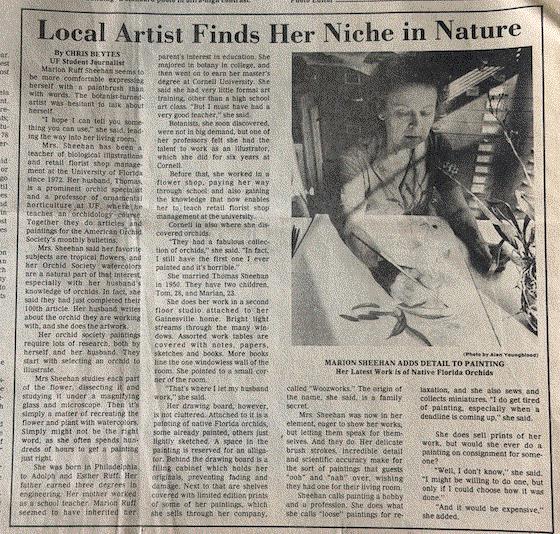
And here I am, 43 years later, still writing about flowers and the people who help make them special.


Feel free to email me at beytes@growertalks.com if you have ideas, comments or questions.
See you next time!

Chris Beytes
Editor-in-Chief
GrowerTalks & Green Profit
This e-mail received by 34,194 loyal readers!
Thanks to my loyal sponsors, who help me reach the 34,194 readers of Acres Online in more than 60 countries. Want to be one of them (a sponsor, that is)? Give Kim Brown a shout and she will tell you about our many advertising opportunities.