New Perennials From Jelitto
It seems like most of the new perennials I feature are propagated vegetatively either from unrooted cuttings or from tissue culture. Rest assured there are a number of perennials propagated by seed that are also introduced each year. Jelitto Seeds has four promising new seed introductions I’d like to share with you.
|
Echinacea Mellow Limes
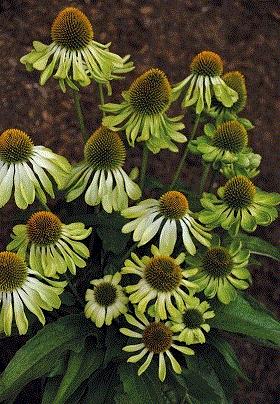
|
Echinacea Mellow Scarlets
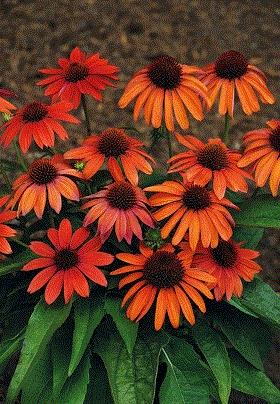
|
Jelitto Seeds has two new cultivars of echinacea: Mellow Limes and Mellow Scarlets. These additions combine with their popular Mellow Yellows coneflower to make the new Mellow series. If you’re not already familiar with it, Mellow Yellows is a nice mix of gold, lemon and cream-colored flowers.
Mellow Limes provides a unique blend of greenish creamy white, light lime green and inimitable green flowers. Mellow Scarlets delivers a mix of intense deep oranges, strawberry and tomato reds. The Mellow series are first-year flowering, bloom all summer long, grows 2.5-ft. tall and are cold hardy to Zone 4.
Prunella Blue Spider
Blue Spider is a new seed prunella from Jelitto Seeds. It creates an attractive textural carpet with its split leaves and blue-purple flowers. Blue spider is a first-year flowering perennial, blooms in the early summer, attracts loads of pollinators, is low growing (just 8-in. tall) and is cold hardy to Zone 4.
Thymus Snowthyme
Snowthyme is described as a hard working, drought tolerant, sun loving, aromatic and prolific flowering groundcover. It’s the first pure white flowering seed strain on the market. This tough cultivar produces a fluffy carpet of white flowers from May to September. It grows just 4- to 6-in. tall, which is ideal for edges and rock gardens. Hardy to Zone 4.

Bare Root Storage
While catching up on my emails from last week, I saw an interesting article on storing bare root in Bill Calkins' Tech On Demand newsletter he sent out this past Friday. Rather than paraphrasing, I figured it would be best to share the entire article with you. Here it is:
Thinking Ahead: Bare Root Storage Tips
In the first couple months of each year, our team hears from growers who received more bare root material than expected or run into a labor crunch and need to set material aside to attend to other, more critical things. If this happens to you and your team is wondering how best to store the bare root inputs for a month or so until there’s time to pot it up, here’s some advice.
Bare root material can be kept in a cooler between 35 and 40 F for later planting. However, if you want to do this, the best bet is to get it in cold storage ASAP and keep them in their packaging to minimize desiccation. Here are a couple things to watch for:
-
Check for signs of new root or shoot growth and bud swelling ASAP. If plants appear to still be dormant and there's no new tender growth, they can be held as is in their original packaging.
-
If there are signs of new, active growth, you should plant as soon as you’re able. If dormancy is broken, they'll start to grow in their packaging. If this occurs, shoots and leaves that develop will be etiolated (pale), very tender and easy to damage. Leaves and shoots like this will either succumb to disease during storage or perform very poorly once they're planted.
-
Keep in mind that even if the crowns still appear to be dormant now, your team should check periodically for signs of active growth and be prepared to plant them ASAP if they break dormancy prematurely.
I don’t know if you already receive Tech On Demand, but if not, I highly recommend you take advantage of all the great FREE information Bill sends out each Friday. Besides Bare Root Storage Tips, the latest issue covered a Bio-IPM Podcast, Water Quality and Fertilizer, Calibrating Your Fertilizer Injector and more.
You can read the entire newsletter from December 19
HERE or
SUBSCRIBE if you don’t already receive it.

Bare Root Planting Depths
After reading Bill’s Bare Root Storage Tips article, I just remembered that I shared some content on bare root in the November 12, 2025 edition of Perennial Pulse. I usually don’t resend content from previous newsletters; certainly not articles that were just sent out a little over a month ago. But I thought this would be a good opportunity to provide this content along with Bill’s article so you can have these articles in one place. Then I’ll offer some new bare root content to keep the theme going.
Bare Root Planting Depths
Planting depths are also important with bare root starting materials. The crown of the plant is the point where the stem forms a union with the roots. Be sure to identify where the crown is on the bare root, as it'll look different from one perennial to the next.
Most bare root perennials should be planted so the crown of the plant is no more than ½ in. to 1 in. below the surface of the growing mix. Similar to planting plugs/liners too deeply, bare root planted too deeply will also lead to slower establishment, reduced vigor, cause crops to appear variable and could lead to plant mortality.
Cornell University performed research indicating several bare root perennials should be planted “high” with the crown being ¼ to ½ in. above the media surface.
The perennials listed above grow more slowly and have less vigor when they're not planted slightly high.

The Bare Root Advantage
As promised, I’m continuing the bare root conversation. Plugs and liners are certainly the most common form of starting materials growers use when they plant their perennials, however, bare root is a viable option and offers some clear advantages over some of the more commonly used starting materials.
Small quantities. The most common perennial plug and liner tray sizes growers produce or purchase are 50-cell or 72-cell trays. These tray sizes work well for many growers, but may actually have more plants than some of the very small growers can use. Many suppliers offer bare root in small quantities, often as few as 25 plants. Smaller quantities can help small growers by saving money on extra plants they don’t plant or keeps them from overproducing plants they don’t need.
Here's an example of two grades of bare root Hemerocallis Stella de Oro. #1 grade is on the left and #2 grade is on the right. Many suppliers offer bare root in small quantites such as 25 plants; this is a great option for small growers who don't need large quantities.
Fuller containers and quicker. One advantage of bare root is they've already been grown for a full growing season, whereas smaller plugs and liners are often only a few months old (they may only have as little as six weeks of growing times in some instances). This age difference offers two huge advantages:
-
Bare root plants will have more branches and grow more vigorously than plugs and liners. Bare root usually doesn't require pinching to encourage branching and greatly improves fullness of the containers and their perceived quality.
-
Bare root requires significantly less production time than liners do. Most varieties can be grown with 25% to 50% less time than when smaller plugs or liners are used. Faster finishing times allows growers to turn their production space quicker.
Vernalization. Many perennials have a cold requirement for flowering or flower better after they've been vernalized. There are times when growers receive liners that haven't received the proper amount of vernalization (or sometimes no cold treatment whatsoever) and flowering is either inconsistent or nonexistent. Bare root that's received and planted in the late winter or early spring has already been vernalized and will flower fully and reliably.
Receiving your starting materials. It seems there are many periods during the winter when plug and liner suppliers cannot ship their plants due to below-freezing temperatures. Many of these plugs/liners could be susceptible to cold injury from freezing temperatures during transit. With bare root being dormant and being shipped from a cooler, cold injury during shipping usually doesn’t occur. This allows them to be shipped without delays and to be planted on time.
Early season planting. With bare root being shipped from cold storage, they’re not as susceptible to cold temperatures after planting as many smaller plugs and liners are. For this reason, many growers plant them earlier in the season into unheated covered structures or even directly to outside growing areas. Please note that it's still beneficial to provide cold protection should below-freezing temperatures occur (especially when the bare root wakes up and has some growth present).
Cooler temperatures. Since perennials from bare root already have a full growing season under their belts and they don’t need warm temperatures to build a fuller plant, they can be grown cooler than many perennials started from plugs or liners. For many perennials from bare root, it’s recommended to grow them at 50 to 60F (10 to 15C). Producing them cooler not only saves heating costs, it also results in higher-quality plants.
Left: Hosta Night Before Christmas; right: Epimedium rubrum.
As you can see, there can be several advantages to using bare root over smaller plugs and liners. With their larger size and a full growing season under their belt, plants from bare root can typically be grown in less time, at cooler temperatures and produce fuller plants with less labor. Some of my favorite perennials to start from bare root are artemisia, astilbe, hemerocallis, hosta, salvia and sedum, to name a few.

Holiday Traditions
I asked you to share some of your favorite holiday traditions in the last newsletter and promised I’d pass them along. I’ve included them here, as well as several others I thought were worthy of sharing.

-
Decorating the house—inside and out
-
Cutting our own tree from a tree farm and decorating it
-
Make a new ornament each year
-
Writing a letter to Santa
-
Baking Christmas treats
-
Decorating cookies
-
Make and decorate a gingerbread house
-
Make cinnamon rolls on Christmas morning
-
Leaving out milk and cookies for Santa (and carrots for the reindeer)
-
Wear ugly Christmas sweaters
-
Calling friends and relatives to wish them a Merry Christmas
-
Virtual Zoom meetings with friends and family from afar
-
Elf on a Shelf
-
Attending religious services
-
Advent calendar
-
Volunteering
-
Random acts of kindness
-
Caroling
-
Sing-a-longs with family and friends
-
Watching Christmas movies
-
Watching "The Polar Express"
-
Reading The Night Before Christmas to the kids on Christmas Eve
-
Watch basketball and/or football games
-
Go see a movie at a theater on Christmas Day
-
Opening a present on Christmas Eve
-
Unwrapping presents on Christmas morning
-
White Elephant gift exchange
-
Secret Santa
-
Family get-togethers/gift exchanges
-
Hanging stockings (then seeing what Santa puts inside)
-
Christmas breakfast or brunch
-
Sledding/tobogganing
-
Listen to Christmas music
-
Game night
-
Sending holiday cards to friends and family
-
Decorate by hanging Christmas cards received
|
|
I’d like to thank those who passed along their holiday traditions and hope all of you had a happy holiday season.


I hope you had a great holiday season. My email is paul@pace49.com if you have any comments, article suggestions or if you'd just like to say hello.
Best regards,

Paul Pilon
Editor-at-Large—Perennial Pulse
National Sales Manager—Pace 49, Inc.
This email was received by you and 34,074 other fine subscribers!
If you're interested in advertising in Perennial Pulse, contact Kim Brown ASAP and she'll hook you up.