Snowed in and Bugs Surviving the Winter
Y’all have heard me complain about cold weather—more often than a normal person would do. By extension, I’m not a fan of snow. You can imagine my mood when I got back from Portland, Oregon, on redeye flights and been promptly presented with sleet on Saturday evening and a blanket of (according to some) “the most beautiful fluffy” snow on Sunday morning.
I couldn’t tell if the snow was truly fluffy and most beautiful or not. All I know is I haven’t seen 5 in. of snow in Back Swamp, South Carolina, since 2010!
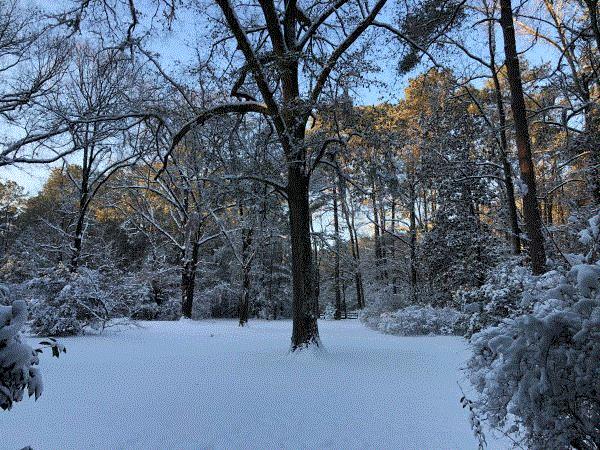
How I wished to be a bug in a heated greenhouse.
As if to rub it in, Paul Pilon wrote about bugs in greenhouses in his Paul’s Pointers column in the February issue of GrowerTalks I received this week. I’m pretty sure that was on purpose because I was complaining to him about the impending snowmageddon when we were both speaking at the Oregon event.
Paul does have a point, though. We get complacent about pest management in the winter. The “out of sight, out of mind” mentality can open the door to welcoming overwintering pest populations that can give you a nasty surprise in your spring crop.
Even empty greenhouses may not be completely pest- and disease-free. There are debris and weeds that can harbor those sneaky tiny buggers. Not to mention unsold or overwintered crops, which are essentially a constant buffet available to slumbering pests whenever they decide to wake up.
It’s perhaps a bit easier to predict what bugs might do in the greenhouses over the winter. It’s much harder to predict what mosquitoes or other annoying insects may do outdoors. I’ve been asked often enough and been wrong often enough that I’m officially out of the what-will-bugs-do prediction market.
In case you were wondering, yes, I took the picture above from inside my house. I wasn’t going to go out there!

Sanitize Before the Next Crop
Paul’s column is really about the necessity of sanitation, which I harp about whenever I can. Sanitation is the most effective way of preventing future pest and disease outbreaks simply by not carrying over crud from one season to the next.
Empty greenhouses should be cleaned and disinfected. Paul cautions that just sweeping and hosing down the floor isn't enough. You need to clean and disinfect—really, make an effort to clean and disinfect. The best time to do so is just before moving crops into the greenhouse. Paul has a very concise, but informative, protocol for cleaning empty greenhouses.
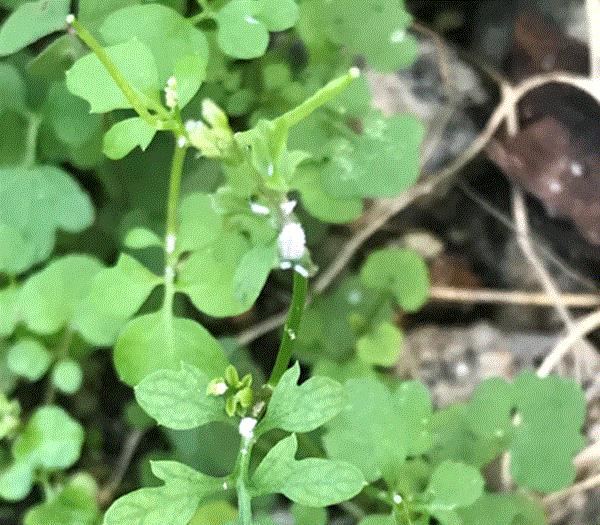
Citrus mealybugs overwinter happily on bittercress in my greenhouse.
Overwintered crops should be monitored for pest and disease presence, just like a normal crop. These pests and diseases should be treated whenever they appear. Know that some of the insecticides or fungicides may not be used or as effective in cooler temperatures. Paul prefers to use horticultural oil and insecticidal soaps for this purpose. (Remember that the temperature should not be below or near freezing when using oil and soap and the overwintered plants should not be under water stress.) He also recommends that, if insecticides and miticides are to be used, they should be applied during the warmest time of the day. At that time, the bugs are more active and have a greater chance of being in contact with the spray solution.
Several extension services also provide information on the importance and the “how” of sanitation. Here's one from Purdue University and one from the University of Kentucky. I’m sure your favorite extension service also has one.
Let’s clean things up and have a great start to the spring crop season!

IPM in GrowerTalks
Pest management takes central stage in the February issue of GrowerTalks. The front cover features a spider mite being consumed by predatory mite Phytoseiulus persimilis. That’s biological control in action! For a bug nerd, that makes my heart flutter.
In addition to Paul’s article on sanitation, there are several articles on managing pests and diseases so that you’re prepared to start your spring crop on the right foot.
Mary Ann Rose, the Director of the Pesticide Safety Education Program for The Ohio State University Extension, reminds us of the importance of staying safe and legal when using pesticides. That’ll involve reading pesticide labels (always do that!), select the right product for the right use site and crop, and adhere to restricted entry interval (REI), personal protective equipment (PPE), and ventilation requirements.
Broch Martindale of Corteva talks about why you need to think about formulation when selecting which pesticide to use. That’s because different formulations may have different delivery efficacy, effectiveness and crop safety.
Anissa Poleatewich and Katie Gustafson of Mycorrhizal Applications discuss different types and benefits of mycorrhizae and answer several questions on how to use mycorrhizal products effectively. In addition, Michelle Jones and Laura Chapin in the Department of Horticulture & Crop Science at The Ohio State University talk about an experiment where they evaluated the benefits of mycorrhizae and Bacilus subtilis products in promoting growth of pansies at low fertilizer rates.
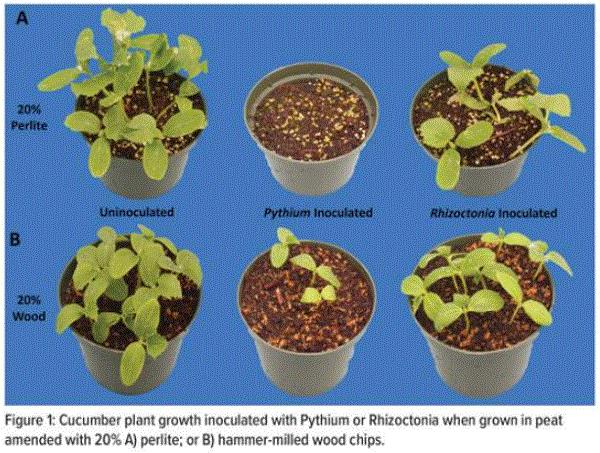
Brian Jackson of North Carolina State University and Anissa Poleatewich also contributed an article on the suppressive effect of some engineered wood components in substrates on root rot diseases, such as Pythium and Rhizoctonia. The experimental results in Brian and Anissa’s paper are quite striking.
On the insect and mite front, Luis Cañas in the Department of Entomology, again from The Ohio State University, talks about the importance of collecting data from scouting programs. After all, pest management is more effective and efficient if it can be driven by decisions made based on data. Luis also introduces us to several new sampling tools and methods and the potential of using environmental DNA to identify pests in greenhouses.
Andrew Britten of Ball Horticultural Company outlined pests common on tropical foliage plants and the chemical and biological solutions to these pest problems. Lastly, Jeremy Webber of Koppert takes a deep dive into the biological solutions for thrips, spider mites and caterpillars.
Read all of these great articles in this month's issue of GrowerTalks.

tHRIve Webinars in February and March
The Horticultural Research Institute’s (HRI) tHRIve Web Series has quite a line-up of educational webinars in February and March. These webinars are scheduled at 1:00 p.m. Eastern and are free to attend. I encourage y’all to take advantage of the educational opportunities provided by HRI. I’m going to sign up for a couple.
February 12: Jerry Weiland, a USDA-ARS researcher at the Horticultural Crops Disease & Pest Management Research Unit in Corvalis, Oregon, will be talking about how to minimize boxwood blight risk in your nursery. Jerry will explain how common production activities can impact boxwood blight introduction and spread. Fungicides effective against boxwood blight will also be discussed.
March 4: Anthony Witcher of Tennessee State University’s Otis Floyd Nursery Research Center in McMinnville, Tennessee, will talk about weed management in propagation. For those who've tried to manage weeds in propagation facilities, you know there are very limited herbicide options. So Anthony will discuss how you can combine sanitation practices, mulch and preemergence herbicides in an effective, cost-effective and crop-safe program.
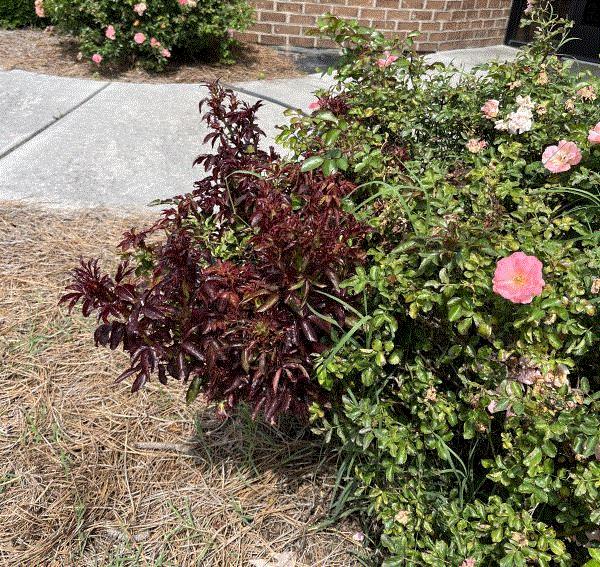
Why do rose rosette symptoms only show up on one side of a plant? Find out by attending a tHRIve Webinar!
April 8: If you've seen a rose plant infected with rose rosette virus, you’ll notice that the symptomatic or rosetted terminals often appear on one side of a plant, instead of all over. Why is that? Jeanmarie Verchot, a virologist and professor at Texas A&M University, will explain how the rose rosette virus moves through the vascular system and causes this odd pattern, and how understanding symptom expression and virus movement can help development management approaches.
May 13: Our own Jeb Fields, editor-at-large of the Nursery & Landscape Insider newsletter, will introduce us to the Soilless Substrate Science (S3) program. S3 is a national, transdisciplinary collaboration developed to advance the next generation of substrates and to support growers in adopting new substrates. Jeb will explore various kinds of non-peat substrates and the effort in developing domestic sources of substrates.
In addition to registering for these upcoming webinars, y’all can also find recordings of previously presented webinars on the tHRIve Web Series website.

Another Link to the Borer Handbook
I introduced y’all to a new handbook of boring insects last week. (They aren’t boring, at least not to me.) I also mentioned that because I’m the editor of this handbook and I want to reward my faithful readers, anyone who pre-orders a copy of the handbook will get a 10% discount. You just need to enter the code “PESTTALKS” at check out.
Several contacted me and told me that there was a little problem getting to the pre-sale order page or that only members can order the handbook. So here's a link that you can copy and paste on your preferred web browser: https://qrco.de/bgZ4tF
Thanks to those who've already placed an order and those who'll place an order soon.
See y'all later!

JC Chong
Editor-at-Large
PestTalks
This e-mail received by 27,847 subscribers like you!
If you're interested in advertising on PestTalks contact Kim Brown ASAP!