New Biofungicide has long cultural history
A new biofungicide (with an ingredient used for centuries) is being introduced to U.S., Canadian and Mexican growers by Syngenta and Botanical Solution Inc (BSI). Quillibrium (currently marketed as BotriStop in Chile) is derived from Quillaja saponaria using BSI’s proprietary plant tissue culture platform.
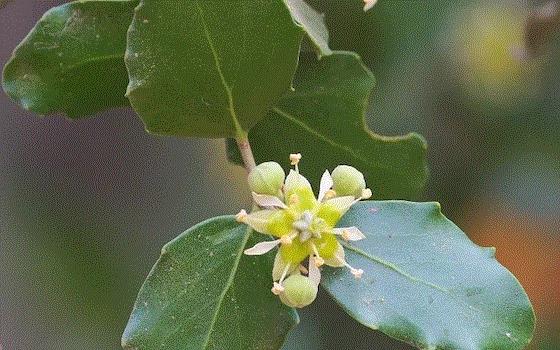
Quillaja saponaria tree flowers (but the bark is where the goodness is).
For centuries, the high saponin content of Quillaja saponaria (aka soapbark) has been used by the Mapuche culture of Chile for cleansing and medicinal purposes. More recently, it has been used to help protect crops such as tomatoes, grapes and berries from a number of diseases, including botrytis and powdery mildew.
The sustainable technology behind Quillibrium allows the developers to develop high‑quality extracts without the need to harvest protected trees, thus preserving biodiversity while ensuring a reliable supply.
“After years of development and successful commercialization in Chile and Peru, we’re thrilled to bring Quillibrium to new key markets, expanding Syngenta’s integrated disease control portfolio,” says Syngenta’s Global Head Seedcare and Biologicals, Emilhano Lima.
An exclusive agreement between BSI and Syngenta will begin the rollout of this new product to North American growers. Check with your favorite supplier for availability date.

Natural Capital Accounting
One of the trickier aspects of sustainability is how to quantify your efforts. Often, we look to certification systems to create benchmarks for us, to validate our endeavors.
Researchers at La Trobe University in Australian have developed something new: a Farm-Scale Natural Capital Accounting Method that tries to quantify farmers’ natural assets. They developed a system to account for production data, remote sensing, ecological modeling and on-ground assessments in order to rate food and fiber products.
The system looks at everything from soil, water and biodiversity to pollination, pest control and wildlife habitat, as well as the typical measures of greenhouse gas emissions, water use and pollution. The researchers say it could easily be adapted to develop environmentally friendly product ratings.
Read more about the new system
HERE.
AIB Webinar: Rain Gardens
America In Bloom (AIB) will present a free webinar next month on Rain Gardens That Work.
It's slated for Tuesday, March 17 at 12 p.m. Eastern/11 a.m. Central.
In this free webinar you will explore the essentials of planning and planting rain gardens that thrive. Learn where rain gardens work best, how to choose the right plants, hear tips for ongoing maintenance and strategies for educating your community about their environmental value. Whether you’re a municipal leader, volunteer or gardener, you’ll gain practical tools to help make your community more sustainable, one rain garden at a time.
AIB's presenter is Rod Barnes, Town Administrator for Edmonston, Maryland. Rob is also an AIB Advisor and Past President of the AIB Board of Directors. And Rod apparently practices what he preaches: his community has more than 60 rain gardens in a town of fewer than 2,000 people—pretty impressive!
P.S. If you missed AIB’s pollinator-friendly landscape webinar, it’s now available as a
RECORDING.

USDA Renews 56 Substances for Organic Production
Part of the National Organic Program in the U.S. involves “sunsetting” the synthetic and certain non-synthetic substances that are allowed for use in organic production and forcing them through a renewal process. The rules require each of those substances to be reviewed every five years to ensure they still meets the criteria. If approved, they get renewed.
The National Organic Standards Board and National Organic Program completed the 2026 Sunset Review of the
National List of Allowed and Prohibited Substances and renewed 56 substances until 2031. It includes products as widely used as hydrogen peroxide, ammonium soaps, horticultural oils, citric acid, magnesium sulfate and activated charcoal.
You can find the full list published in the
Federal Register notice published on February 9.
Report from the MT Outpost
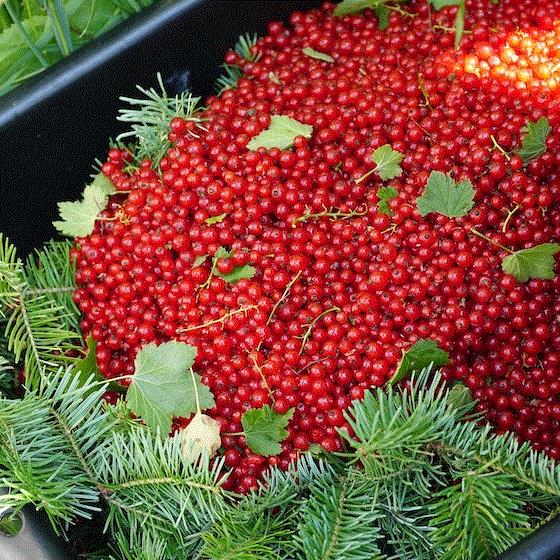
Foraging ... I need to do more of it.
I had the opportunity to slip into Yellowstone National Park a few weeks ago for an evening in order to attend a book signing with Sean Sherman, also known as the Sioux Chef, who has a hefty new cookbook titled "Turtle Island." I’m not even sure the term "cookbook" does it justice. While it does have recipes, organized by region, it’s full of stories and the traditions of Indigenous people across North America.
Sherman is a James Beard Award-winning chef. His cooking is next level; it takes months to get a reservation at his restaurant in Minneapolis. And his recipes are a gourmand’s dream. I tackled his glazed meatloaf recipe the next night. I’ve always found meatloaf—even the good recipes—to be .. well ... fine. But this one was exceptional. I had to pull some cranberries (for a glaze) out of the freezer and resorted to plucking a few dried-up leaves of bee balm from the garden in order to fulfill the ingredient list. (I had no idea that wild bergamot had culinary uses.)
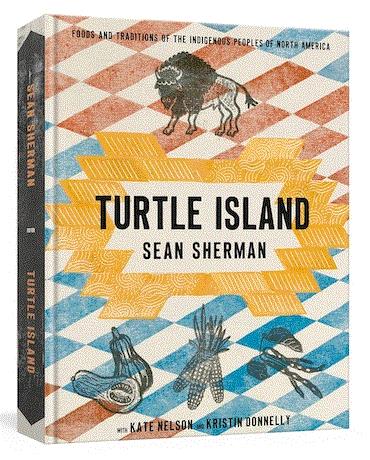
What excites me most about this cookbook is that it has opened up this whole new world (to me) of ingredients—foraged and grown. I’m heading into the spring season thinking that I need to make a list of ingredients I want to grow and forage: more reasons to gather chokecherries, plant squash, and maybe seek out some new heirloom varieties in the garden. I share this because, as a life-long member of the horticultural industry, I have to admit that a lot of the plants used in these recipes have not been on my radar for their culinary uses, or if they were, it was a footnote I never knew how to practically apply. What’s even more heartening is that this isn’t an obscure book; it’s a national bestseller. It was named best cookbook of the year by The New York Times, as well as the Washington Post, Smithsonian Magazine and Library Journal. It may be pricey, but perhaps it belongs on the shelf at a garden center, paired with a plant list?
And if you’re curious to learn more, Sherman is also founder of the Indigenous Food Lab; you can get a taste of what that group is doing with both recipes and foraging info on their
YouTube channel.


Until next time,

Jennifer Duffield White
jwhite@ballpublishing.com
This email received by 26,926 loyal readers!
Want to be one of the lucky sponsors who reach those readers of GreenTalks? Drop Paul Black a line and he’ll tell you what a bargain it is!
GreenTalks® is a registered trademark of Ball Horticultural Company in the U.S.