Organic Sales Climb—with a Surprise
The Organic Trade Association (OTA) just released its 2026 Organic Market Report (which is based on 2025 sales). Overall, organic sales increased 6.8% in 2025, reaching $76.6 billion. Most of that was food, accounting for $70.1 billion of the total and ringing in at 6.9% growth over the previous year. In comparison, the overall food market, including conventional, only grew at 2.3%.
“For the third year in a row, organic has grown faster than the total market, which indicates shoppers are prioritizing their health and the planet, and are willing to pay a premium for it,” says Tom Chapman, Co-CEO of OTA.
Produce still stands out as the main player, making up nearly 30% of organic sales. A few of those organic produce categories saw some double-digit increases:
- Organic berry sales increased 10.5%
- Organic citrus sales increased 18.1%
- Organic bananas increased 12.6%
But the real surprise? Organic beef sales increased an impressive 44.3%, the largest increase of any category. OTA notes that this was mainly driven by imports, though they say there are efforts under way to grow the domestic organic beef supply.
A summary of the report is available
HERE. To access the full data, you either need to be an OTA member or purchase it from OTA (beginning March 18).

Creating a Circular Economy with 5-Day Composting
A company out of Saskatoon in Canada has been developing industrial-scale composting technology that can compost organic waste in just five days. It does so with an airtight vessel that uses “proprietary microbial aid.” Manufacturer B-Nature Biotech says the end product makes an excellent agriculture fertilizer that can even be pelleted.
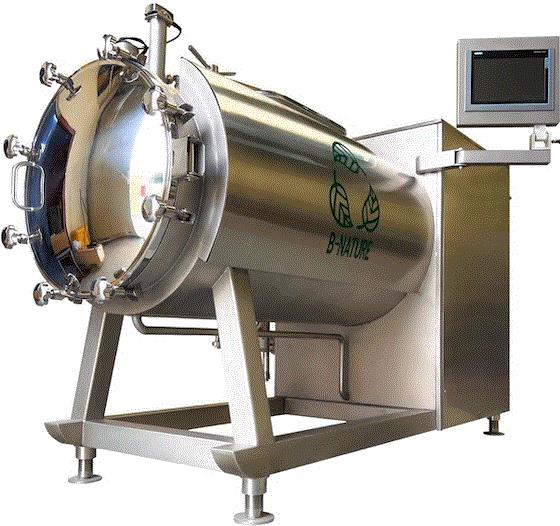
B-Nature’s composting system is at the center of a new collaborative project that just received funding from the Canadian government to support an “Indigenous-led circular economy initiative.” The funding will help build a rapid composting and bio-fertilizer facility on Cowessess First Nation, which will provide low-cost nutrients for both greenhouse and agricultural production, along with a growing dome. The
PROJECT also involves a collaboration with Pro Metal to design and manufacture bear-proof organics bins and composting infrastructure, ensuring that there’s a viable and easy way for people on the Cowessess First Nation to divert organic matter away from the landfill and into the composting system.
Rebecca Âcikahtê, Business Development Manager of Sustainability, Cowessess Ventures Ltd. (CVL), says, “This investment allows Cowessess to take a practical, community-led approach to circular economy development—diverting organic waste from landfill, producing food on our own land, and creating skilled jobs and indigenous-owned manufacturing opportunities. Through rapid composting, year-round growing and locally built infrastructure, we are improving community safety, strengthening food security, and building a model that other First Nation and rural communities can adopt.”
Raj Behari, founder of B-Nature Biotech notes that, “Together with CVL and Pro Metal, we are building a scalable circular economy model that can be replicated across rural and First Nation communities across Canada.”

All-Green School Grounds by 2050?
A new action agenda has taken shape, with the lofty vision that by 2050 all U.S. school grounds will be green schoolyards. The Green Schoolyard Action Agenda puts together a national roadmap with action items to ensure all students have access to green schoolyards by 2050.
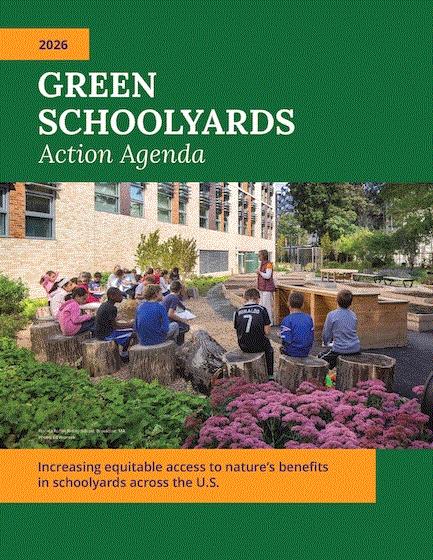
The why here is clear: Youth are struggling with mental health, academic inequities continue to widen, and a growing body of evidence shows that time spent learning and playing in nature helps children reach their full academic and social-emotional potential. Also: plants solve a lot of other problems!
Originally launched in 2017, this new version builds on the Green Schoolyards Action Agenda, emphasizing climate-resilient schoolyards as part of the community infrastructure, making nature-based learning a core academic strategy, and giving educators tools to lead the transformation.
The Children & Nature Network, in partnership with the Trust for Public Land and KABOOM! led this refresh of the action agenda, and now they’re on a mission to see it adopted across the country. Children & Nature notes that, “By designing school grounds as living, nature-rich community infrastructure, they can simultaneously strengthen learning, improve emotional well-being, reduce urban heat, manage stormwater, expand tree canopy, support biodiversity, strengthen hands-on learning, and deepen neighborhood connection.”
You’ll find the full plan on their
WEBSITE. And if—as a green industry individual or company—this excites you, there’s a spot on their website where you can sign on to the agenda.

Sustainability Planning Template for Wholesale Florists
Wholesale florists have a brand new (free) template to support their sustainability planning, thanks to Sustainabloom, by
American Floral Endowment. Download it, complete the self-assessment, and find actionable steps to meet sustainability goals, no matter where you are in the process.
Amanda Solliday, senior program manager for Sustainabloom, says that rather than developing a one-size-fits-all solution, the templates empower industry members to choose the actions that make the most sense for their size, structure and stage of sustainability efforts. And it makes it easier for businesses to communicate their efforts.
The template was created with input from industry partners and the results of an industry-wide survey. So if you’re looking for cost savings, reduced spoilage, improved energy efficiency and increased customer trust, head over to the
TEMPLATE and get started.
Sustainabloom was created by AFE to help members of the floral industry grow responsibly through accessible, research-backed tools and education. Last fall, they released a planning template for retail florists, and you’ll also find a number of sustainability resources and
industry guides on their website.

Report from the MT Outpost
March in Montana is never shy. Every ray of sun, bluster of wind and tumbling creek seems bold and bent on its destination. It makes up for the still-brown landscape and mud-worn trails.
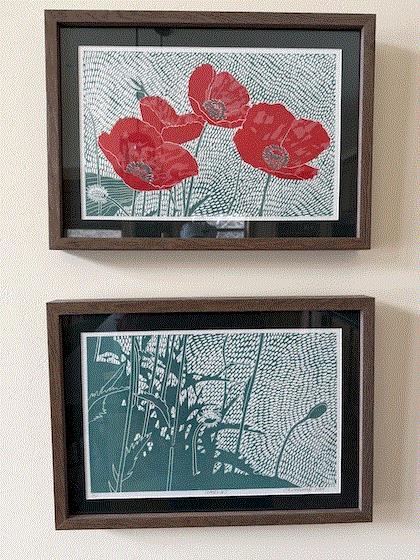
I had to scroll through photos last week to remind myself what it looks like when we finally turn towards green. I’m sure many of you are already feeling spring, but I’m still in the dreaming phase. A friend gifted me a giant container full of seeds she’d collected from her native flowers last year. I’m plotting planting plans. And I keep sneaking over to
our rental cabin when it’s empty to enjoy these delightful poppies by Cape Cod artist C.A. Livingstone.
Until next time,

Jennifer Duffield White
jwhite@ballpublishing.com
This email received by 26,913 loyal readers!
Want to be one of the lucky sponsors who reach those readers of GreenTalks? Drop Paul Black a line and he’ll tell you what a bargain it is!
GreenTalks® is a registered trademark of Ball Horticultural Company in the U.S.