Daylight Saving Time
I don’t know about you, but it always takes me time to adjust to daylight saving time (DST) in the fall each year.
The first area I have trouble adjusting to is how, even though it’s just one hour, having a day job and it getting dark earlier means one less hour of daylight to enjoy outdoor activities, including cleaning up the perennial gardens before the snow arrives.
Secondly, my role as national sales manager at Pace 49 requires me to navigate the different times zones across the United States, Canada, Mexico and Guatemala on a daily basis, However, not all of these locations recognize DST. Some locations, including our corporate office in British Columbia, were recently on Pacific Standard Time and three hours behind me in the Eastern Time Zone, but now they're just two hours behind.
There’s been chatter over the past few years about moving away from daylight saving time. What’s your take on this topic? Send me your thoughts:
paul@pace49.com.
DST Fun Facts
-
“Daylight savings time” or “daylight saving time?” Grammatically, use the singular form. Think of what you’re doing during—saving daylight. Therefore, the proper phrasing is “daylight saving time.”
-
Myth: Daylight saving time was Benjamin Franklin’s concept. Unfortunately, it wasn't. He did suggest Parisians wake up earlier to save money on lamp oil and candles in a satirical essay in 1784.
-
About 70 countries observe daylight saving time in all or select regions. Most countries near the equator do not practice DST. Many African and Asian countries—including China, India and Japan—do not participate in daylight saving time.
-
Not all 50 states practice daylight saving time. Hawaii and Arizona are on permanent standard time.
-
Moving the clock forward in the spring is actually bad for your health. This spring clock change has been linked to an uptick in heart attacks and strokes. There’s also an uptick in workplace injuries and traffic fatalities. Interesting.
-
Myth: The concept was originated by farmers. Farmers actually lobbied against it, as it's disruptive to farmwork. For example, cows expect to be milked the same hour of each day regardless of what the clock says.
-
The first legal push for daylight saving time came from an entomologist in New Zealand in 1895 who wanted to do more insect hunting in the evenings after his day job at the post office. This would extend the day length during the summer and switching the clocks back in the winter when people and bugs are less active outdoors. It got shot down at the time, but just two decades later, daylight saving time was commonplace throughout the industrialized world.
-
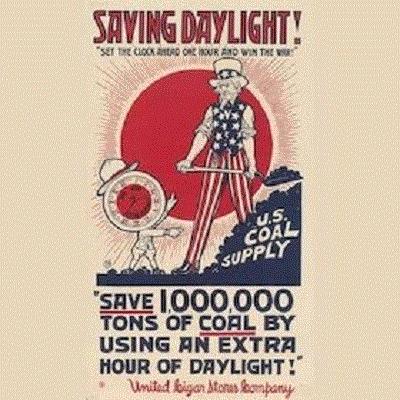
Similar to Ben Franklin’s commentary, there are other links to using daylight saving time to conserve energy. During the energy crisis due to the oil embargo of 1973, the government imposed daylight saving time to reduce public energy consumption during the winter months.
-
One study in 2015 found the start of DST in the spring was associated with a reduction of robberies.
-
DST starts at 2:00 a.m. rather than midnight, as you might think, to align with a time when most businesses (bars) would be closed and most people would be in bed when the time change occurs.
The concept of daylight saving time has been adopted across the globe, but has different names outside the U.S.
-
United Kingdom: British Summer Time (BST) when they go ahead
-
United Kingdom: Greenwich Mean Time (GMT) when they go back
-
Europe: Western European Summer Time (WEST)
-
Europe: Eastern European Summer Time (EEST)
-
Ireland: Irish Standard Time (IST)

Winter Trade Events
After just talking about time, that reminds me—it’s time to start thinking about the upcoming winter trade events. Click on the name of the event to view the details.
|
November 18-19, 2026 |
Green Industry Show and Conference (GISC)
Red Deer, Alberta, Canada |
|
|
|
|
December 2-3, 2026 |
Breeders & Distributors Conference
Oldenburg, Germany |
|
|
|
|
December 8-10, 2026 |
Great Lakes EXPO
Grand Rapids, Michigan |
|
|
|
|
January 5-7, 2027 |
Montana Green Expo
Missoula, Montana |
|
|
|
|
January 6-8, 2027 |
Gulf States Horticultural Expo
Mobile, Alabama |
|
|
|
|
January 10-12, 2027 |
NRF Retail's Big Show
New York City, New York |
|
|
|
|
January 12-14, 2027 |
Landscape Ontario Congress
Toronto, Ontario, Canada |
|
|
|
|
January 13-15, 2027 |
Mid-Atlantic Nursery Trade Show (MANTS)
Baltimore, Maryland |
|
|
|
|
January 18-22, 2027 |
Green & Growin'
Greensboro, North Carolina |
|
|
|
|
January 19-21, 2027 |
Northern Green
St. Paul, Minnesota |
|
|
|
|
January 19-21, 2027 |
Great Lakes Trade Expo Annual Conference & Trade Show
Grand Rapids, Michigan
|
|
January 20, 2027 |
CNLA Winter Symposium
Plantsville, Connecticut |
|
|
|
|
January 25-27, 2027 |
Utah Green Conference & Trade Show
Sandy, Utah |
|
|
|
|
January 26-29, 2027 |
IPM Essen
Essen, Germany |
|
|
|
|
January 26-27, 2027 |
Total Pro Expo & Conference
Edison, New Jersey |
|
|
|
|
January 26-27, 2027 |
InVigorateU
Bloomington, Illinois |
|
|
|
|
January 26-28, 2027 |
ProGreen EXPO
Denver, Colorado |
|
|
|
|
January 28-29, 2027 |
SC Green Conference & Trade Show
Columbia, South Carolina |

A Few from Dümmen Orange
Here are a few great perennials from Dümmen Orange:
Gaillardia Spintop Orange Halo
Spintop Orange Halo is an incredibly heat-tolerant and long-blooming blanket flower. As you can see, it covers itself with vibrant, dark orange flowers tipped with glowing golden yellow halos, and the blooms have deep burgundy red central eyes. It’s compact, growing a very tidy 10- to 12-in. tall by 12- to 15-in. across. No vernalization is required for flowering. Cold hardy all the way to Zone 3.
Salvia Salute Light Pink
Here’s a beautiful salvia with masses of light violet spikes arising above the grayish green foliage in the late spring. It has an intermediate growth habit, reaching 18- to 24-in. tall when in bloom and spreads to 18-in. across. Salute Light Pink is versatile and can be used in everything ranging from containers to mass plantings. Hardy to Zone 4.
Viola Spring Morning Bumblebee
Spring Morning Bumblebee covers itself with vibrant yellow and purple flowers. I reaches 6 to 8 in. in height and spreads up to 16-in. across. This perennial viola has long-lasting blooms, better heat tolerance than traditional violas and is cold hardy to Zone 5.

Apprenticeship Program
The College of DuPage, located in Glen Ellyn, Illinois, announced a new program that offers recent high school graduates and young professionals new to the industry a way to earn an associate’s degree while also gaining hands-on, real-world experience.
The new DuPage Horticulture Apprenticeship Program is a two-year course comprised of four semesters of in-class education during the summer and fall (totaling 64 credit hours) at College of DuPage, and on-site paid work experience at a participating greenhouse operation during two peak spring seasons. Students who complete the course will earn an associate’s degree in applied science in Horticulture, along with certificates in Horticulture and Greenhouse Management.
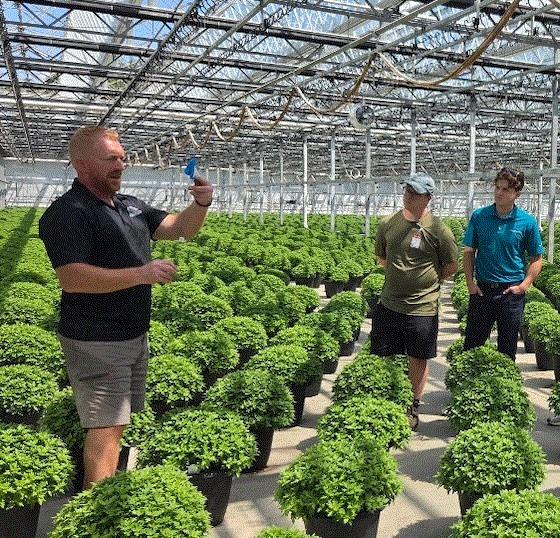
With the cost of higher education continuing to increase, the good news is that this program is free for the 16 students who are chosen by the selection panel, made possible by generous contributions of industry professionals. The only thing the students will have to worry about is transportation, food and housing on the College of DuPage campus. (Resources to find housing will be provided.) During the spring apprenticeship on location, the greenhouse and nursery businesses participating in this program will provide housing, paid employment and mentorship.
“A lot of students are struggling to pay for tuition, books and fees, so this is a great opportunity for them to get a two-year degree basically paid for by the industry,” explained Brian Clement, department chair and professor of horticulture at College of DuPage. “This program is based off of the old DuPage Horticulture School model, which a lot of people in the industry are familiar with, and we're trying to bring that model back.”
Dr. Nathan Jahnke, culture research manager for Ball and one of the industry members involved with this program, said that horticulture college programs typically require classes during the spring—the best time to earn experience. And it’s challenging to find work in a greenhouse during the summer after the peak season. This apprenticeship program helps students work around that.
“It's challenging to find experienced labor with a strong education,” said Nathan. “The combination of the two strengthens our talent pipeline, ensuring we can continue to grow as an industry and provide consumers with impactful products.”
Available to students in the U.S. and Canada, the College of DuPage is accepting applications now through December 4 for the Summer and Fall 2027 semesters. And there are only 16 spots, so if you or someone you know will be graduating from high school in May or have one to three years of greenhouse experience and want to pursue a career in horticulture, apply today!
Get more information—including the names and locations of the participating greenhouses—and apply for the DuPage Horticulture Apprenticeship program
HERE. You can also reach out to Brian Clement directly at (630) 942-2526 or
clement@cod.edu.
If you’re interested in supporting this program with a financial donation or by participating as a host location, contact Nathan Jahnke at
njahnke@ballhort.com.


My email is paul@pace49.com if you have any comments, article suggestions or if you'd just like to say hello.
Best regards,

Paul Pilon
Editor-at-Large—Perennial Pulse
National Sales Manager—Pace 49, Inc.
This email was received by you and 33,933 other fine subscribers!
If you're interested in advertising in Perennial Pulse, contact Kim Brown ASAP and she'll hook you up.