10/25/2010
Styling Solutions: Fade to Back
Meghan Boyer
 Styling Solutions: The Series
Working closely with their customers over the last several years, Braun Horticulture realized it’s important to not only offer distinctive garden products to retailers, but to present solutions to displaying these products, as well. To fill this need, Braun has developed a line of fixtures and display elements in various styles. For more information about the Styling by Braun program, call (330) 607-7538 or e-mail
sued@braungroup.com.
 Backgrounds and Backdrops! Oh My!
“Pay no attention to that man behind the curtain,” the Wizard of Oz told Dorothy. Why? Because it would ruin the illusion he created.
Backgrounds and backdrops—like the Wizard’s curtain and those used by retailers—work to showcase what’s in front of them and, just as importantly, hide what should not be seen behind them.
The challenge for retailers is to choose background options that can fulfill both requirements without stealing the show themselves.
Stop that Eye!
The purpose of a backdrop is to stop a person’s eye from overlooking. “You want to be able to guide or limit the eye and be able to focus on the foreground,” says Scott Daly, visual merchandising manager with Homestead Gardens.
- Backdrops can be made from a permanent or temporary wall, fabric, POP, plant material and more.
- They can be used to distract from “full-time eye sores” in the garden center, such unattractive areas or work areas, says Scott.
- Texture is great for backgrounds if used sparingly, says Scott. “Patterns or textures and big bold prints can become a distraction,” he cautions.
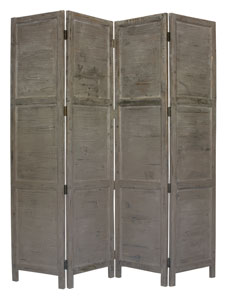
- A background could be “something put on the back of a fixture to stop the person’s eye,” says Scott. Consider using tri-fold screens, shelving units and other fixtures in displays.
A Color Story
Backdrops and backgrounds help create a color story for a merchandised display. “It can start to establish the color story for you, whether that’s done with paint, fabric, paper or plant material,” says Scott.
Despite the benefits, some retailers may lose confidence when creating a display with a colorful backdrop because they think it’s overwhelming, says Scott. “You have to remember, it’s a backdrop. It’s going to fade with every layer of product or fixture you put on it,” he says. “Colors that are bright look drastic, but in the end, you are actually glad you did it.”
Scott’s recommendation? “Have faith in where you are heading.”
 Using Plants
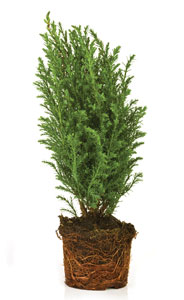
Fabric and other hard goods aren’t the only items suitable for use as backdrops and backgrounds: Plants tall and small can be used effectively in displays. Centering on a particular plant grouping, such as shrubs or a rack of plants, can add color and texture to a display. “For many, a hedge is a backdrop,” says Scott.
An interesting option for garden centers is using small plants growing from cubes affixed to a wall, says Nancy Proman, director of independent retail services at the Dynamic Experiences Group LLC, a retail consulting firm. “Using different textures of green plants can give an interesting look,” she says.
Don’t Be Shy
Embrace backdrops and use them! Without them, products can get lost, especially in island displays, says Scott.
“I don’t think [garden centers] use them enough, frankly,” he says. “I think that’s how product gets lost.”
However, retailers must understand the scale and scope of their shops to use the techniques effectively.
Quick Tip
“Don’t make them too busy. Remember, you’re trying to draw attention to the display items, not your creativity.”—Bob Phibbs, retail consultant and author
Meghan Boyer is a freelance writer based in Chicago, Illinois.