7/1/2023
Perennials as Décor
Lowell Halvorson
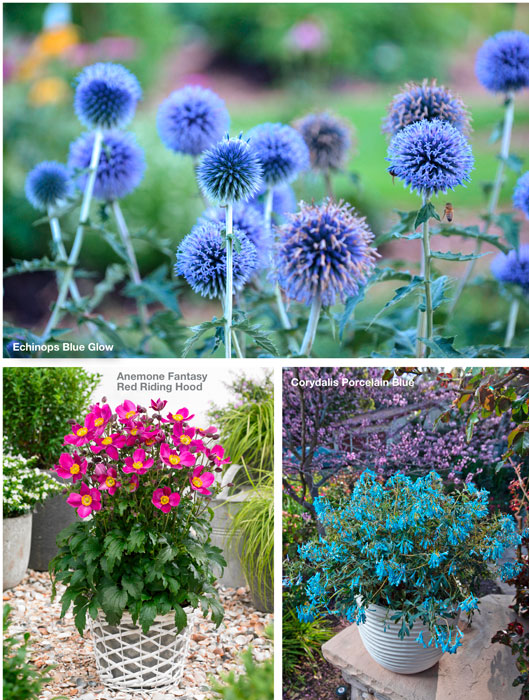
Building a decorative program around perennials means an upscale program focused on their personalities. Perennial inputs are generally higher, so rethink the container. As far as the plant is concerned, it sits in a little garden bed. Clay or ceramic or metal makes it portable, but durable over years of use, which is a signature perennial advantage. Fill with quality soil and very slow-release fertilizer so your product has a long tail of success after purchase.
The plants themselves should have a strong personality like a dog or cat, and a xeric nature so you can sell it as low maintenance and naturally rain watered. I like to focus on volume. The plant feels valuable if it occupies space. Very often, these plants also make great cut flowers, either fresh or dried. With these qualities outlined, let’s dive into the easy-peasy choices first, then move onto the easy exotics next.
Bred for the Job
It doesn’t hurt to work with plants you already know. Europeans have a long history of potscapes with perennials, so breeders worldwide have developed series specifically for this job.
Echinacea (sun): Cheyenne Spirit, multiple colors on single blooms, comes to mind first. It kickstarted perennial participation in the fall holiday and it’s widely available. Its siblings, the PowWow series (purple or white), are also comfortable with pottery work. For more exotic looks, turn to Cara Mia Yellow (golden pom-pom), Parrot (red/yellow single), Butterfly Kisses (delicate poms in Barbie pink) or Dark Shadows Wicked (a goth-style single down to the black stems). Typical blooms are summer through early fall, at 12- to 24-in. and hardy to Zones 4 to 9.
Anemone Fantasy series (full/part sun): Fantasy varieties shrink the large anemone habit into a tidy clump of leathery leaves. Famous windflowers whirl in a tall cylinder of stems overhead. Puffy seed heads like creamy cotton balls add winter interest. Blooms late summer to early fall at 16- to 18-in. in Zones 5 to 8.
Ashtilbe Younique series (part/full shade): Youniques are dwarves with many more flower spikes per plant, often double. Dense bottlebrush plumes appear two weeks earlier than usual. Not as xeric as the others, it needs routine watering. These feature early to midsummer blooms at 12- to 18-in. in Zones 3 to 8.
Going Grassy
Ornamental grasses belong to the landscape vocabulary in northern gardens, especially New England. These selections pick up on that trend and bring it to the deck and porch.
Carex Feather Falls (part shade): Striped arches of bladed leaves topped with cream-white feathery plumes, like a mini-pennisetum. Handles more sun than other carex. Late spring-early summer blooms at 24-in. in Zones 6 to 9.
Fescue Beyond Blue (sun): A post-punk grass with a blue hedgehog look. (Think of the New Wave monochromatic scales of The Cars.) Doesn’t suffer the brown-tip summer dormancy of the usual fescue. Grows to 18-in. in Zones 4 to 8.
Panicum Northwind (sun): Very upright grass for strong columns, turns golden yellow in fall. Features wispy tops when blooming. Blooms in late summer to early fall and grows to 4- to 5-ft in Zones 4 to 9.
Sporobolus heterolepsis (sun): A taller grass with draping skirts and a tall column of stems, complete with wispy blooms on top and turns color in the fall. A good birding grass. Growing to 24- to 36-in., it blooms in late summer to early fall and is hardy to Zone 3 to 8.
Pennisetum Red Head (sun): Classic brushy plumes waving at head height complement a broad base of loose grasses that flow up and out in a vase shape. Can be used as a living screen when placed in a row. Red Sun blooms summer through fall and maxes out at 6-ft. in Zones 5 to 9.
Garden Punk
Attitude. Some folks step out with spiky trim, wild variegations and unexpected colors; so do perennials. Here are a few that can hear London calling for protest botanica.
Echinops Blue Glow (full/part sun): Deep blue globe flowers lord over soft thistle foliage. More cuddly than it looks, it’s a strong pollinator. Blooms emerge mid-summer and max out at 3- to 4-ft in Zones 3 to 8.
Eryngium Big Blue (sun): Flowers look like small blue pinecones surrounded by a high collar of thistle-style bracts. Intense colors run down the stems and into the foliage, while the plant grows in low rosettes. The sunnier the site, the more intense the blue becomes. Most steampunk of the batch. Look for early to mid-summer blooms with a height of 18- to 24-in. and hardiness in Zones 5 to 9.
Acanthus Whitewater (part/full shade): Big leaves are deeply serrated with big splashes of variegation. Emerging leaves can look bleached and so does the imposing flower stalk. The ghostly white flower buds blush pink as they age. More tender than the others, but so striking. Think Tim Burton in his Batman phase. Hardy to Zones 7 to 9, Whitewater has summer blooms that reach up to 48 in.
Exotic Looks
Selected for habits and flowers rarely seen, these perennials provide an unusual focus of attention and go for the high style of look.
Corydalis Porcelain Blue (part shade): Mass of vines that fold in upon itself with big clusters of long tubes colored in robin’s egg blue. It doesn’t go summer dormant like the species, but it does need regular watering. Blooms in late spring through early summer blooms, maxes out at 12-in. and is hardy in Zone 5 to 9.
Origanum Bellissimo (sun): Vibrant purple hue on trailing strings of outsized calyxes that have a hops-like vibe to them. Strictly an ornamental, but hardy like the herb. Mid-summer through early fall blooms, it only grows 6- to 8-in. Hardy to Zone 6 to 9.
Heliopsis Sunstruck (sun): Bought for the crackled or pickled varnish done so well on the foliage variegation. A dwarf plant with golden yellow flowers. Good birding plant if seedheads are allowed to develop. Sunstruck blooms in summer and reaches 14- to 16 in. in Zones 4 to 9. GP
Lowell Halvorson is a consultant and writer in Fairfield, Connecticut, for retail and wholesale horticulture, specializing in business development. He also covers the breeding community for GrowerTalks magazine. You can contact him at (203) 257-9345 or halvorson@triadicon.com.