11/28/2025
Turning Off the Spigot
Wendy Komancheck
As of October, more than half the country was in some kind of range from abnormally dry to exceptional drought, according to the Drought Monitor. In this story, we’ll look at drought-tolerant plants that need less water, as well as techniques that can help consumers reduce the amount of water they use while still keeping their landscapes.
Drought Definitions Vary
“What is drought for me is not necessarily drought for you,” said Ellen Zachos, a xeriscape expert who lives in New Mexico. “Your average rainfall determines what makes a plant xeriphytic in your area.”
Sue Goetz, a certified professional horticulturist, garden designer, writer and speaker from Washington state, agrees. “The Pacific Northwest, for me, as a regional kind of definition, is that we have very wet winters and very dry summers. There’s a balance—we have to have plants that will take that wet winter to survive. Sometimes, people think of drought as it’s dry all the time … it really is knowing your place and what you know what drought really means for your specific region.”
The garden retailers in her region must stock plants and soil amendments to ensure that these plants survive Washington state’s unique climate.
“We’re ‘droughty,’ but we drown in the winter and so do the plants if we aren’t careful,” said Sue. “That baseline is to help people understand that, deeper still, is knowing your soil.
“Our soils in the Pacific Northwest need to be well-draining. In the xeriscaping realm, when we’re working on projects like that, we have to know what the water’s doing. Is it draining away? Is it ponding? We want the water to drain away or percolate into the landscape and not to sit in one place.”
Back in New Mexico, Ellen uses drip irrigation to get her plants established. “I have a section of my garden that has no irrigation whatsoever and a section that has drip irrigation,” she said. “I still use drip on most of my plants for the first couple of years to get them established—the goal being that eventually I can remove the drip irrigation when the root system is well enough established that it’s going to be able to get down to where the moisture is.”
Droughtables: Plants Made for Drought
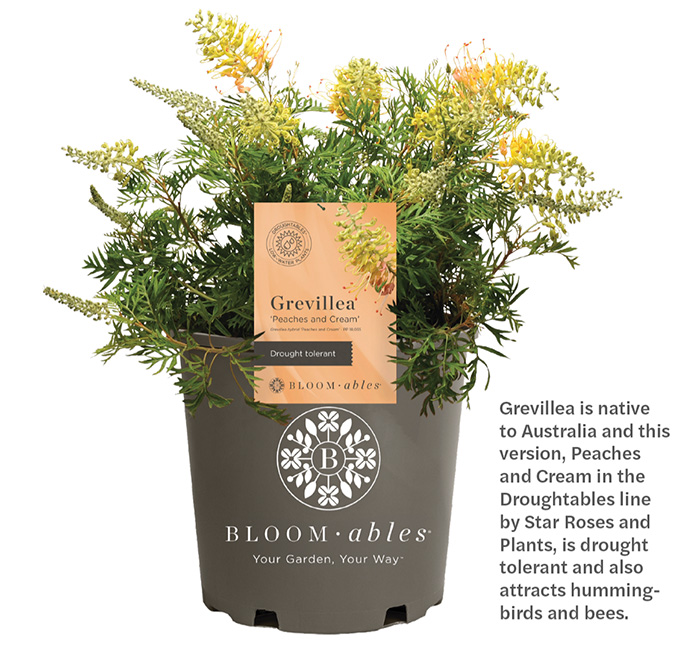
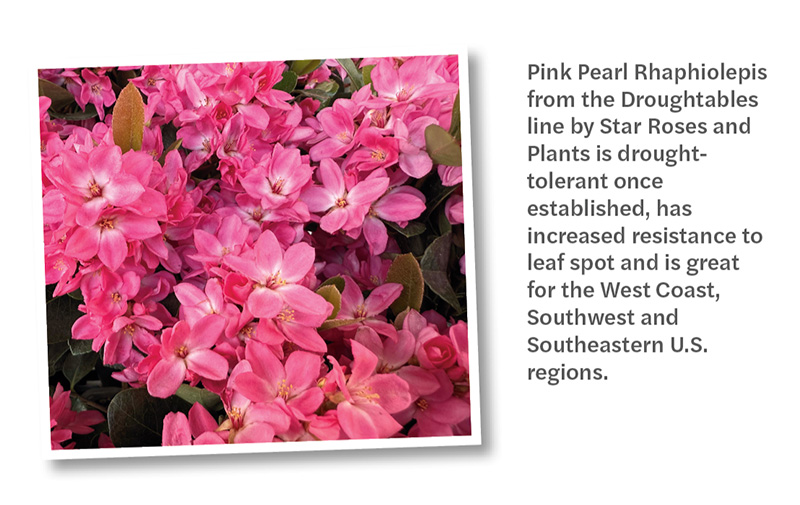
Seeing a need, Star Roses and Plants introduced its newest collection this year, Droughtables by Bloomables, which are exceptional drought-tolerant plants bred for landscapes in hot, dry climates. Star’s Kristen Pullen explained the Droughtables evolution came about over a 10-year period where different areas in the U.S. experienced extreme weather conditions.
“We’ve worked with drought-tolerant plants since 2015, but we wanted a simple way to present a concept that could work nationwide. Droughtables is our answer to that—by utilizing our national trial data and industry recommendations for drought-tolerant genera, we’ve been able to cultivate a list, by region, of which plants will best survive periods of low water across the United States,” Kristen said. All plants require deep watering when planted and regular watering until established.
Currently, there are 42 Droughtables varieties. Star used field data from their national trials and university recommendations for drought-tolerant genera. She also explained that there were standout species and variety performances, such as many Australian native plants.
“These plants do exceptionally well in the dry heat of California and the Southwest. We’ve seen impressive performance of our grevillea collection under water restrictions in the area,” she added.
 Working with Your Local Water Authority
Cynthia Bee, Director of Community Engagement for Utah Water Ways, is passionate about connecting plant design options to homeowners and landscape contractors. She developed a plant tool with SimplyScapes that allows homeowners and contractors to select plants for installation on their properties.
Cynthia has also worked with local nurseries to ensure that these plant varieties are available to their customers. The Utah Plant Selector also allows customers to swap plants, but in limited varieties. Nurseries are connected with the plant selector and can guide their customers to the plant combinations they built on the website.
“We focus it on combination because what makes it look beautiful isn’t just the plant itself—it’s how it looks adjacent to its neighbors. So rather than trying to help people understand all these complex design concepts, we boiled it down to the simplest terms. Customers can also mix and match,” Cynthia said.
While not every garden center will be able to partner with their local water authority, you can still tap into the U.S. Drought Monitor to see how your region is doing and then provide the education and plants to thrive in your local climate.
Garden Center Takeaways
Your retail space may be limited or unavailable for workshops on xeriscaping, drip irrigation or drought-tolerant plant combinations. However, you can develop signage, punch lists and QR codes for customers to tap into for more information.
Plus, you can redefine xeriscaping, since many people will think of it as only Southwestern desert landscaping with stones and cacti. Indeed, you can reframe xeriscaping as drought-tolerant gardening and suggest which plants work best for your region.
Ellen recommended that garden centers focus their signage on everyone’s pain points—such as saving money. “Everybody likes to save money, so you have a sign that says, ‘What was your water bill last month?’ or ‘Would you like to reduce your water bill and still have a beautiful garden?’”
If you have the space and sell drip irrigation products, Ellen suggested a drip irrigation workshop.
“People think, ‘I must hire a professional’ when it comes to drip irrigation,” she said. “And sometimes you do, if you’ve got to lay the infrastructure. But if you’re adding emitters to the system or deciding, ‘Do I need a half-gallon emitter or do I need a 2-gallon emitter?’ that’s really easy stuff and very empowering to a consumer to give them those tools.”
Sue partners with a local garden center and has taught different workshops, such as DIY Garden Design. She suggested garden centers hold workshops if they can manage it and consider using flex space during the off-season. That education gives customers the confidence to purchase plants, soil amendments, drip emitters and other drought-tolerant materials from you rather than a big box store.
“The customers feel like they have a buy-in—they got taught at this place and now feel really empowered to design and do their garden; I think that’s super valuable,” Sue said.
Remember, most regions in the U.S. are abnormally dry or in drought. Equip your customers with knowledge and they could become your best customers. GP
Wendy Komancheck owns The Landscape Writer and is a proud Garden Communicators International member. She writes for green industry trade magazines and content for lawn care, landscape and gardening services. You can email her at wendy@landscapewriter.com.