11/28/2025
It’s Dead!
Bill McCurry
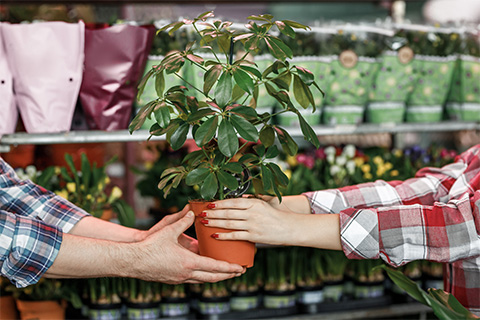
Some retailers outside our industry are curbing their “customer satisfaction” guarantee by limiting what’s covered. Others are tracking customer returns and declining returns to repeat offenders. We asked six industry leaders to share their perspective on how they view plant guarantees for garden enthusiasts.
Danny Summers—The Garden Center Group
Danny has spent almost 30 years leading horticultural groups. During the last decade, he’s been Chief Instigator of the 150-plus retail centers of The Garden Center Group, a background allowing him a unique perspective on the guarantee question.
He asked: “What would you pay to get a good customer back in the garden center? What’s one good customer worth in a lifetime of transactions? When a customer returns holding something they failed with, it’s a chance to be a hero and build even stronger relationships. I understand selling annuals and tropicals doesn’t lend itself to a guarantee … but, in the end, the customer’s satisfaction, repeat visits and word-of-mouth advertising are what’s at stake. With this in mind, it makes the cost of a replacement plant pretty small.”
Sam Di Rito—Collier’s Greenhouse & Garden Center, Jackson, Georgia
Some retailers have their plants speak for themselves. Sam shared, “We raise healthy plants or we won’t sell them. I guarantee this is a very healthy plant when it goes out the door. Beyond that, it’s up to you.”
Collier’s Greenhouse is candid and up front with their customers. “Even in our busiest time of the year it’s rare to get inquiries about plant guarantees. Trees and shrubs are handled on a case-by-case basis.”
Sam doesn’t sell “rough” or needy plants. “If a plant is not in great shape, it’s put in the back and returned to full health or it goes into the compost bin. This avoids the customer telling social media, ‘My plant died,’ without remembering to say it was a half-off ‘rescue plant,’ which means it had no guarantee.”
Tanner Jones—Family Tree Nursery, Liberty, Missouri
“We grew the plants; we know they’re in great shape. What we can’t control are our customers’ perceptions. Most other retailers are very return-friendly with automated systems where our customers see returns happen hassle-free and instantly. Customer expectations have changed due to experiences, the standard we’re being judged against.”
Tanner shared his view of modern day. “Many plant owners see themselves as ‘plant parents,’ especially if they are empty-nesters. Allowing a plant to die under their care is traumatic. Fear of failure is very high among these customers. Liz Lark-Riley did a training video on how to empathetically handle dead plant returns. She helped change my attitude toward returns. I used to want to put on my Justice Badge, saying it wasn’t right for us to take that return. Today, our costs of guaranteeing plants is much lower than envisioned. We devote training sessions on handling warranties and selling the necessary support materials for success.”
Bobby Lewis—Meadows Farms, Virginia, Washington, D.C., Maryland and West Virginia
“When I started working with my uncle years ago, we didn’t have any guarantee, which created ‘interesting’ customer situations. We have very specific guarantees today. Under our Customer Satisfaction policy, store management teams have the authority to make instant adjustments on the spot. If we make an exception, we take the time to ensure the customer knows that ‘We’re replacing it for you—this time.’ Then we explain our normal policy. Customers want their plants to live and we want to support that. Having a guarantee that brings customers back to the store with their problems allows us to be ‘problem solvers.’ It builds the relationship when we satisfy them, while giving them faith in their own growing capabilities, as well as in Meadows Farms.
“When a customer comes through the door with an obviously dead plant it’s unpleasant for both the customer and the salesperson. We try to make it an upbeat learning experience, resulting in a positive outcome for all parties.
“With trees and shrubs, we have an easy-to-understand guarantee. There is a one-year guarantee if you buy only the plant. It’s three years if you buy enough mulch, planting mix and Bio-Tone. This helps ensure the plant is properly started its first year and the customer understands plant care is needed. If Meadows Farms installed the shrub/tree, it’s a lifetime guarantee as long as the customer owns the property. A brochure is included talking about watering and plant care, with explanations of Meadows Farms’ landscaping capabilities. That brochure helps sets us apart from big box competitors, which is what garden centers have to do.
“We watch our guarantee costs. There was really no noticeable increase in costs with the longer guarantee. Part of the reason could have been the education by our salespeople what the three-year guarantee requires with each shrub/tree sale. By going over the three things the customer must buy, the salesperson teaches what’s necessary for successful plantings. The use of the three items causes more plants to survive the first year in stronger condition, so they usually last beyond the third year.”
When discussing the three-year guarantee, Bobby said, “We thought there would be an increased cost potential. It didn’t materialize. The team training was easy and the process helps the customer better understand the care needed by their new plant.
“The critical piece to remember is your customer wanted the plant to live—that’s why they bought it. We’re here to help them successfully fulfill that desire.”
Liz Lark-Riley—Mahoney’s, Winchester, Massachusetts
Front-line employees feel they need to stand up for the company and take a tough stance on returns, especially if it’s obvious the plant hasn’t been properly cared for.
Liz said, “Empathy, Exception and Education will make sure the customer’s happy over the long run.”
While some garden centers feel abused by customers’ return habits, Liz looks at the benefit of having the customer back in the store.
“Why lose this opportunity? Customers will return where they feel victorious and not humiliated. Customers can feel shame and are embarrassed when they come in to report a dead/dying plant. They feel they have failed. Don’t take it personally. Customers are people, after all, and don’t need to make themselves feel failure. You don’t want to have people connect failure with your store.
“It’s okay to say things like, ‘You must be really disappointed with the results. I would be, too.’ A little empathy goes a long way.”
Liz gets very practical. “What’s your investment to get a customer in the door? The guarantee costs are minuscule. Remember, they wanted the plant in the first place. They want to be successful. Help them do that and you’ll be friends for years to come.”
Marianne Willburn—author and podcaster
“I understand that returning everything from a sofa to underwear has become commonplace, but when garden centers give money-back guarantees on live goods, they fundamentally alter the relationship they are trying to build between people and their plants; and indeed, plants and our planet—which is, at its core, one of stewardship. They are training gardeners to be passive consumers.
“Plants are not durable goods—like toys and appliances—to be discarded and money returned if they no longer ‘work.’ If garden centers can achieve solidarity in effectively and gently communicating a message of stewardship, it is not just the retailers who will benefit, but our culture as a whole. It’s worth a centralized and professional PR campaign to stop this terrible trend before it’s unstoppable.”
That’s yet another side of the story. GP
Bill McCurry is the owner of the consulting firm McCurry Associates. Please contact him at wmccurry@mccurryassoc.com or (609) 731-8389.
About the Customer
Check out Liz Lark-Riley’s video HERE. It will change your approach to handling returns—guaranteed.