3/31/2026
Global Garden Retail Lessons
John Stanley, Sid Raisch & Dries Jansen
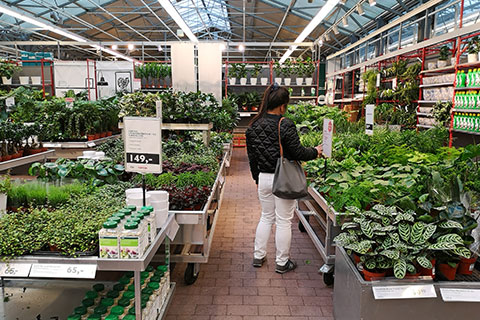
Garden centers are places of routine and ritual. People visit them on quiet mornings, between errands or as part of a weekend habit. They’re deeply rooted in local life, shaped by climate, seasons and long-standing customer relationships. Yet, when garden centres from different countries are viewed side-by-side, something unexpected becomes clear. The further you look beyond borders, the more familiar customer behavior begins to feel.
This observation lies at the heart of a shared perspective developed by Fred de Rijcke and Dries Jansen, both connected through GardenCenterAdvice. Their work across Europe, North America and the Middle East has shown that while garden centres may differ in scale, style and culture, the way people experience them follows remarkably consistent patterns.
Wherever a garden center is located, the first moments inside are decisive. Visitors instinctively assess whether the space feels welcoming, understandable and calm. Within seconds, a quiet judgment is made: Does this place invite me to stay or encourage me to move on?
These reactions aren’t shaped by nationality; they’re human. While habits differ between countries—how often people visit, what they grow, how much they spend—the need for orientation, comfort and trust appears everywhere.
Across markets, one insight continues to surface. People buy more easily when a garden center feels logical—not because everything is explained, but because the space quietly guides them. When visitors sense where they are, where to go next and what kind of offer to expect, they slow down, stay longer and make decisions with less hesitation.
Understanding these patterns requires a particular way of looking. Without relying on fixed models, this approach shifts attention from isolated numbers or trends to the relationships between space, behavior and context.
Data can support this way of seeing, but only when treated with care. Revenue figures alone rarely explain much. They become meaningful only when viewed alongside floor space, location and surrounding population. Used this way, data doesn’t judge performance; it provides perspective, helping outline what might reasonably be expected in a given setting.
An important part of uncovering these patterns lies in data mining: carefully searching through large sets of information to see what emerges. By combining figures on revenue, floor space, location, catchment areas and store characteristics, relationships become visible that are difficult to spot in daily operations. These aren’t dramatic revelations, but subtle signals—small mismatches between space and performance, or striking similarities between places that seem unrelated.
Data mining, in this sense, is less about prediction and more about observation. It helps reveal how people actually behave, rather than how we expect them to behave. Taken together, the data offers a realistic sense of how much untapped potential may exist—not as a promise, but as a grounded indication of what might already be within reach.
When a garden center struggles to meet expectations, the cause is rarely singular. More often, it’s a question of coherence. The entrance may promise inspiration while the interior delivers complexity. When space and function support each other, visitors rarely notice. They simply feel comfortable.
Looking internationally, the garden centre sector is clearly evolving. Businesses are becoming larger and more professional. Investors are taking a closer interest. Attention is shifting from total revenue to return per square foot. At the same time, flexibility is increasingly important, as seasons, product categories and customer expectations change more quickly than before. These developments aren’t instructions to follow, but signals worth reflecting on.
Every garden center has its own identity, history and environment. What’s universal are the questions that remain relevant everywhere. Does the thing still make sense? Do space, assortment and service reinforce each other? Would the shop feel intuitive to someone visiting for the first time?
Garden centers that continue to ask these questions tend to remain relevant. Not by chasing trends, but by paying close attention to how people actually behave once they walk through the door.
Perhaps that’s the most consistent lesson visible across borders: People may differ in culture and habit, but the way they experience space—and make choices within it—is surprisingly similar. GP
You can reach the authors at the following emails: John Stanley at info@johnstanley.com.au; Sid Raisch at sid@advantagedevelopment.ai; and Dries Jansen at info@gardencenteradvice.com.