6/1/2026
Year Of … Crocus
Jennifer Polanz
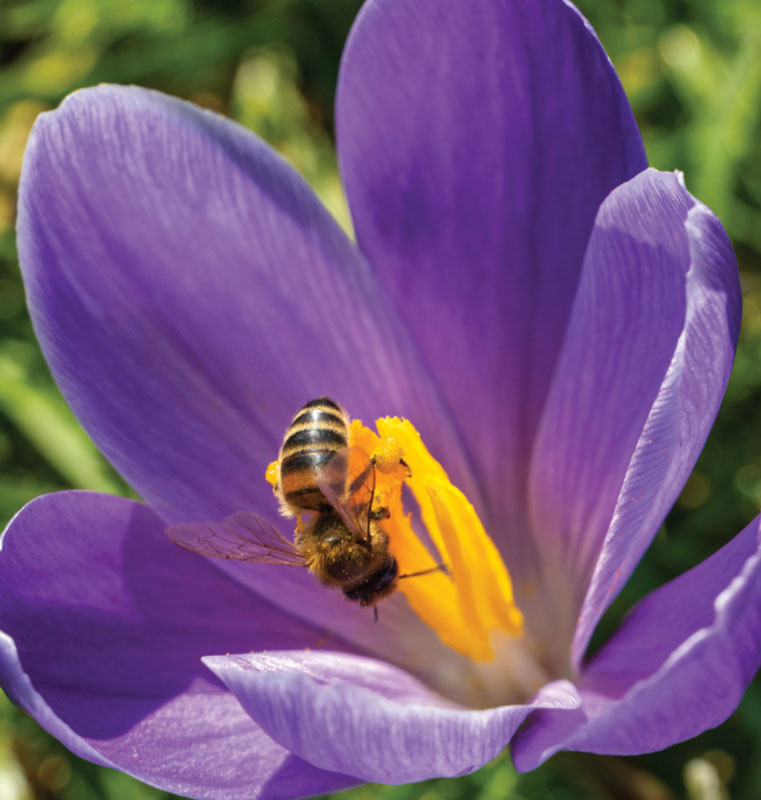
In this space, we’ll highlight each of the National Garden Bureau’s (NGB) Year Of … plants. They’re chosen because they’re easy to grow, popular, genetically diverse, widely adaptable and versatile. Visit NGB.org for free downloadable promotional materials, growing tips and more.
These lovely little harbingers of spring offer more than just beauty. NGB notes they’re one of the first stops for early pollinators like bees, and Crocus sativus is the most well-known crocus species, as it’s the source of saffron, a valuable and expensive spice.
Along with C. sativus, there are: C. chrysanthus, C. vernus, C. tommasinianus, C. flavus, C. sieberi and C. etruscus, as well as Dutch Hybrid Crocus.
Here are some more of NGB’s “Did You Know?” facts:
- Crocuses have natural insulation. Their leaves and petals are covered by a waxy cuticle that protects them from frost and snow.
- Crocus are actually corms, that act as food storage organs. Each year a new corm is produced on top of the old one.
- In many cultures, crocuses symbolize rebirth, joy, hope and fresh beginnings.
Saffron from C. sativus, is more expensive than gold. One flower produces just three red stigmas. It takes 80,000 flowers to produce just one ounce of saffron. GP