6/30/2026
The Evolution of Garden Center Food Service
John Stanley, Sid Raisch & Dries Jansen
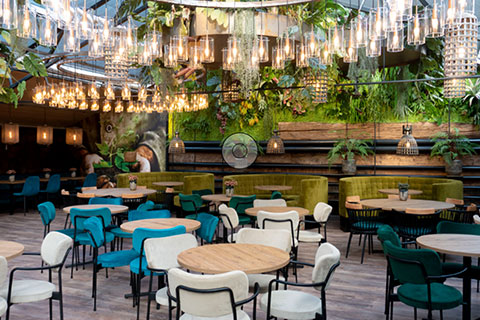
Garden centers have always been seasonal businesses, with clear peak periods in spring and during Christmas. Over time, they’ve evolved from purely product-driven retail environments into destinations where experience plays a central role. One of the most influential developments in this transformation has been the introduction of food in the form of cafés and restaurants, as well as food trucks.
These Intratuin locations in the Netherlands offer lots of food service options through beautifully appointed cafés. Seating is shown at the Duiven location.
The origin of garden center restaurants can be traced back to the United Kingdom, where unpredictable weather encouraged the creation of warm, inviting indoor spaces. Inspired by traditions such as high tea, these environments became social meeting places where visitors could relax and spend time regardless of the weather. About 30 years ago, architect Fred de Rijcke introduced this concept to the Netherlands by designing the first garden café. What started as a supporting function has since grown into a key pillar of modern European garden center design and food offerings have been slowly trending up in the U.S.
Today, the role of the restaurant has fundamentally changed. It’s no longer just a place to have a quick bite; it’s an essential part of the overall customer experience. Ambiance has become central, with a strong focus on greenery, natural materials, comfort and atmosphere. At the same time, food quality has significantly improved. Where offerings were once simple and functional, they’re now fresh, honest and often positioned at a much higher culinary level. This shift reflects changing consumer expectations, where visitors are looking not only to shop, but to also meet others, relax and be inspired.
A well-designed and well-managed restaurant has a clear impact on business performance. It encourages repeat visits with the most frequently consumed offering of garden retailers. Dwell time is increased and food strengthens customer loyalty. Visitors who stay longer in the garden center are more likely to spend more—both in the restaurant and in the retail area. Additionally, a strong food concept enhances the overall brand perception and level of service.
A clear example of this impact can be seen at Intratuin Maastricht, which has taken a slightly different approach by focusing on service and hospitality. After optimizing their garden café, including expanding the number of seats from 160 to 284, the restaurant achieved a 35% increase in revenue. More importantly, the number of visitors using the café increased significantly and customers stayed longer. While the direct effect on retail spending is difficult to measure precisely, it’s highly likely that an extended stay contributes positively to overall turnover and customer satisfaction. This enhances the overall brand experience and creates a stronger emotional connection with visitors.
Another important development is the integration of family-oriented experiences. By adding play areas for children of different ages, garden centers can attract a wider audience and create a more complete day-out experience. Intratuin Duiven is a strong example. By creating an indoor and outdoor play area, additional activities, such as children’s birthday parties, further strengthen the role of the garden center as a social destination.
Left: Swanson’s Nursery in Seattle offers a large selection of breakfast and lunch choices, along with a bakery and even gelato, with a tropical seating area for their café. Right: There are lots of options for offering food, including a permanent interior station for beverages and snacks, like at Sky Nursery in the Seattle area. 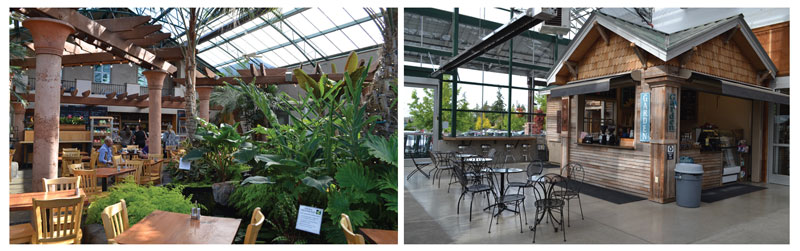
The Menu Challenge
Looking to the future, one of the challenges is getting the menu right for your target customer. Garden centers are perceived as places of nature, sustainability and well-being. This should be reflected in the restaurant menu. In the past, ultra-processed foods appeared in many garden retail food offerings, but in the future, the visitor will expect a healthy offering and many items on the menu must be acceptable to a health-conscious customer.
This shift can already be seen in Sweden, where garden centers such as Castle Garden Centre and Akersberg Garden Centre have already successfully made the move to a well-being food offer.
Are Food Trucks Your Answer?
Setting up a restaurant may not be the answer for your business. We have many clients who’ve set up food trucks. These can be operated only in busy periods and moved around the garden center as and when required.
The conclusion is clear: A garden center restaurant is no longer just an additional feature, but a strategic asset. When executed well, it drives customer traffic—particularly with repeated visits—increases seasonal traffic and increases overall revenue growth. Food offerings increase customer loyalty and elevates the overall shopping experience. However, it must be done properly. A poorly managed or low-quality restaurant can negatively affect the perception of the entire store. GP
You can reach the authors at the following emails: John Stanley at info@johnstanley.com.au; Sid Raisch at sid@advantagedevelopment.ai; and Dries Jansen at info@gardencenteradvice.com.