6/30/2026
Inspiring Beautification
Jennifer Polanz
We have studies conducted by university researchers showing the economic impact of beautification on communities and we have organizations dedicated to helping communities in these efforts. There are even cities that have legislated beautification to ensure it continues. Community beautification is such an important aspect of our industry and yet sometimes it feels difficult to gain momentum.
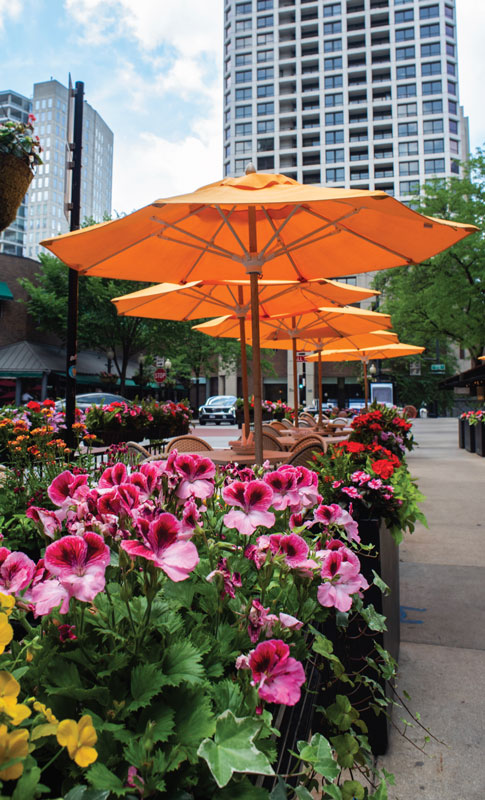
Some areas of Chicago are required through city programs to have landscaping for outdoor seating or for screening purposes, while other sections are governed by local merchant associations that encourage beautification. | Photo by Osvaldo Cuevas.
For this issue, and in honor of the 25th anniversary of the industry’s premier beautification program, America in Bloom, I wanted to take a look at a few of the strategies that have worked for communities of different sizes, as well as look at some of the speed bumps that are out there. From helping your local officials draft legislation that codifies beautification to creating revenue streams to fund it, there are lots of ways communities (and green industry members) can become good stewards of beautification efforts. This isn’t a comprehensive list, but just a few of the successes that hopefully will inspire anyone reading this to get involved at their local level.
Is Legislation Necessary?
Initially, my focus was going to be on municipal-level legislation to codify beautification standards. There are good reasons to legislate, but it isn’t always necessary, said Dr. Marvin Miller, marketing research manager (aka hortistician) at Ball Horticultural Company, as well as former president and current board member of America in Bloom (AIB). Often, it can be enough to educate municipal office holders on the economic benefits of beautification; however, municipal offices change hands frequently. He’s seen both work.
“From an industry perspective, you’d rather them understand the power of plants and how putting money into landscaping pays dividends rather than to say, well, they need to legislate this in order for it to happen,” Marvin noted, adding to the contrary, “some people ... you know, they don’t get it.”
One prime example of legislating beautification include sections within the city of Chicago (an America in Bloom entry in 2002). Mayor Richard M. Daley’s campaign for beautification standards is almost legendary and provides an excellent example of codifying certain requirements that exist beyond one person’s political tenure. Not only did Mayor Daley do it for a more beautiful city, Marvin said, but the mayor once told him he also had to sell it to council and show how it increased tourism and, by extension, made the downtown businesses more money. Enacted in 1991, the landscape requirements continue today, including specifics for outdoor dining, as well as screening for parking lots and loading docks. Here’s an excerpt from the updated Sidewalk Cafe Rules:
“The Applicant must prepare and submit a beautification and landscaping plan for the railing, barriers and seating arrangement that is consistent with the City of Chicago’s objective of developing attractive tree-lined streets, aesthetically pleasing boulevards and greener neighborhoods that contribute to the dynamism and diversity of Chicago.”
Other beautification programs are coordinated by local organizations, like a variety of merchant associations. Those combined efforts not only impacted the City of Chicago, but inspired additional cities coming together to create beautification and sustainability goals. I briefly connected with Edith Makra, director of environmental initiatives for the Metropolitan Mayors Caucus, who sent me resources about the Greenest Region Compact. The Compact is a group of 166 communities in the Chicagoland area that have agreed on 49 high-level goals to create more sustainable communities. It shows how beautification efforts can snowball outside one community into others and create lasting changes (you can scan the QR Code to see those initiatives).
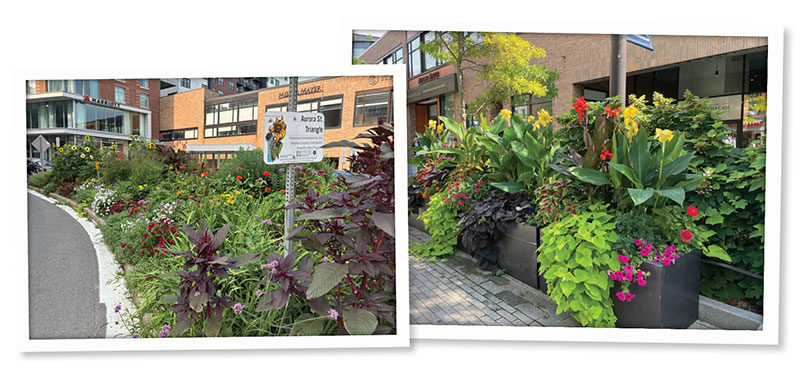
The beautification program run by Cornell Cooperative Extension manages 28 gardens of varying sizes plus 70-plus plantings at The Commons in Ithaca, New York. | Photos courtesy of Cornell Cooperative Extension.
Creating a Funding Source
Marvin pointed me in the direction of another successful beautification program in Ithaca, New York (a 2007 America in Bloom entry), which funded its efforts through proceeds from a hotel tax enacted by Tompkins County, called the Tompkins County Tourism Program and Hotel Room Tax. The 5% tax approved in 1998 is paid by guests at local hotels, motels and bed-and-breakfasts, and a portion of the money goes to beautification programs run by the Cornell Cooperative Extension.
I chatted with Janine Willis, community beautification program coordinator, who works with four staff members and a team of volunteers on managing 28 gardens that range in size and the 70-plus plantings at The Commons, a pedestrian mall in the downtown area. Because the hotel tax is for the entire county, the program also offers beautification mini-grants to smaller communities within Tompkins County for their own efforts.
Janine, previously a volunteer, came on board as a staff member for Cornell Cooperative Extension in 2016, and said the money from the tax has been mostly steady, with the exception of the couple of years during and after COVID.
“That was a challenge. Our funding has been stable since, and we’ve been able to make the case for additional funding to increase staff capacity,” she added. “If you have knowledgeable staff, then you can obviously make a better impact.”
That impact includes growing much of their own material and then buying in the rest of what they need. They try to use local plant material as much as possible, she said. “We try to prioritize working with places that are here, not only because it’s good for the economy, but also because you can actually see what you’re buying.”
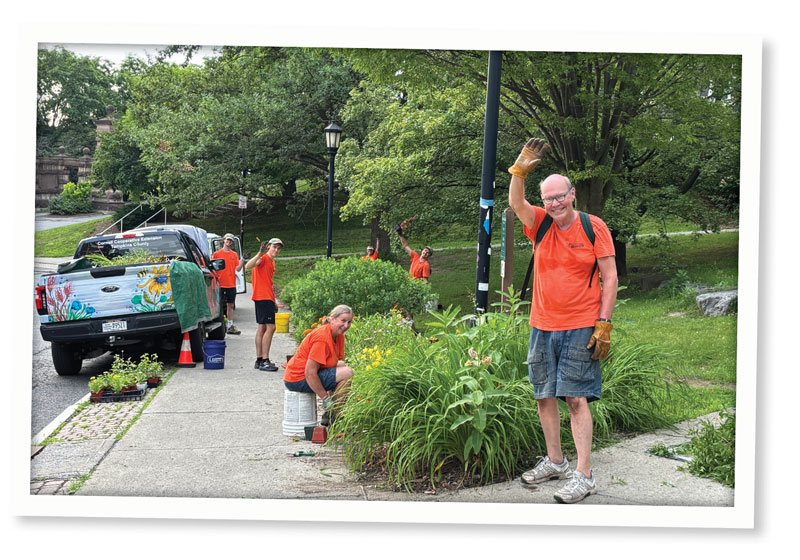
Her team works with local organizations, too, who contribute donations and volunteer hours to help with beautification. The end benefit? “I would say that the biggest benefit is just basically pride in community,” Janine said. “Not only from those like us who are actually doing the work, but people who are appreciating it. We’re out with volunteers one to three days a week, and I don’t think there’s any time when some passerby doesn’t stop and say thank you. So there’s a lot of community investment in this.”
Numbers from visitors back this up, too. Visit Ithaca and the Tompkins County Tourism Program commissioned a study in 2019 asking visitors about their experience in the city, and nearly 100% of respondents agreed with both “offers a beautiful, natural outdoor environment” and “offers a welcoming environment for visitors.” The study found repeat visits increased in a 10-year period, as did average spend.
Part of that visibility is education for locals, too, which is one of the missions of Cornell Cooperative Extension. From offering help to businesses who want to maintain planters at their storefronts to volunteers looking to learn more about gardening, the beautification efforts provide a variety of ways to encourage more knowledge and excitement around plants.
“Even in an urban setting, we’re providing these little oases around this urban center,” Janine added. “Spending time in those green spaces is important.”
 Speed Bumps on the Road to Beautification
There can be several, including what I alluded to before in the changing of municipal leaders. Without codification of beautification, cities can ebb and flow in their enthusiasm for the efforts. Marvin gave one such example of a destination city in the south that enthusiastically participated in the early days of AIB with the encouragement of the mayor at the time. After that mayor retired, another beautification champion took his place, but eventually a new challenger won the office with the argument that the city had grown too fast thanks to its reputation as a beautiful city. Leadership can change, along with goals and funding without guardrails in place, whether that’s an established beautification organization or actual legislation.
The beautification program in Ithaca, New York, relies on the efforts of about 50 volunteers a year. | Photo courtesy of Cornell Cooperative Extension.
“You need to sell it one way or the other, whether it’s sell it to the legislator or sell it because it’s a good idea—you know, either could work,” Marvin added. “And it might be an easier sell if it’s not legislated in some environments.”
Building a coalition of organizations and volunteers that believe in beautification can help solidify the effort, as well as showing local businesses the impact planters, hanging baskets, green walls and other offerings can make on their profits.
Communities are also places to learn and make a lasting impact, and we’re seeing more emphasis on native plantings and pollinator plantings in municipalities. In some places, there’s legislation in place encouraging water-efficient, native and adapted plants, as well as pollinator plants and other beneficial landscapes, according to Dr. Melinda Knuth, researcher and assistant professor at North Carolina State University. Some of these state and local laws even prohibit homeowners associations from restricting native plants, something that we’ve seen pop up around the country.
I asked her how retailers and others in our industry can get involved to make sure their communities legislate in a positive way that encourages planting beneficial species like natives and pollinators. She said much of this regulation comes from HOAs and gave two recommendations: “Encourage HOA covenants to be less restrictive or to ban HOAs from restricting ‘messy’ and requiring turf. Get involved in state-level government/gang up with other groups like The Native Plant Society, etc. and explain the important of environmental stewardship. People care a lot about low input and saving bees, and using terms that appeal to people is important.”
Attend America In Bloom 2026
For the 2026 America in Bloom Symposium & Awards, there’s no better place to celebrate on the 25th anniversary (and the country’s 250th anniversary) than Washington, D.C. Taking place September 24-26, attendees can take part in educational sessions, tour local beautification spaces, network with others dedicated to beautifying their spaces and celebrate with the annual awards program.
You can find out more about the event, as well as access a wealth of resources for beautification efforts, at americainbloom.org.
And while the native messaging is starting to resonate, she noted some of the key messages to share is that not all natives are messy or slow growing.
“Natives are resilient and, generally, low maintenance,” she said. “They can be pollinator supporters and water-conserving plants.”
Just like what Marvin said about beautification, educating people on the benefits can be just as effective as legislating them. And encourages homeowners, communities and businesses to create active ecosystems that are also beautiful, great for the environment and long-lasting.
Building Coalitions
Everywhere I looked for examples, I saw groups that drove action, whether it was volunteer organizations, retailers and growers working with municipal leaders, or merchant and tourism organizations leading beautification efforts. So while actions like these can start with one person, they take a village to enact and continue. The AIB website is a really great resource to highlight how other communities have accomplished their beautification efforts and no story seems to be exactly the same. It can happen in a variety of ways, and the AIB program itself has evolved over time to encompass more efforts of all sizes and offer more resources than ever. It’s a great place to get started and help create the beautification program you wish to see in your community. GP
More Resources mentioned in this article:
Details about the Ithaca Beautification program run by Cornell Cooperative Extension.
A link to the Mayors Caucus Greenest Regional Compact.
More examples of successful strategies for beautification from America in Bloom.
Resources from the Ellison Chair in International Floriculture on plant health benefits, economics and more.