8/31/2026
5 Cool Annuals
Matthew Olson
Consumers have their go-to annuals, but that shouldn’t limit your offerings. In some cases, these plants just need a bit more awareness to make an impact on the sales floor.
Lancelot Salvia
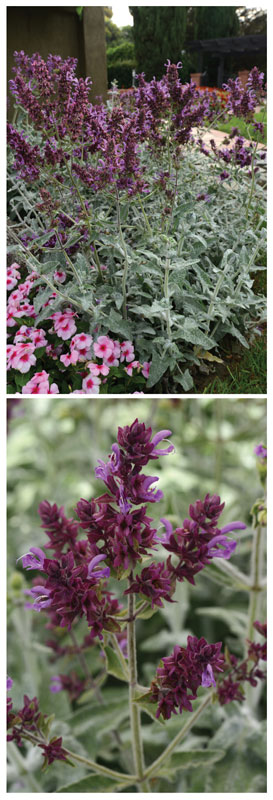
The blooms of salvia are a staple in many gardens, but what about their leaves? I talked to Lloyd Traven, owner of Peace Tree Farms in Pennsylvania, to discuss a salvia with silver foliage. He told me about his first encounter with Salvia Lancelot.
Left: Salvia Lancelot
“I was visiting PanAmerican in California and Lancelot jumped out at me. The leaves were white and the upright flower stems had brilliant lavender flowers,” he said. “I’m mad at myself that I hadn’t noticed it before, but I knew it would be on my list for next year.”
Starting in July, the tall blooms emerge above the fragrant foliage for a wave of color. The striking appearance can be combined with other annuals or as a standalone in a pot.
Groups of Lancelot make an impact in borders and are a perennial in Zones 7 and warmer. Retailers can highlight the silver leaves and share photos of what the blooms will look like.
“People are always looking for something that’s blue or close to it and that contrast with the foliage is exceptional,” Lloyd added.
Pseuderanthemum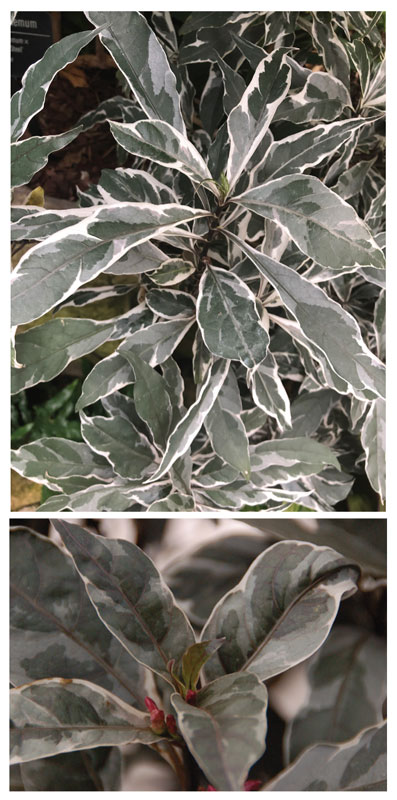
Another plant that caught Lloyd’s eye is the genus pseuderanthemum.
“I was introduced to this genus at Cultivate and it knocked my socks off,” Lloyd said. “I got some cuttings from Chris Baker and we started to discover a bunch of unusual varieties.”
Right: Pseuderanthemum Stainless Steel
As Peace Tree created their Garden Geek collection, the variety Stainless Steel was the founding member that launched their brand of unique plants about 15 years ago.
“Kelly Norris has described it as the little black dress of horticulture,” Lloyd noted. “It has an upright, elegant habit with black-and-white leaves.”
This genus doesn’t like full sun, but it’s great for mixed containers in shady areas.
“It can be a thriller or a filler, and I suggest displaying a larger plant so people can see what it becomes,” Lloyd said.
In this genus, each plant has distinct colors and habits, making for a well-rounded collection. While the leaves are the main appeal, the variety Pseuchotic Reaction is set apart by long-lasting color.
“It never stops flowering and can bloom for 12 months of the year,” Lloyd said.
 Plectranthus Velvet Collection
Among the unique plants of South Africa are plectranthus, a genus of nearly 60 species in the mint family. In the late 1990s, Mona Lavender was bred at the Kirstenbosch Botanical Gardens in Cape Town and became a hit across the industry. Soon afterward, Terra Nova Nurseries began working on their own plectranthus project. Five years later, they had a winner. I spoke with Chuck Pavlich, Director of New Product Development at Terra Nova, to learn more about this option for shady spots.
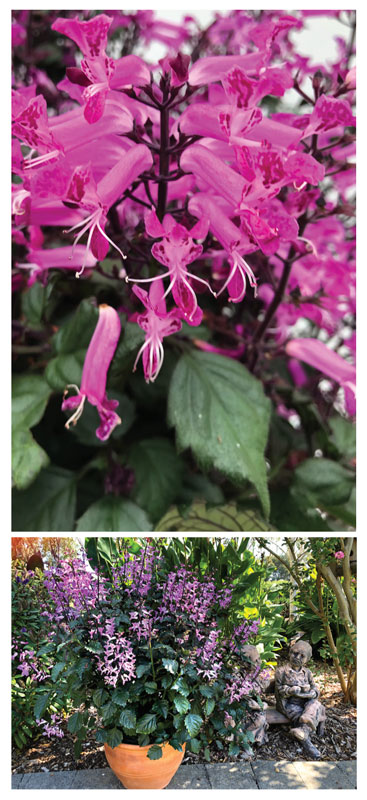
Top: Plectranthus Velvet Lady
Bottom: Plectranthus Velvet Starlet
“Our first intro was Velvet Elvis, which was bred from proprietary seedlings from seed in South Africa. Velvet Elvis became a hit with flowers that are nearly twice the size of Mona Lavender on more vigorous plants,” he said.
The rest of the series required gamma radiation to achieve a range of colors and dwarf habits. Lady stands out with two shades of pink on the blooms (pale pink on the exterior of the tube and cherry pink on the interior). Diva is a heavy bloomer with lavender-violet flowers, while Starlet has glowing pink blooms on the most compact plants in the series.
“All the plants in the Velvet series are free-flowering, blooming several times a year. Most of them don’t require pinching to stay in shape; they are naturally self-branching and have a long shelf life,” Chuck added.
 Kent Beauty Oregano
For many gardeners, oregano is simply an herb. David Wilson, the Director of Marketing at Overdevest Nurseries, shares why Kent Beauty is special.
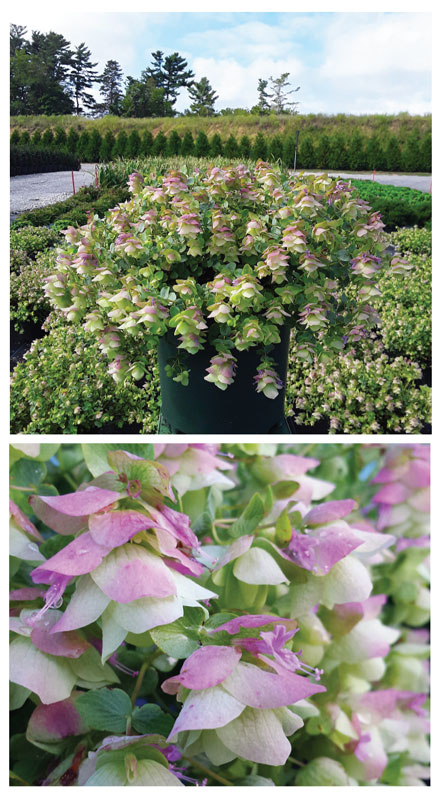
Right: Origanum Kent Beauty
“We like it because it is compact and bushy, with papery bracts that look like lime-green, cream and pink hops that are produced in mid-summer and persist for an incredibly long time (well into the autumn),” he noted.
Like other oreganos, Kent Beauty is a perennial (hardy down to USDA Zone 6), but also works as an annual in colder climates (sharp drainage is key to overwintering this plant). This selection was discovered growing between two other oregano species in Elizabeth Strangman’s garden at Washfield Nursery in Kent, England.
“The little purple, nectar-rich flowers that are produced within the dangling bracts are popular with pollinating insects,” David said. “When these two species from distant geographical areas (Origanum rotundifolium from Turkey and Origanum scabrum from Greece) were growing near each other, they combined the best merits of both species.”
Since Kent Beauty takes until mid-summer to flower, it won’t be at peak during the spring rush. However, it’s a great plant for pollinators and is drought tolerant. Plus, the deer aren’t a fan.
“To command attention in the garden center, it’s important to get the plants up off the ground, so displaying them on benches or end caps is the way to show off the shapely habit and unusual pendulous blooms,” David added.
Signage with images of the blooms can also help. With its short, trailing habit, Kent Beauty is right at home in containers and the front of borders.
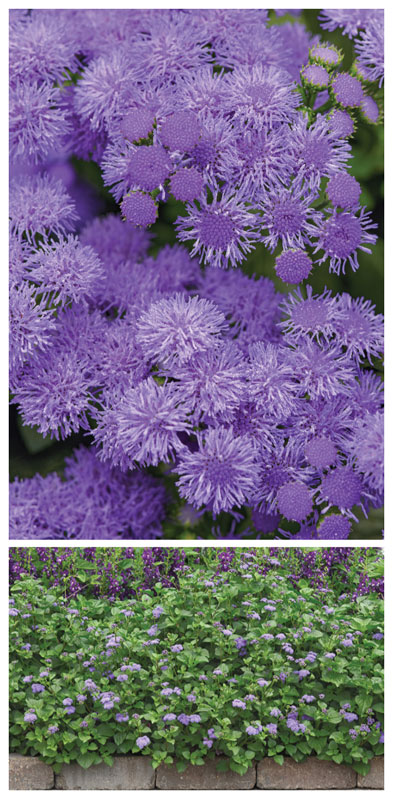 Monarch Magic Ageratum
Ageratum is a longtime favorite for butterflies, but this newer variety goes a step further with a unique spreading habit. Dawn Pollack, sales manager at Clesen Wholesale, shared her first experience with this plant, introduced by Ball FloraPlant.
Left: Ageratum Monarch Magic
“I first saw Monarch Magic in the Ball Gardens during the heat of July 2025, where its exceptional garden performance and vibrant display immediately stood out,” she recalled. “Positive feedback from customers who saw it firsthand confirmed it was a variety we wanted to offer.”
At Clesen, these plants are sold in 6-in. container pots and in hanging baskets to emphasis the trailing display of blooms. And for retailers, Dawn suggests a similar approach.
“It performs best in 6-in. or larger containers and displaying in individual pots rather than keeping them in trays to allow customers to appreciate its form,” she said.
Adding them to entrance displays and landscape beds will also garner attention. Plus, you can make educational displays using signs and images to share the benefits of helping pollinators. GP
Matthew Olson is a professional horticulturist and garden writer. He regularly writes articles about gardening for consumers and industry professionals. You can reach him at matt@mattolsonhorticulture.com.