8/31/2026
From Truck to Trunk
Erik Dietl-Friedli
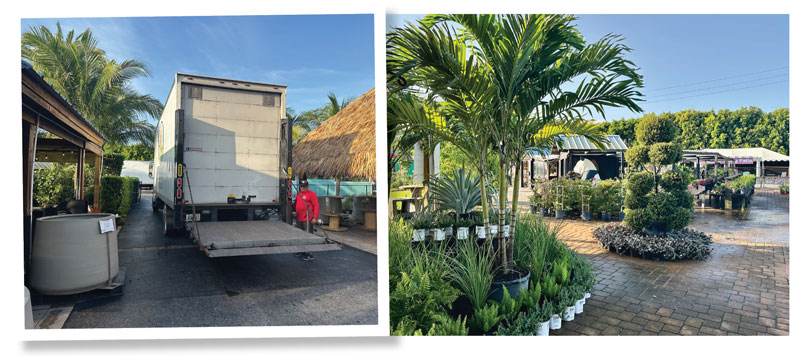
Receiving can make it or break it. If we can receive, then we can sell. Over the years, I’ve found the key is to handle receiving the same way every time, whether we’re getting a huge order or a small one. And the process needs to be simple, so everyone is comfortable with the steps involved and where we are in the process each time.
With plants, my primary goal is to ensure that they reach customers’ hands as quickly and efficiently as possible. I don’t believe in holding areas. Plants never look better than the moment they come in, so we start processing and displaying them within 30 minutes of delivery. They move directly to where they’re being displayed.
The Beginning Stages
First, I assess the plant needs. This involves reviewing sales reports and observing the sales floor throughout the week. Once I have a clear understanding of plant needs, I place an order, generate a purchase order (PO) and print labels as soon as I receive an acknowledgment.
Then I make room for the new product by shifting existing items closer to the registers. This is where sales velocity is greatest. These areas can also be challenging to stock, so it’s best to do this when we aren’t under the pressure of a large delivery. We start with the plants we don’t anticipate getting more of since they’re further along on the sales curve. Getting them closer to the registers is key to clearing them out.
By shifting older product forward, we’re clearing out space for new plants. Customers don’t like to buy from half-empty tables. The gaps are where “the good plants” were, but nobody knows what was on an empty table. Customers see empty tables as the Theater of Retail: something is about to happen there. And an empty table is the easiest to stock.
Onto the Tables
My tables are 6-ft. wide and 8-ft. long—the perfect size for customers to get around and reach into the center. They’re also the perfect size for 100 one-gallon plants. I order primary movers in multiples of 100 and secondary movers in multiples of 50. With secondary plants, I’ll put 50 in the center of the table and 50 of another as a border around it.
Ideally, plants are coming in pre-priced by the growers on racks that they leave and switch out the next time. Ideally. Let’s consider all those times it doesn’t happen this way because, for many of us, that’s every time.
We unload directly onto trailers for larger plants and onto racks for smaller plants. Then we distribute the labels and move the racks to the designated space for the products. I often place one item on the table with the labels, eliminating the need for anyone to ask, “Where is this going?”
Finally, we price and place the products out simultaneously. This process minimizes the number of times we handle plants, which is especially important when dealing with hundreds of a single item. Each “touch” multiplies the effort, so it’s crucial to minimize this. A common mistake is for staff to price on the rack, then put the plants down. When they do this, they’re handling each plant another time.
I often delegate large blocks of a single item to newer staff members to price and place. I understand that this task can be time-consuming and this keeps them occupied while I manage last-minute adjustments to ensure everything fits. As they become more familiar with the products and their typical locations, they gain more freedom to display them.
The Home Stretch
When the plants are down and tables are full, then it’s time for fun. That’s when we look for areas and opportunities to display plants even better. And in doing so, maybe we’re clearing more tables for the next delivery?
The customers see all of this as the Theater of Retail. They feel like they’re a part of it as they see it.
And their role? Taking it away. GP
Erik Dietl-Friedli has worked in garden retail for more than 35 years. He’s the head buyer at Flamingo Road Nursery in Davie, Florida, and a consultant at Garden Center Consultants. He can be reached at erik@gardencenterconsultants.com.