6/30/2026
Independent Thinking
Chris Beytes, Bill Calkins & Jennifer Zurko
As close as breeders, growers and retailers are these days, it’s no surprise that breeding direction and plant introductions are more and more aligned with retail sales and sell-through. Of course big box and mass market have a large influence, but independent garden centers have ALWAYS influenced breeding, because for most of our industry’s history, that’s all there was. And with half of garden centers being hybrid businesses growing their own product, local garden centers and nurseries have always been the (or a) focus of plant breeding.
Modern consumer trend research, sales data and a deep understanding of today’s shopper is really improving the hit rate of new varieties. Basically, thanks to the information shared by retailers and the growers who supply them (plus the large consumer focus groups they conduct), breeding companies have much better intel into what consumers actually want and what they’ll buy.
First is a “rebirth” in mixed containers. For the past few years, breeding companies who’ve either dabbled in combo programs or never been in the recipe game are releasing new programs that help growers select the best plants to build premium combos based on crops with proven track records and availability from the same rooting stations. We have enough data now to make solid educated guesses about designs and recipes that sell through at various price points because no one in the supply chain can handle big shrink numbers on such high-end items. Also, we’ve seen an increase in shade crop breeding over the past five years, which is opening up more and more options for shade combos.
Next is season extension and the importance of “shoulders,” which is not just driven by the mass market, but it really impacts and benefits every garden center and greenhouse. Breeders seem to be focusing a lot on new crops that can be sold before peak spring weekends and after the traditional garden shopping season ends. Sometimes they’re related to cool-season crops that can be sent to retail in bloom in early spring. Other crops that fit the profile are summer-blooming perennials, fall combo components, crops bred for extra-long holdability during bad weather and “rain events,” or durability in the heat of summer.
If adding sales on the shoulders of your traditional sales calendar is a goal for your business, talk to your favorite breeders or sales reps because there’s a huge palette of purpose-bred crops that you might not even be aware of.
There are even more new annuals on the GrowerTalks side. Watch all of our videos from the event!
New Annuals
 Begonia Dreams Chloe White Blush (Beekenkamp)
New in the Dreams Chloe collection is White Blush. Chloe is a collection of interspecific begonias with great heat tolerance and strong outdoor performance. White Blush looks like a hellebore, with soft white flowers and pink undersides.
 Dahlia LaBella Medio Fun Maroon, Maggiore Fun Elmo Ruffle (Beekenkamp)
In their medium- and large-sized dahlia sub-series under the LaBella umbrella, are two new “Funs,” meaning they’re bicolors. Medio Fun Maroon is good for quart containers sizes and Maggiore Fun Elmo Ruffle is one of the biggest dahlia flowers we’ve ever seen. We can see why they called it Elmo because it literally looks like the fur of the “Sesame Street” character Elmo.
Salvia Tropicolor, Melba Magic, Sunkiss Cranberry Crush (Jaldety)
Tropicolor is a new series of S. guaranitica that includes three colors: Sunrise (orange, pictured), Carmine (red) and Claret (dark purple). The really cool thing about these is the very dark burgundy undersides of the leaves.
 Last year, we saw Salvia macrophylla Melba Magic Peach—this year, they had two more bicolors to add to the series: Raspberry (pictured) and Strawberry. Like Peach, the plants are medium height with dark stems.
And the third salvia (another S. guaranitica) is Sunkiss Cranberry Crush. It has very dark, almost black, “caps,” and very bright magenta flowers. Sunkiss is more compact than Tropicolor and their other salvia series Amistad, but you still get the long stems and just as many blooms.
 Thunbergia Sunny Susy Orange Red, White Wedding (Jaldety)
Jaldety also has a line of thunbergia called Sunny Susy. There are two new ones: Orange Red and White Wedding, which is a pure white flower—no eye like typical thunbergia flowers.
 Bidens Pink Treat, Fireworks (Danziger)
Pink Treat has pale pink flowers striped with darker pink, along with yellow centers. But Fireworks really caught our eye for its vivid yellow and orange star-shaped flowers that would be great along with your fall mums. We were told it’ll take hard frosts, so give it a try for autumn sales!
 Vinca Tattoo Boysenberry (PanAmerican Seed)
Tattoo is the series with unique colors like peach and orange tones with dark eyes and other interesting patterns. New for 2027 is Boysenberry, the first new one in at least five years. This one has a white-ish center that transitions to red and purple by the edge of the flower. It’s super cool and like many varieties, the color is deeper and darker in cooler temps and PanAm said to consider shading it about 20% when growing it in southern climates.
 Osteospermum Akila Sunshine Yellow (PanAmerican Seed) New Akila Sunshine Yellow is as vivid as they get and adds to this seed series that’s known for its compactness, no-pinch production and excellent uniformity.
Osteospermum FlowerPower Petite, Compact; 4D (Selecta One) New for the FlowerPower Compact series is White Amethyst and for the newer FlowerPower Petite series is a really nice Yellow. Lastly, adding to the 4D series is Orange (pictured), which could be pretty interesting for fall programs, as well as early spring. Remember, 4Ds are the ones that have huge flower centers and overlapping petals that literally cannot close up, so they look beautiful 24/7.
 Petunia Tea (Beekenkamp)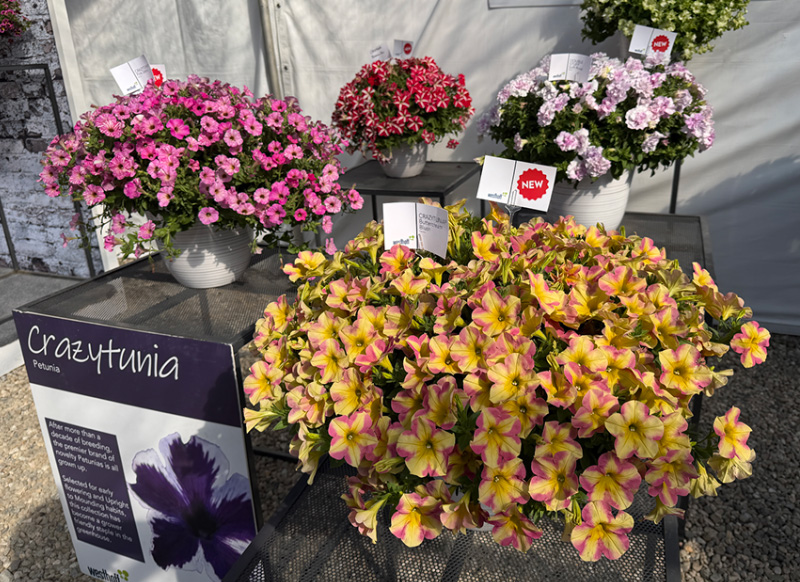
There are a few new colors for the Petunia Tea series coming to market in 2027. This is the weather-tolerant and versatile series for 4-in. pots up to hanging baskets. Rosette Blend, Rosy Sun and Lilac Sun (pictured) are all fresh new colors for the series.
Petunia Crazytunia (Westhoff)
New for 2027 are four new Crazytunias. Pink Zebra is pink with white stripes, Skookum Star is red and white, Buttercream Blush is an interesting yellow and pink pattern, and High Five is magenta with a yellow edge.
 Petunia Frogger White (Westhoff)
It’s a green-and-white petunia—the fact that they named it Frogger White implies there may eventually be a Frogger Pink, Frogger Rose, Frogger ... well, who knows?
 Scaevola Bali Blue (Danziger) Blue might be the prettiest scaevola we’ve seen. The flowers are a perfect blue, the habit is absolutely uniform, the green is clean and just the right shade to compliment the flowers—not too light, not too dark ... it would be a shame to relegate this to combo basket status. We’re told it’s long-lasting and all the flowers open at once. Oh, and that more colors are coming.
Petunia Double Stuff; Disco Ball (Westhoff) Also new in Westhoff’s petunia range is a double called Double Stuff Soft Rose, and Disco Ball Black, which brings a really dark purple color to the sky/polka dot color pattern of roundy-moundy petunias.
 Calibrachoa Eyecatcher; Calitastic; Caliloco Tiger (Westhoff)
Three intros include Eyecatcher Plum (Eyecatchers have dark eyes), Calitastic Romeo Pink (Calitastic are early and uniform) and Caliloco Tiger (pictured), an orange flower with a dark eye (Caliloco are the equivalent of Crazytunias with interesting colors).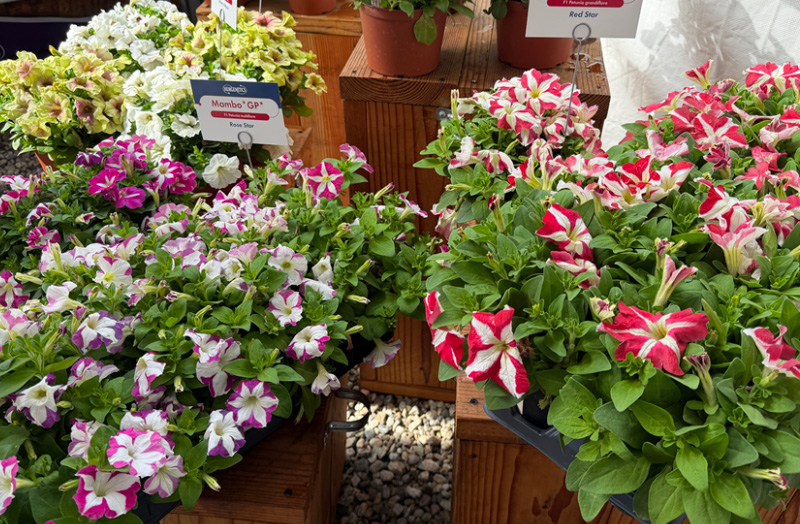
Petunia Limbo Red Star, Mambo Rose Star (Hem Genetics)
The first star patterns in Hem’s Mambo and Limbo Petunia series—Limbo (grandiflora) gets Red Star, while Mambo (multiflora) adds Rose Star. They’re all from seed and bred to be naturally compact with no need for PGRs.
 Petunia Kuyamba Salmon Glow (Kientzler)
This is Kientzler’s series of huge, patio pot-type petunias with bold colors and big blooms. New for 2027 is Salmon Glow, with rosy-pink, salmon-y shades.
 Tomato (Cherry) Purple Empress (Rooted in Solutions)
From the same company who introduced the bioluminescent Firefly plant, they also showed us a GMO cherry tomato called Purple Empress. Its deep, deep purple color comes from a snapdragon gene, they say, and it matches blueberries in antioxidants. You should be able to get Purple Empress to add to your garden veggie plant line now.
Origarium vulgare Zoregano (Hishtil)
This rust-resistant oregano has fragrant, fuzzy leaves and is a cross between a traditional Origarium vulgare and Majorana syriaca, which is an herb native to Africa.
Strawberry Pretty Tasty Ruby (ThinkPlants/Terra Nova)
The name describes it well—pretty deep red flowers that eventually produce loads of small, tasty fruits.
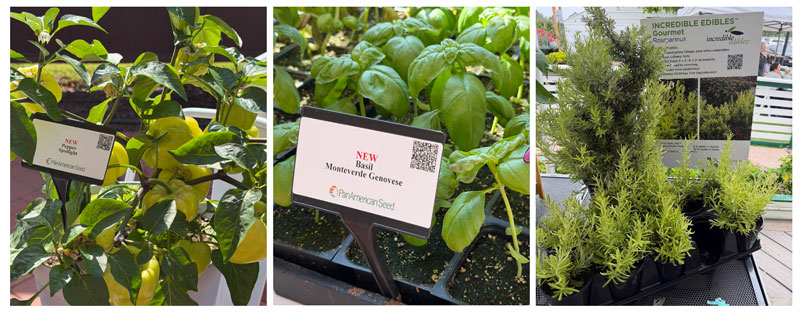
Pepper (Sweet) Spotlight (PanAmerican Seed)
An early maturing (70 to 75 days) sweet pepper that goes from an ivory color to a yellow, Spotlight has excellent bacterial leaf spot resistance. The walls of the peppers are thick, so they’re super crunchy and the taste is less bitter with a more mild flavor than traditional sweet peppers. Home gardeners can grow it in a container or in the ground.
Basil Monteverde (PanAmerican Seed)
Monteverde Genovese is a traditional Genovese-style basil that has high resistance to many strains of basil downy mildew (and intermediate resistance to many others). But most important was flavor and we can vouch for its savoriness without too much of that licorice taste. By the way, they’ll be using the “Monteverde” name for a full line of disease-resistant basils of other types.
Incredible Edibles Rosemary (PlantHaven)
For 2027, they’re taking a first step into edible plants with a collection called Incredible Edibles. Gourmet Rosemary is the first release, and not only does it have excellent rosemary flavor, but it is also a very bright chartreuse instead of the usual green of most rosemary sprigs. They did share a sneak peek into a little “no photos allowed” greenhouse to see futures and experimentals, and showed a collection of raspberries called Ricochet bred by the legendary Scott Trees, so we know there will be more Incredible Edibles to report on in the future. GP