8/31/2026
Beyond Clean Floors
George Grant & Tanner Bailey

Walk into any successful independent garden center and you’ll notice more than healthy plants. You’ll see clean walkways, organized displays, attractive merchandising and an inviting atmosphere that encourages customers to explore. While colorful blooms and well-stocked benches draw shoppers in, one of the most overlooked contributors to sustaining retail success is sanitation.
Figure 1: Promptly remove trash cans with plant debris away from retail spaces to reduce pest pressure.
Figure 2: Innovative watering tools can be used to improve organizational efficiency and reduce tripping hazards.
Many growers associate sanitation with greenhouse production, where facilities are cleaned and sanitized between seasons to reduce pest and disease carryover. Once plants move into the retail environment, however, sanitation often becomes third fiddle to merchandising and customer service. That can be a major missed opportunity.
Retail garden centers serve as holding environments where plant quality must be maintained while creating a unique shopping experience. Plants arrive from multiple suppliers, there’s dynamic foot traffic throughout the day, irrigation systems run continuously and organic debris constantly accumulates. A thoughtful and consistent sanitation program does more than reduce pests and diseases—it protects plant quality, creates a safer shopping environment and reinforces the professional image customers expect every time they walk through the door.
First Impressions Matter
Customers begin evaluating a garden center well before they ever pick up a plant. Clean walkways, organized displays, healthy-looking inventory and well-maintained benches inspire confidence in your products and organization. On the other hand, algae-covered sidewalks, weeds growing through gravel, overflowing trash containers or piles of discarded plant debris can quickly change a customer’s perception of the business.
Daily housekeeping goes a long way. Sweeping potting media, collecting empty plant trays, removing fallen foliage/blooms and keeping trash and debris outside customer shopping areas create a cleaner, more inviting retail environment.
These simple tasks also reduce breeding sites for insects and remove organic matter that can harbor plant diseases. It should go without saying no customer wants to see dead or dying plants, nor bring a pest problem home with them (Figure 1).
It All Starts with Water
Many sanitation challenges begin with excess moisture in the retail and growing environment. Standing water, leaking irrigation fittings, clogged drains and excessive overspray encourage algae growth while creating favorable conditions for fungus gnats, shore flies and plant pathogens. Wet sidewalks also become significant slip hazards for customers and employees.
Figure 3: Keep customers focused on plants they want to buy, not weeds.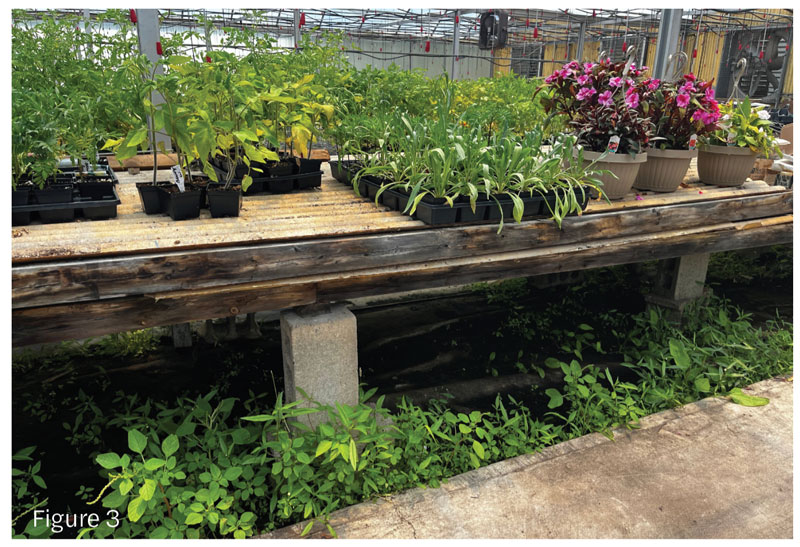
Managing water is one of the easiest ways to improve both sanitation and customer safety. Repair leaks promptly, improve drainage where water tends to collect and direct irrigation toward containers instead of surrounding pavement whenever possible. It’s amazing what a reliable hose shutoff valve can do to reduce water from getting on non-crop surfaces. Reliable wetting agents such as AquaGro L and H2Pro can be tank mixed with the general maintenance fertilizer and injected on a continuous basis to improve water infiltration, reduce runoff, and help keep both containers and walkways drier. Not to mention slower dry-downs equal fewer labor hours spent hand watering and more hours keeping customers happy.
Proper hose management is another often-overlooked component of retail sanitation. Hoses stretched across customer aisles create unnecessary tripping hazards, damage plants as they’re dragged through displays and make the sales floor appear cluttered. Products such as the recently released Dramm Heavy-Duty Hose Reel help keep hoses organized while maintaining safer, cleaner shopping aisles (Figure 2).
Algae & Weeds Are Warning Signs
Algae and weeds are often viewed as cosmetic issues, but they usually signal larger sanitation concerns. Algae develops where surfaces remain consistently wet, while weeds establish in neglected gravel, landscape fabric or display areas (Figures 3 and 4). Both detract from the appearance of the garden center while creating habitat for insects and increasing future maintenance needs. Routine scouting allows employees to remove weeds while they’re small and address algae before it becomes established.
For heavily trafficked sidewalks and customer walkways, GreenClean PRO is a granular product that can be broadcasted directly over wet, hard surfaces to help remove algae and improve both the appearance and safety of these high-visibility areas. Growers tend to forget that there are herbicides that are labeled for both outdoor and greenhouse use. A pre-season application with a reliable post-emergent burndown and pre-emergent herbicide combination can provide season-long protection. A key reminder is that sanitation doesn’t need to be labor-intensive. In fact, integrating a few valuable tools ahead of time can help prevent a lot of headaches and save valuable time putting out fires.
 Clean Before You Disinfect
One of the most common misconceptions is that applying a sanitizer alone solves sanitation problems. Effective sanitation follows three simple steps: remove debris, clean the surface and then disinfect. Combinations of algae, biofilm and mineral scale prevent sanitizers from making direct contact with surfaces, reducing their effectiveness. Simply put, you can’t sanitize a covered surface very well.
Figure 4: Algae and biofilm are unsightly, but also a customer slipping disaster waiting to happen.
When plants are present, sanitizers such as KleenGrow, SaniDate 5.0 and ZeroTol 2.0 can help maintain hard surfaces as part of routine sanitation and can generally be left to air dry after being applied. For periodic deep cleaning after hours, Strip-It PRO or GreenClean Acid Cleaner can be applied and then rinsed to help remove algae, mineral deposits and organic buildup before going in with a suggested sanitizer.
Make Sanitation Part of Your Culture
The best sanitation programs are built into everyday operations, not reserved for seasonal cleanups. Remove plant debris while watering. Pull weeds before they produce seed. Sweep potting media and collect empty plant trays throughout the day. Organize displays as inventory is replenished, report irrigation leaks immediately and inspect walkways for algae and standing water before opening each morning. Additionally, as more retailers adopt biological control programs, sanitation becomes even more important. Clean facilities reduce pest pressure and create an environment where beneficial predators can perform more effectively, helping reduce reliance on conventional pesticide applications in customer-facing spaces.
Small, consistent habits such as removing debris, managing water, maintaining clean walkways and utilizing proper sanitation tools create healthier plants and a better shopping experience. Customers may come for the plants, but they remember the experience. A clean, well-maintained IGC communicates professionalism, reinforces the quality of the products being sold and encourages shoppers to return. By making sanitation part of daily operations rather than an occasional clean-up project, garden centers reduce pest pressure, improve safety and create an environment where both plants and customers thrive. GP
George Grant, Ph.D., is the technical services manager and Tanner Bailey is a technical service specialist in the GGSPro Technical Team for Griffin Greenhouse Supplies. Visit griffins.com and click on the GGSPro tab to see more technical resources.